 As part of New York State’s early celebration of the United States Bicentennial, in May 1973, the Museum of American Folk Art (today the American Folk Art Museum) in Manhattan opened its “The Metal of the State” exhibit. One of the artifacts on view was described in the catalogue as “a large Revolutionary [War] anchor found in Lake George.”
It remains an enigma as to where the anchor was actually found however, and if it even was from the American Revolution (1775–1783), since most colonial military operations at Lake George were during the French & Indian War (1755–1763). (An exception was the Battle of Diamond Island in 1777.)
The exhibition was on the heels of the pop art craze of the 1960s, when counter-culture artists created recognizable imagery of bright colors drawn from popular media; think Andy Warhol and his “Campbell Soup Cans.”
In a society during the early 1970s that was known for bell-bottoms, eight-track tapes, and the emergence of disco music, this folk art program examined another form of human expression. Folk art was characterized by Americans with different skill levels producing appealing material culture.
The Museum of American Folk Art described their art extravaganza in 1973 as “an in depth study of the ways various metals have been used to serve and decorate New York.”
The wares shown came from a variety of metals — cast and wrought iron, copper, brass, pewter, silver, and tin. These artifacts were donated by collectors, museums, and historical societies from around the Empire State. The exhibition sought to present the role of metal in the state’s economic growth from Revolutionary War times.
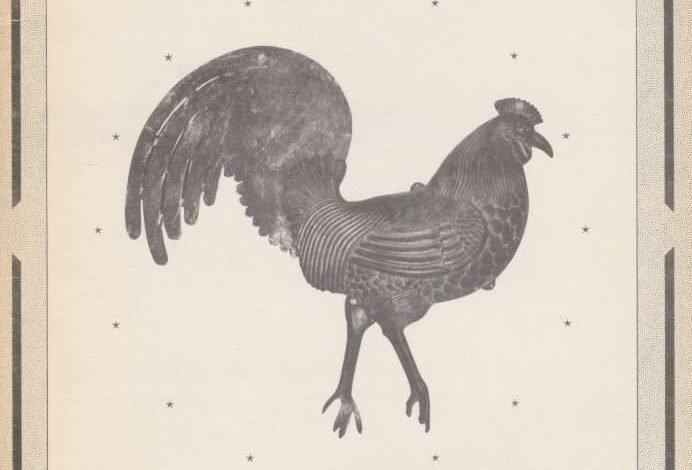
According to a May 29, 1973 article in The New York Times, nearly 300 metal objects were showcased. These included a mid-19th century copper weathervane, an iron eagle sculpture, a nine-foot-tall copper Native American statue, various children’s toys, a shovel used in 1914 during construction of the East River Tunnels, a Shaker teapot, and of course, the so-called Lake George Revolutionary War anchor.
“The Metal of the State” exhibit ran from May 1 to July 1, 1973. To enter the museum, it cost $.50 for adults (children were free), a bargain for that time. The show then traveled to other galleries around the state.
Item #26 in the production’s catalogue was cited as an “Anchor From A Revolutionary War Ship, Lake Champlain or Lake George.” It was one of three artifacts loaned from the “Collection of the Revolutionary War Celebrations Museum, Schuylerville, N.Y.”
That facility, located on Broad Street in Schuylerville in Saratoga County, opened about 1967. After several years it seems disappeared from the record. (Anyone with knowledge about that museum should let us know in the comments below.)
Unfortunately, it’s not clear what happened to this historic anchor and whether it really was from Lake George, or possibly Lake Champlain.
Read more about New York’s Naval History.
A version of this article first appeared on the Lake George Mirror, America’s oldest resort paper, covering Lake George and its surrounding environs. You can subscribe to the Mirror HERE.
Illustrations: Part of the catalogue of the 1973 “The Metal of the State” exhibit at the Museum of American Folk Art in Manhattan (courtesy Joseph W. Zarzynski Collection); and Doug Leininger (left) and Mark Bessen (right) record measurements from an Admiralty Pattern Anchor during a 2021 anchor, grapnel, and grappling iron study at Fort William Henry Museum, Lake George. The anchor pictured here is missing its wooden stock. It may be that the anchor exhibited in 1973 at the Museum of American Folk Art was similar in appearance (Joseph W. Zarzynski).
Source link