 Beneath the towering trees of New York State, under the leaves and rotting logs, lives a group of amphibians. Nocturnal in their behavior and hunkered down in underground retreats, forest salamanders often go undetected – until they move on rainy nights in large numbers for their annual breeding migrations to vernal pools.
Along with wood frogs, these amphibians encounter many roads that bisect their habitat, and in some places, they also encounter volunteers who lend a hand to provide safe passage. You can be one of the those volunteers.
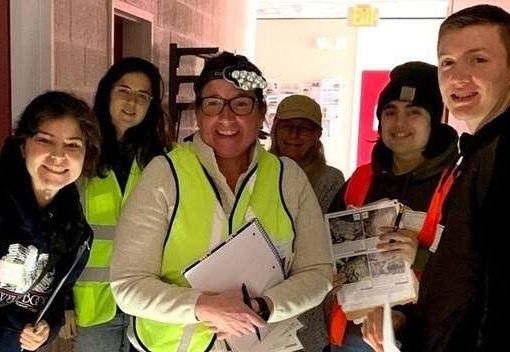
The Amphibian Migrations and Road Crossings (AM&RC) Project enlists volunteers to find locations where amphibian migrations cross roads; document weather and traffic conditions; record migrating amphibians; and help them across the road.
Since the project started in 2009, more than 1,000 volunteers have counted at least 66,000 amphibians and observed 20 species. They assisted more than 40,000 amphibians across roads during migrations and counted nearly 19,000 migrating amphibians killed by passing vehicles.
Volunteer observations build an understanding of where amphibians are especially vulnerable during their annual migrations and where their habitats are located. This information can be used for community planning and for groups of volunteers interested in starting “crossing guard” programs for the amphibian breeding season.
There is an upcoming virtual lecture and several amphibian migration volunteer trainings planned for those interested in helping amphibians attempting to cross roads in their communities.
Volunteer Training (In-Person)
Volunteers should complete some form of training prior to surveying roads and submitting data. Training topics will include volunteer protocols, safety measures, data collection and reporting on Survey123, and species identification.
In-person volunteer training sessions:
Wednesday, Feb. 11, 6:00-9:00 pm in Albany (Albany Co.) Register to attend
Hosted by Albany Pine Bush Preserve Commission
Saturday, Feb. 14, 9:30am-12:30 pm in New Paltz (Ulster Co.) Register to attend
Hosted by Wallkill Valley Land Trust
Wednesday, Feb. 18, 6:00-9:00 pm in Garrison (Putnam Co.) Register to attend
Hosted by Hudson Highlands Land Trust
Volunteer Training (Virtual)
Tuesday, Feb. 24, 5:30 pm (more details and a registration link will be announced). Subscribe to receive AM&RC bulletins, you can sign up at the bottom of the AM&RC webpage.
If you’re unable to attend an in-person or virtual program, you can view the YouTube training modules. There is also an online Volunteer Handbook.
Upcoming Public Lecture
Laura Heady, a Cornell University biologist with the AM&RC will present a talk (virtually and in-person) about the world of forest amphibians, their life histories and role in forest ecosystems, and the opportunities to get involved in the conservation of vernal pool-breeding amphibians.
The event, set for Thursday, February 12th at 7 pm ET, is free and open to all, but registration is required (here for in-person and here for virtual).
The in-person will take place at the Cary Institute of Ecosystem Studies‘ Lovejoy Auditorium, 2801 Sharon Turnpike in Millbrook, NY. This lecture is offered as part of the Catskill Science Collaborative.
Cary’s public lectures are made possible, in part, by support from Harney & Sons Fine Teas.
Read more about amphibians in New York State.
Source link