 People of color fought on both sides of the American Revolution. But for some enslaved people, the British Army offered a unique opportunity for freedom.
Philipse Manor Hall State Historic Site and the Friends of Philipse Manor Hall are presenting “Freedom Behind British Lines: Black Loyalists in New York,” a talk about those who sought freedom with the British military during the Revolutionary War by Sarah Wassberg Johnson.
Attendees can learn about the three British proclamations enslaved people used to find freedom behind British lines, the lives of formerly enslaved individuals from Westchester County, NY, and New Jersey who fought for and worked with the British Army, and what happened to the Black Loyalists after the war.
This event will take place in-person and online via YouTube Live on February 11th at 7 pm, ET, at Philipse Manor Hall State Historic Site at 29 Warburton Avenue in Yonkers. In-person admission is $6 for adults, $3 for seniors and students, while virtual access is free.
Registration is recommended. To reserve a spot, attendees should call (914) 965-4027 or email philipsemanorhall@parks.ny.gov. Virtual access is free and open to everyone. at www.philipsemanorhall.com/programs-and-events.
Sarah Wassberg Johnson is the education and programs manager at Philipse Manor Hall State Historic Site. She has an MA in public history from the University at Albany. She has spent the last several years researching the American Revolution in New York, especially Westchester County and connections to Philipse Manor Hall.
You can read her previous research into the Philipsburg Proclamation and Black Loyalists here.
Philipse Manor Hall State Historic Site, located at 29 Warburton Avenue in Yonkers, NY, is open for tours Wednesdays through Sundays, from 10 am to 5 pm. Dating back to the 1680s, Philipse Manor Hall State Historic Site sits near the confluence of the Nepperhan (Saw Mill) and Hudson Rivers, the site of a Munsee Lanape village.
Used by four generations of the Philipse family and worked by the people they enslaved as well as European tenant farmers, the Philipse Manor was once over 200,000 acres and helped make the Philipse family the richest in New York.
Loyalists during the American Revolution, they fled to England and the Hall was owned by several individuals before becoming the Yonkers Village Hall and later Yonkers City Hall. When a new City Hall was built in the early 20th century, the house was preserved through the generosity of Eva Smith Cochran and donated to New York State to serve as a historic site.
Today, Philipse Manor Hall State Historic Site provides visitors with a balanced approach to interpreting the lives of Indigenous, European, and African people to understand the complex relationships that took place at the Manor from the earliest days of the Dutch Colony of New Netherland to the American Revolution and beyond.
Learn more at Philipse Manor Hall’s Virtual Wing at www.philipsemanorhall.com.
Read more about black history in New York State.
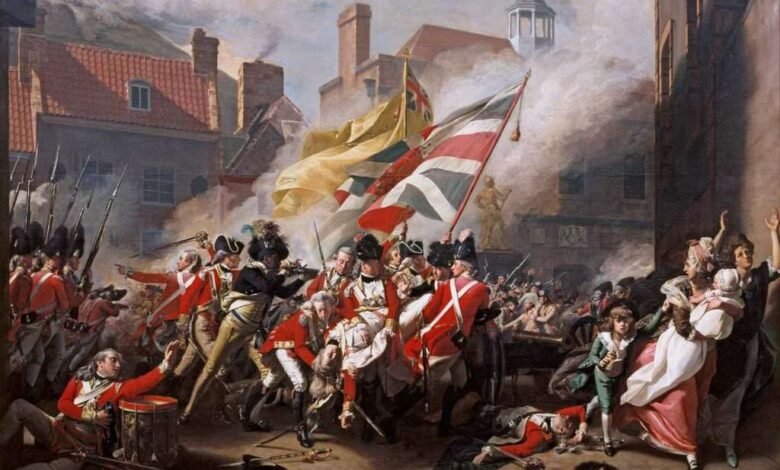
Illustration: “The death of Major Pierson, January 6, 1781,” 1783 by John Singleton Copley (Tate Museum, London).
Source link