 Long before Harlem, Black New Yorkers were shaping the city’s history, neighborhoods, culture, and institutions. A multi-part series of free virtual lectures organized by Save Harlem Now and its partners are currently exploring those stories, beginning in 17th century New Amsterdam and continuing through centuries of resilience, community-building, creativity, and struggle.
Installments include the free Black settlement known as the “Land of the Blacks,” the Little Africa communities in Greenwich Village and the Tenderloin in Midtown, and the storied neighborhood of San Juan Hill, lost to urban renewal and the building of Lincoln Center. Along the way, lectures help uncover how these communities laid the groundwork for what would become Harlem.
The first lecture was held last week and discussed the first enslaved people of African descent to be brought to New Amsterdam who were eventually emancipated and granted farmland on and near what is now the Merchant’s House Museum.
Museum Historian Ann Haddad explored the complex story of Black life in the 17th century Dutch settlement, and the free, “half-free,” and enslaved Black people who raised families, established a strong community, and contributed to the development of New York City. The virtual link had a technical problem, but the same lecture is available online here.
This week’s lecture – on Thursday – explores Greenwich Village during the late 18th and early 19th centuries, especially the South Village, home to a significant free Black population.
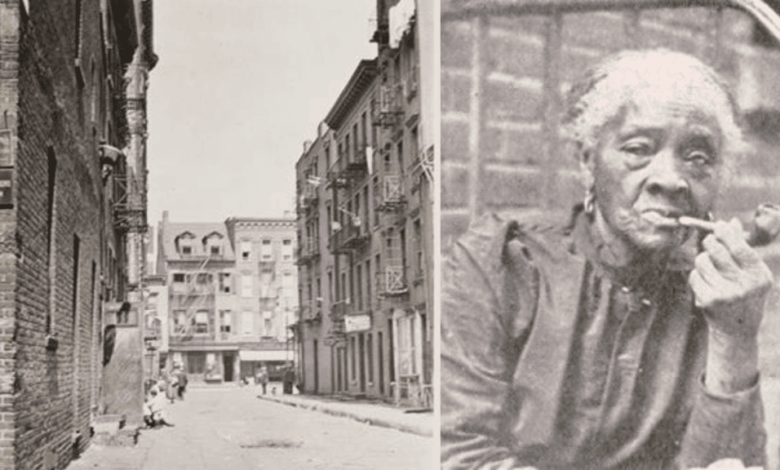
In the latter half of the 19th century one of the most notable early settlements was “Little Africa,” centered around present-day Minetta Street and Minetta Lane. The community included Black-owned businesses, churches, and social institutions. Between the 1880s and early 20th century this was the most important center of Black life in Manhattan before moving uptown.
Village Preservation educator Amanda Adams-Louis will talk about one of Manhattan’s most important, but nearly unknown, historic neighborhoods. This free virtual event will be held Thursday, February 12, 2026 from 6 until 7:30 pm. Register here.
Amanda Adams-Louis is a Brooklyn-based photographer, teaching artist, and cultural producer creating images, education programs and events that move with the rhythm of culture. She holds a BFA in Photography, with minors Graphic Design & Art History from Pratt Institute; and is an alumna of the Whitney Independent Study Program & TASIS.
Her recent exhibition, “Shelltoe Systems: Litefeet Culture 2010–2025,” is the first photography show to highlight the vibrant, Harlem-born and Uptown-cultivated street dance form known as Litefeet. Amanda is also an educator with Village Preservation and has presented several Village Preservation public programs on Black history and culture.
Read more about Black American History in New York State.
Illustration provided.
Source link