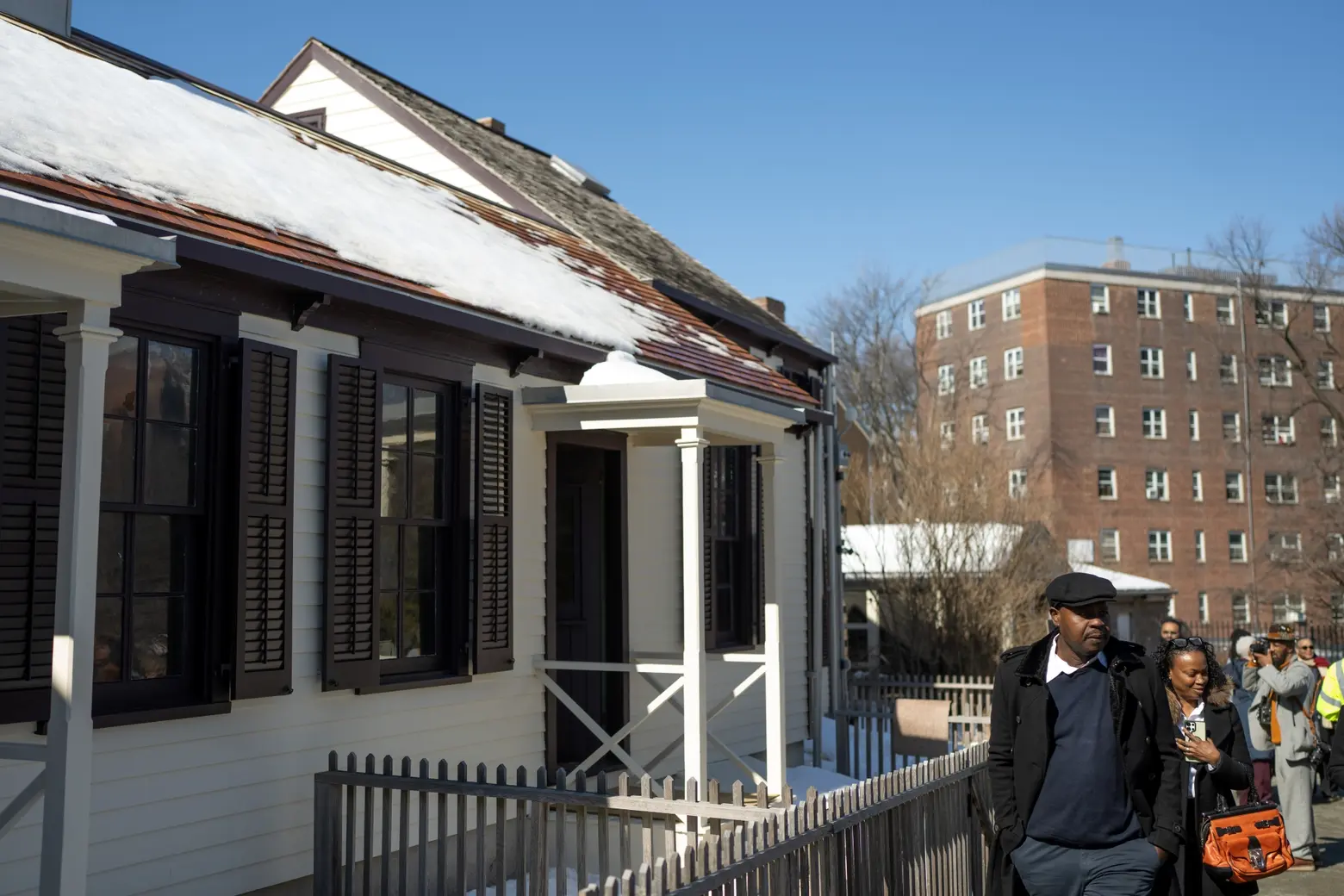
Four wood-frame homes built in the 19th century as part of one of the nation’s largest free Black communities before the Civil War have been restored. The Hunterfly Road Houses at the Weeksville Heritage Center in Brooklyn reopened last week after undergoing a $4 million renovation, Mayor Zohran Mamdani announced on Friday. Last month, the center also received $1.2 million in state funding to maintain the historic homes, support staff and daily tours, and expand literacy and community programs.
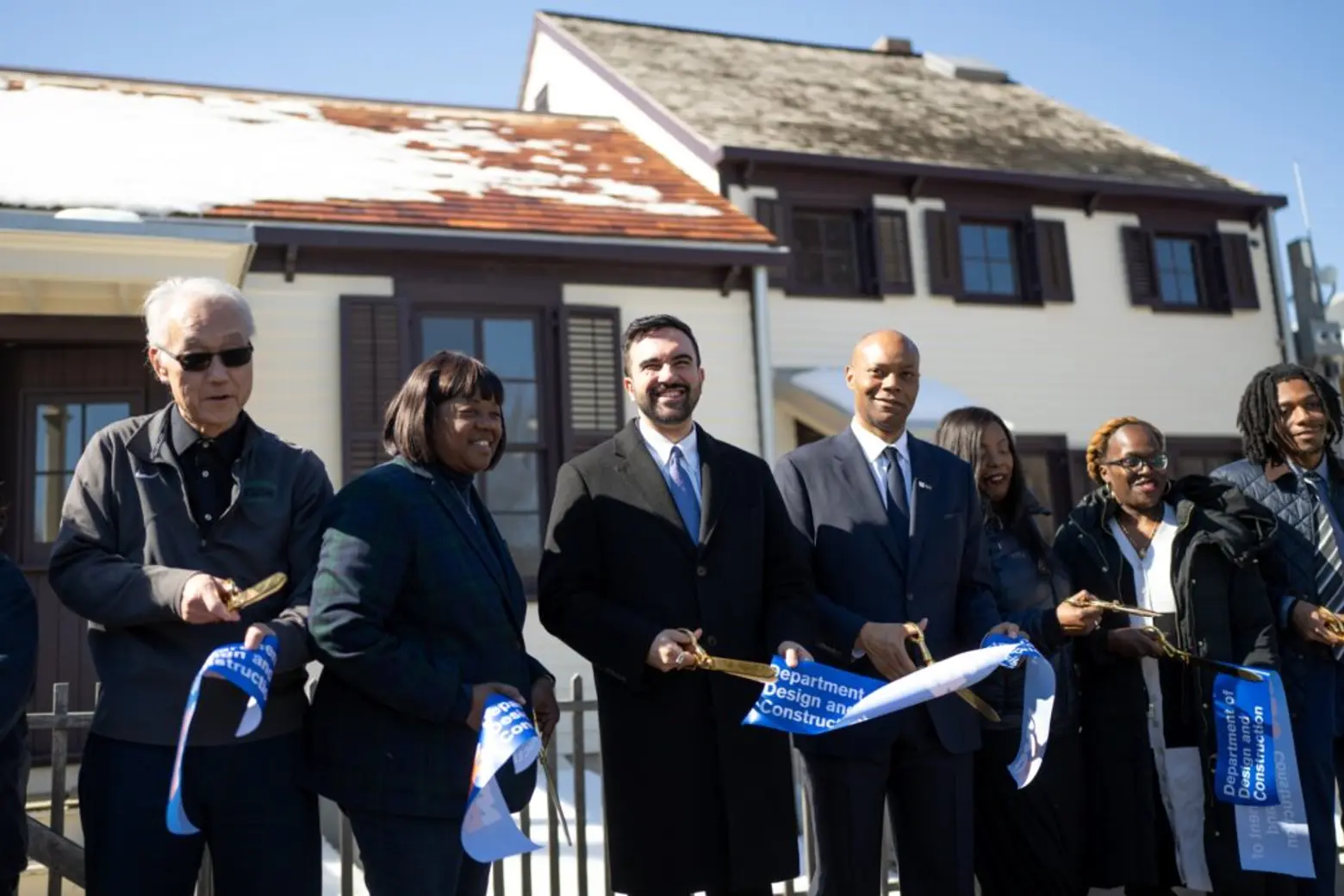
“Weeksville tells the story of Black New Yorkers who built freedom for themselves in a country that tried to deny them it,” Mamdani said. “It was a sanctuary that offered safety, dignity, and opportunity in the face of economic injustice and systemic racism.”
“By restoring the Hunterfly Road Houses, we are preserving not just historic buildings but a living legacy of resilience and self-determination.”
The project, led by the city’s Departments of Cultural Affairs and Design and Construction, restored the facades, siding, windows, doors, and front porches of the homes. Roofs, gutters, and leaders were also repaired, and wood brackets along the roofline were removed and replaced to improve structural integrity, according to a press release.
A climate-controlled storage room was added in the cellar of one of the homes, built in 1869, to help preserve historical artifacts. Plumbing, exterior lighting, fire alarms, and security camera systems were also upgraded as part of the restoration.
Funding was provided by the mayor’s office, the Brooklyn Borough President’s Office, and the City Council.
Dr. Raymond Codrington, president and CEO of the Weeksville Heritage Center, emphasized the significance of the restoration and its role in preserving history.
“This restoration was more than facades, windows, and foundations. It was about fortifying memory. It was about ensuring that future generations can stand where we stand and understand that freedom here was lived, organized, and defended. Together, we commit to safeguarding spaces like Weeksville so that truth has a home and sanctuary has an address.”
The historic homes were once part of Weeksville, a thriving 19th-century Black community. Following New York State’s abolishment of slavery in 1827, free black professionals bought land in what is now Crown Heights and founded the neighborhood as a self-supporting community of African American Freedmen. The neighborhood became e the second-largest free black community in Antebellum America, as 6sqft previously reported.
By 1855, more than 520 free African Americans lived in Weeksville, including prominent figures in the abolitionist and equal suffrage movements. The community offered political self-determination and voting rights to free Black residents at a time when New York law restricted Black men’s voting to those owning at least $250 in property.
Weeksville also served as a place of refuge during periods of racist violence, including the 1863 Draft Riots in Manhattan.
The community grew throughout the 19th century, but by the 1880s, new development in surrounding areas began to integrate Weeksville into the broader Brooklyn landscape. The construction of Eastern Parkway soon followed, prompting many residents to move elsewhere. By the early 20th century, the history of Weeksville was largely forgotten.
In 1968, two researchers from Pratt Institute uncovered references to Weeksville in 19th-century Brooklyn histories and conducted an aerial survey of the area, discovering four homes on Hunterfly Road, the oldest standing structures in Bed-Stuy and Crown Heights and the only remaining houses from the original Weeksville community.
The following year, a Bed-Stuy resident founded the Society for the Preservation of Weeksville and Bedford-Stuyvesant History to research and preserve Weeksville’s legacy. After two years of advocacy to protect the Hunterfly Road Houses, the four structures were designated New York City landmarks in 1970 and added to the National Register of Historic Places in 1971.
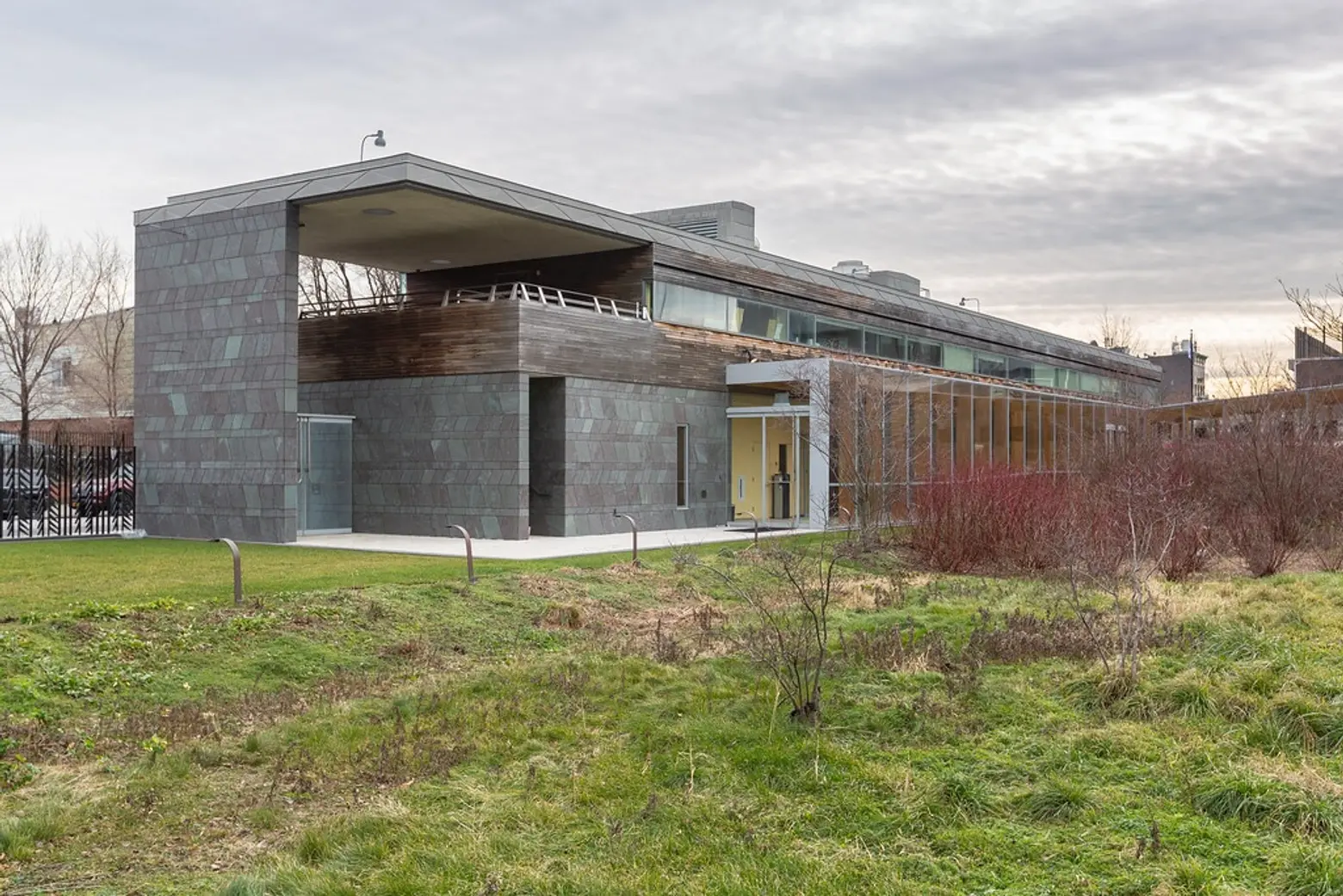
The Society purchased the homes in 1973 and opened the Weeksville Heritage Center in 2005. In 2014, the center expanded, adding a new building. Today, it continues to serve as a vital community institution offering public programs, tours, and research facilities to “document, preserve and interpret the history of free African American communities in Weeksville, Brooklyn and beyond.”
Visitors can view artifacts such as spoons and hand-altered dolls—once everyday objects that now stand as powerful reminders of resilience and the legacy of “Black self-creation,” according to a press release.
The $1 million in state funding is part of Gov. Kathy Hochul’s initiative to support institutions that uplift communities of color across NY. According to BKReader, the funding provides resources for preservation and public programming, helping ensure that historic sites continue to offer educational, cultural, and community activities.
RELATED:
Source link