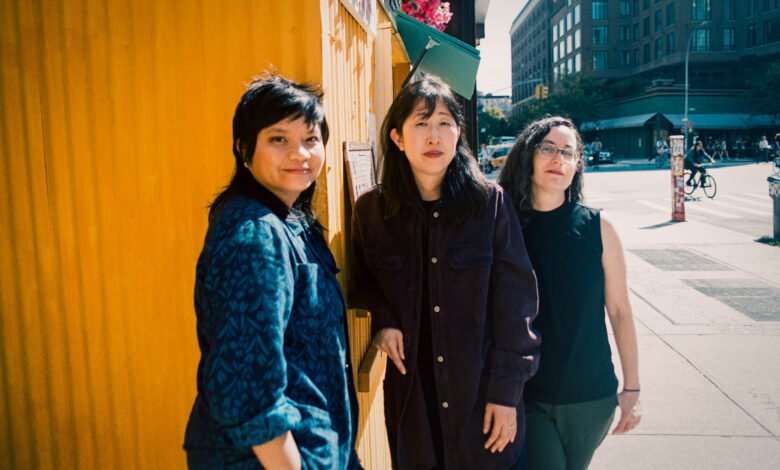
Finally, in an off-hand comment, someone (I think it was me?) threw out the name Pink Fang. In the late nineties, around the time of my internship, a letter arrived at the company misaddressed to “Pink Fang.” It was a malapropism of Ping’s name—humorous, accidental, and oddly evocative. It became a running joke and, eventually, even the name of the office Wi-Fi network.
At first, Pink Fang felt too irreverent. But what started as an offhand quip slowly took on a magnetic pull. A name mispronounced, reclaimed, made powerful. It acknowledged the very real experience of being misnamed—of having one’s identity casually mangled and erased—and transformed it into something unforgettable.
When we shared it with Ping and Bruce, they laughed and embraced it. Pink Fang begins and ends with the letters of Ping’s name, carrying history without clinging to it. It honors legacy while clearing space for reinvention. It’s punk and poetic. It invites curiosity, not conclusion.
When Ping retired and requested that the name of the organization change with his departure, it was an act of generosity that reflected his values as an artist.
Ping has often said that the power of Undesirable Elements lies in “claiming your name in public.” Renaming the company took three years because it required us to find ourselves and find our narrative before we were ready to claim our name in public. Arriving at Pink Fang required an intentional departure from tradition, a choice rooted in love and audacity. It makes space for complexity. For contradiction. For multiple lineages. It resists flattening. It resists erasure.
After nearly twenty-five years with the company, I often feel my entire identity is intertwined with this history and work. Without Ping and Bruce, and the company, there would be no me, as I now am, nor would I have grown into the artist or leader I have become. My call to action is rooted in one of Ping’s favorite phrases, from the author E.M. Forster: “Only Connect.” My superpower is building spaces of deep listening, connection, and belonging. In every workshop, whether with artists, high school students, nurses, or older adults, we begin by sharing the story of our names, and that glimmering spark of connection, of possibility.
And this reminds us, again and again, that naming is never the end of the story. It is the beginning.
The Second Act: Building the Future We Name
By Jane Jung
The first time I encountered the work of Ping Chong, I was an undergraduate in a multicultural theatre practicum. I read the script SlutforArt and felt a distance from it while simultaneously feeling drawn in. The worlds inside were poetic, layered, and unlike anything I had envisioned on stage before. Years later, after graduate school, I moved to New York and joined Ping Chong and Company as general manager in 2010.
I left in 2014 for another role, thinking I might not be back. But in 2018, I returned—first part time, then as managing director in 2019, alongside longtime executive director Bruce Allardice. I stepped into that role, the COVID pandemic hit, and during that time, Ping and Bruce made the decision to officially retire from the company by the end of 2022. For decades, “Ping Chong and Company” was both a name and a person to some, the duo of Ping and Bruce to others. It was hard to imagine the company without Ping and Bruce. With no roadmap for what leadership would look like after the two of them stepped down, we embarked on a journey to make one.