

The Bahá’í new year begins at sunset today, opening a holy day of renewal that follows nineteen days of fasting, prayer and spiritual reflection.
Bahá’í communities around the world are preparing to welcome Naw-Rúz, the Bahá’í New Year, listed in the official Bahá’í calendar for 21 March 2026. Because the Bahá’í day runs from sunset to sunset, the observance begins at sunset on Friday, 20 March. That transition from one day to the next is not merely a calendrical detail. It gives the holy day the character of a threshold, where one year closes and another opens in prayer, fellowship and hope.
Naw-Rúz, meaning “New Day,” is one of the best-known holy days in the Bahá’í calendar and is closely linked to the vernal equinox, which marks the beginning of the Bahá’í year. It arrives immediately after the Bahá’í Fast, a nineteen-day period from 2 to 20 March during which adult Bahá’ís fast from sunrise to sunset. Official Bahá’í explanations describe that fast as a time of prayer, meditation and spiritual rejuvenation, giving Naw-Rúz a meaning that is deeper than seasonal festivity alone.
That context matters. Naw-Rúz is not simply a celebration of spring, but the culmination of a disciplined period of inner reflection. The movement from fasting to festivity gives the holy day a spiritual texture familiar across many religious traditions: joy that has been prepared for through restraint, introspection and conscious devotion. In Bahá’í life, renewal is not just emotional. It is moral and spiritual as well.
The symbolism of Naw-Rúz is both natural and theological. The new year begins with the return of spring light, but it also marks the chance to begin again inwardly. The Bahá’í writings identify Naw-Rúz as the day that ends the fasting month and stands as a feast at the opening of the new year. For believers, that gives the holy day a dual resonance: it belongs to sacred time, yet it also speaks to a wider human desire for balance, renewal and fresh beginnings.
Naw-Rúz also carries a broader cultural heritage. The festival is historically connected to the wider Persian and Central Asian tradition of Nowruz, celebrated across different societies and backgrounds. Within the Bahá’í faith, however, Naw-Rúz takes on a distinct religious significance as part of a sacred calendar that structures communal life through holy days, monthly gatherings and devotional rhythms.
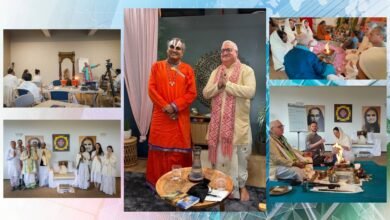
In Bahá’í communities, Naw-Rúz is often marked by devotional gatherings, shared meals, music and joyful fellowship. Some observances are simple and local, taking place in homes or community centres. Others are more public, especially where Bahá’í communities have developed long-standing annual traditions. However they are celebrated, the atmosphere typically combines reverence and joy: not austere, but not merely social either.
This year’s observance may feel especially meaningful because it follows a fast designed to create a pause in ordinary life. The official Bahá’í description of fasting emphasises not only abstention, but spiritual rejuvenation. Naw-Rúz therefore arrives not simply as a release from discipline, but as the flowering of it — a moment when inward effort becomes visible in communal celebration.
For a religion that places strong emphasis on the unity of humanity, Naw-Rúz also has a wider social resonance. It invites believers to think not only about personal renewal, but about the kind of world that renewal should help build. In Bahá’í thought, prayer and spiritual growth are closely connected to service, community life and the pursuit of greater justice and harmony.
That is part of what makes the holy day so timely. In a world marked by polarisation, war and fatigue, a festival centred on renewal can sound simple, but it is not shallow. Naw-Rúz does not ask believers to ignore reality. It asks them to meet it with a new measure of clarity, gratitude and moral purpose.
As sunset falls today, Bahá’ís in different countries, languages and cultural settings will begin the new year together. The last day of the Fast gives way to the first day of a new cycle, and the discipline of the previous nineteen days opens into fellowship and celebration. That sequence is what gives Naw-Rúz its special beauty: it is not only a date on a calendar, but a sacred turning of the year.
Source link