
Charade: an empty or deceptive act or pretense.
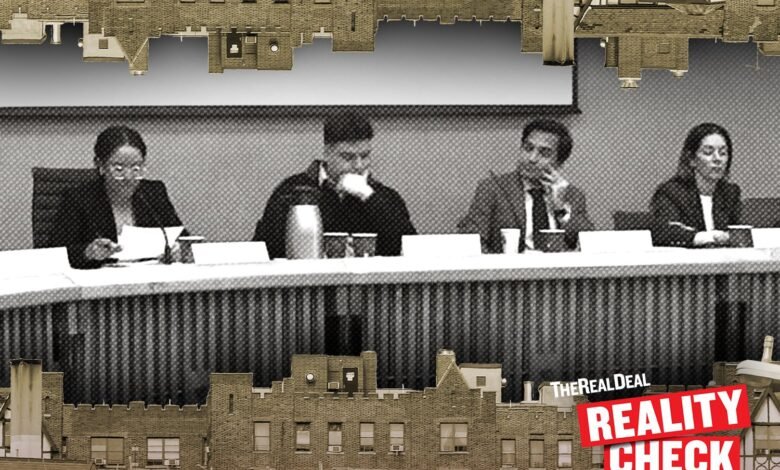
The annual Rent Guidelines Board process, which began last week, clearly meets that definition.
It doesn’t matter whether board members are liberal or conservative or which mayor appointed them. The very idea that they can make the right decision is a charade.
The board can do only one thing: set an annual rent increase for the city’s nearly 1 million rent-stabilized units.
These apartments might be in bankrupt, crumbling buildings in the South Bronx or in valuable, immaculate buildings on Park Avenue. Their tenants could be 1-percenters with weekend homes or unemployed single moms with three kids.
Every one gets the same rent increase, which this year will be zero if Mayor Zohran Mamdani gets his way.
Imagine a gas station attendant tasked with fueling a million different vehicles — Ferraris and Priuses, Formula 1 cars and junkers, model planes and Airbus A380s, lawnmowers and yachts. All he has is 87-octane unleaded, and every machine must get the same amount.
That’s our Rent Guidelines Board.
Everyone is focused on whether Mamdani will get his rent freeze, but the real story is how profoundly stupid this part of New York’s rent stabilization system is.
Regardless of how much data the rent board collects and how many hearings it holds, it cannot choose an appropriate rent increase. The world’s most talented mechanic couldn’t maintain a broken tricycle and the Space Shuttle with one turn of a wrench.
Last week the board released data showing the financial performance of buildings with at least one rent-stabilized unit. Tenant activists and the mayor will focus on their 6.2 percent increase in 2024 net operating income.
Systemwide NOI is irrelevant, for two reasons.
Imagine I argued that New Yorkers can afford high rents because their average household income last year was $128,247. Tenant activists would say that’s inflated by the 70,000 who make $1 million or more, and they’d be right.
Yet these same activists pretend the 6.2 percent increase — an average that’s inflated by core-Manhattan buildings with lucrative, market-rate units — is representative of all rent-stabilized landlords.
They omit that more than 1 in 9 buildings had a negative net operating income in 2024, meaning they lose money every month. And it’s really much worse than 1 in 9.
It’s worse because of the second problem with NOI: It doesn’t account for mortgage payments or six-figure expenditures like new facades, roofs, boilers and elevators. Yet the activists still portray NOI as “profit” and never mention that 6.2 percent adjusted for inflation was just 2.2 percent.
Politicians mimic this deception. Consider this statement last year by Brad Lander, who was city comptroller at the time:
“To stick all New Yorkers with a big rent increase because there are a small percentage of buildings that need a program to address distress, it’s just a trick.”
But Mamdani would stick all rent-stabilized landlords with a rent freeze because of a small percentage of tenants who need a program to address distress — and already have many of them.
Dozens of programs help tenants pay for groceries, rent, electricity, health care, child care, cell service, internet and even heat (although landlords pay that bill). Other programs provide a monthly benefit or a tax credit that can be spent on anything.
These safety-net programs sustain families, benefit the economy and backstop the risk-taking that is essential to capitalism. There is no safety net for buildings crippled by the 2019 Housing Stability and Tenant Protection Act, 10 years of below-inflation rent adjustments, skyrocketing insurance premiums and an epidemic of nonpaying tenants.
Every spring, the Rent Guidelines Board charade consumes an incredible amount of attention. To be sure, the outcome matters, because rent is the main or only source of income for buildings and the top expense for many tenants.
But the debate is a sideshow, literally and figuratively, that distracts everyone from real solutions.
Read more

Death loop: Inside New York’s Kafkaesque hardship program for landlords

The Daily Dirt: Rent board rookie makes valiant but naive case to activists

Rent board is worst show on Broadway