 By early April I start to get impatient for full-blown spring. I’m ready for the treetops to be full of warblers and the understory to be crowded with blooming flowers.
But when mud season lingers, I pick up my paddle. Kayaking and canoeing in floodplain forests is a seasonal treat as fleeting as spring ephemerals – and it comes earlier.
Floodplain forests are low-lying deciduous woods along rivers – and a few lakes – that flood in springtime as waterways fill with snowmelt. Silver maple almost always dominates the overstory in these habitats, although green ash, American elm, and cottonwood often also grow here.
Few shrubs survive the inundation of water, but when the water recedes later in summer, the forest floor becomes a riot of ferns and sedges.
Paddling quietly beneath the elegantly arching silver maples, I forget my daydreams of the coming spring abundance. While the rivers rush with snowmelt, these adjacent backwaters often remain still and serene.
Although the water can be very shallow, and the risk of getting temporarily stuck is high, the novelty of weaving through a forest by boat is well worth muddy feet.
The colors here are still muted, hinting at what’s to come: the silver maples sending out the first of their pale green leaves above, the remnants of their red flowers floating on the water’s surface, the blue gray of the sky and water.
Occasionally, I let my kayak drift, dipping my paddle in only to avoid obstacles. I find this is the best way to admire the reflection of the sky and trees on the water – and to see the secret world of the floodplain reveal itself.
During these still moments, I’ve watched muskrats glide into the water and swim silently in front of me. Beavers collect mouthfuls of the first fresh green growth
along the water’s edge. Painted turtles bask on partially submerged fallen trees.
Phoebes and red-winged blackbirds sing, and I often hear the high-pitched whistles of wood ducks and sometimes glimpse them in the branches or careening through the trees. Many of the early-returning migrants in these flooded forests don’t sing, however, which makes spotting them all the more special.
Last year, floating along with my eyes on the treetops, I noticed a lanky great blue heron landing on a stick nest in the high branches and realized I had drifted below a rookery. The herons didn’t notice – or didn’t care – as I watched about 20 of them come and go, taking to the air with dramatic flaps.
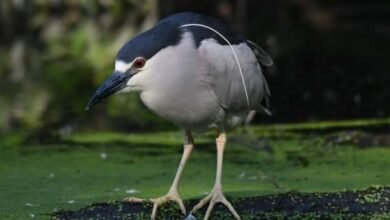
Ospreys are also returning at this time, and I sometimes spot them flying above, talons clutching nesting materials. By mid-April, I may see green herons and black-crowned night herons along the water’s edge, standing among the reeds and sedges and staring intently into the shallows.
Exploring floodplain forests by boat is an incredible reminder of the ecological and economic value of these unique habitats. Large swaths of the Northeast’s floodplains have been cleared for farms – their flat topography and rich soils make them prime agricultural land – but those that are still intact provide important benefits to wildlife and humans.
These sheltered backwaters are essential nesting and feeding grounds for a number of birds, amphibians, and fish, and are home to several rare and uncommon species such as green-dragon, a plant in the same genus as Jack-in-the-pulpit, and the wood turtle, which prefers woods by slow-flowing waters for foraging.
Floodplain forests also store and slow floodwaters, protecting communities downstream. And these habitats filter pollutants from the water and trap them in the soil, improving water quality in adjacent waterways. The slow release of water from floodplain forests prevents riverbank erosion downstream.
As climate change increases precipitation across the Northeast, especially in spring, these natural buffers are critical to restore and protect.
In a few weeks, newer delights will catch my eye, and I’ll put my paddle aside for hiking boots. By then, the water level in floodplain forests will start its slow drop, making navigating by boat a challenge.
By late spring, riverbanks will emerge, and by mid-summer these floodplain forests will be thick with wood nettle and mosquitoes. A mossy water line on the silver maples will be the only reminder of these quiet days of early spring.
NOTE: In spring, waters remain very cold. New York State requires all occupants of boats 21 feet and under to wear a life vest until May 1st. All paddlers should wear cold water protection.
Read more about paddling in New York State.
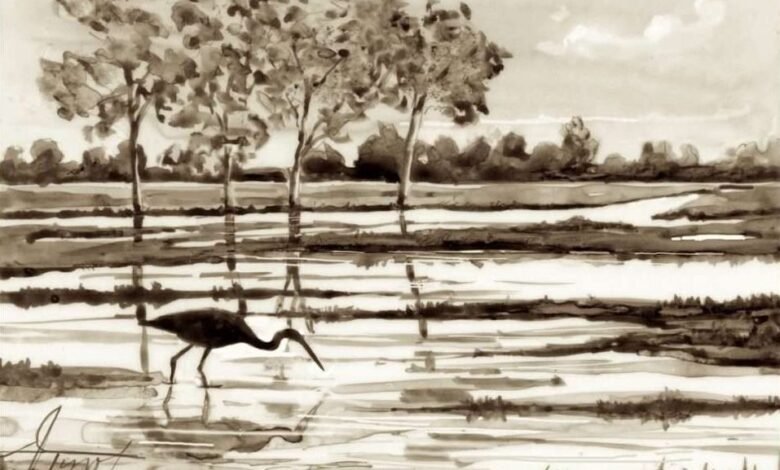
Catherine Wessel is the assistant editor at Northern Woodlands. Illustration by Adelaide Murphy Tyrol. The Outside Story is assigned and edited by Northern Woodlands magazine and sponsored by the Wellborn Ecology Fund of New Hampshire Charitable Foundation: nhcf.org.
Source link