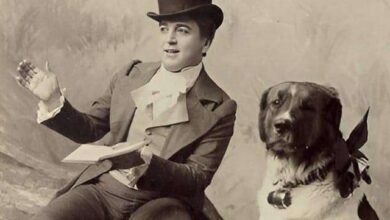
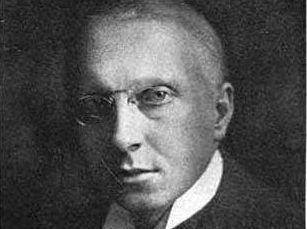
 George Morton Wolfe (1885-1966) was a prolific Buffalo, NY architect who specialized in industrial architecture. Born in 1886 in Middletown, Connecticut, Wolfe spent two years at Hartford Technical High School in Hartford, Connecticut, before settling in Buffalo in 1903.
In the first stage of his career, Wolfe worked as a draftsman in the contracting business of S.H. Woodruff. In 1908, he started his own architectural and engineering practice specializing in “factory, warehouse, and commercial building construction in their many forms.”
 Among his earliest independent works was the Globe Theatre (1913) at 1555 Main Street in Buffalo and the Spanish Revival Circle Arts Theater (1914) at 444 Connecticut Street in Buffalo (later Circle Arts Theatre and now a mosque).
Throughout his career, Wolfe designed factories and other industrial buildings for General Motors, Houde Engineering, Iroquois Gas, Houdaille Industries (in Buffalo and Akron, NY), American Machine & Foundry (in Cheektowaga), Morrison Steel, U.S. Hame Company, Buffalo Weaving and Belting Company, and Augustine Automatic Rotary Engine Company, among many others.
From 1941 to 1958 he also designed several commercial plazas (strip malls), including Sheridan Plaza in Tonawanda; Smith Plaza in Lackawanna‘ Delaware Plaza in Buffalo; and Airport Plaza in Batavia, in Genesee County, NY.
The Amherst Theater on Main Street in Amherst, NY, was a major component of the University Plaza (now mostly demolished) that Wolfe designed in 1942.
 In addition to this work, Wolfe designed houses, offices and other commercial buildings. In 1909, he designed the Henkel Building at 1377 Main Street in Buffalo, the building in which he kept his firm’s office until his retirement in 1963.
The Cold Spring Storage Company Warehouse at 1440 Main Street (recently nominated for State and National Historic Registers) is a rare surviving example of this prolific architect’s early industrial work.
The seven-story reinforced concrete building constructed in 1919 was originally built for a local household storage and moving company. It exemplifies early twentieth century reinforced concrete warehouse construction in Buffalo.
 As a specialized type of “daylight factory,” the warehouse was designed with limited windows to minimize sunlight, which could damage light-sensitive materials stored inside.
G. Morton Wolfe designed the building as an addition to the Cold Spring Storage Company’s 1916 six-story brick warehouse next door at 1432 Main Street, which was demolished in 1967.
In 1938, Wolfe organized the Western New York Society of Architects, the first such professional organization in the region.
When this organization was superseded in 1944 by the Buffalo Western New York chapter of the American Institute of Architects, Wolfe became the chapter’s first president from 1945-1947.
For eight years, beginning in 1949, Wolfe organized and led a volunteer committee of architects and engineers to revise, according to his estimate, about 90% of Buffalo’s building code, which was then more than fifty years old.
He served on various other boards and committees during the later years of his career. Upon his retirement in 1963, his architecture firm at 1377 Main Street was succeeded by Gerald J. Shaw & Associates.
G. Morton Wolfe died in 1966 at the age of eighty.
Read more about architecture in New York State.
This essay is drawn from the Cold Spriong Storage Company Warehouse National Registration Form. You can find the full document, including footnotes, here. John Warren contributed to this essay.
Illustrations, from above: George Morton Wolfe early in his career; The Circle Theatre in Buffalo, ca. 1914; Amherst Theater and University Plaza, in Amherst, NY, 1955; an 1920 advertisement showing the Cold Spring Storage Company’s completed addition.
Source link