Kantemir Balagov made a critical and artistic breakthrough with his second feature, Beanpole, a controlled and symbolic pageant of unresolved trauma and the wintry depths of the Russian soul, shortly before the COVID-19 pandemic. A member of the Circassian ethnic minority from the Caucasian regions near the Black Sea, Balagov spoke out against the Russian invasion of Ukraine in 2022, and relocated to North America shortly thereafter; like many new immigrants to the United States, his assimilation begins at an ethnic restaurant.
Zalya, named for its proprietress (Riley Keough) is an unassuming spot in an ugly building in Newark, New Jersey; harsh lighting bounces off its tile floors, so you know the cuisine is authentic. Zalya’s brother Azik (Barry Keoghan) makes fantastic delens — potato and cheese pancakes which make northern New Jersey’s Circassian diaspora nostalgic for home. Azik is something of a fuckup, per his sister, but he has high hopes for his 16-year-old son Temir (Talha Akdogan), a promising wrestler who credits his victories to his dad’s cooking, but is too shy to make eye contact with the sex worker he’s taken to see as a celebration gift after he wins a tournament.
Get more Little White Lies
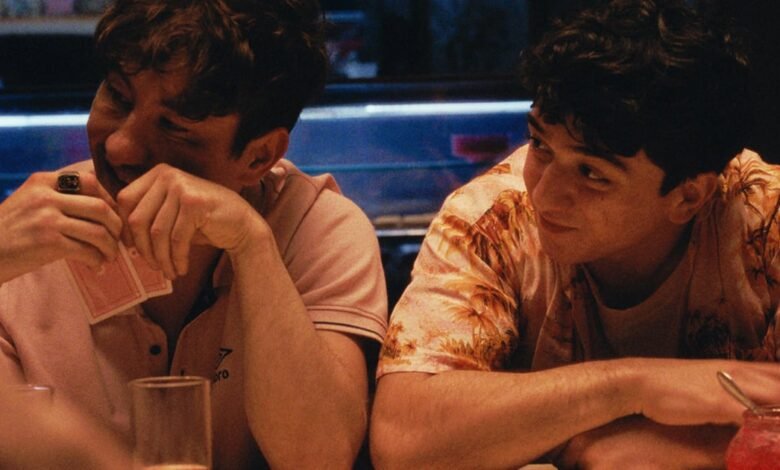
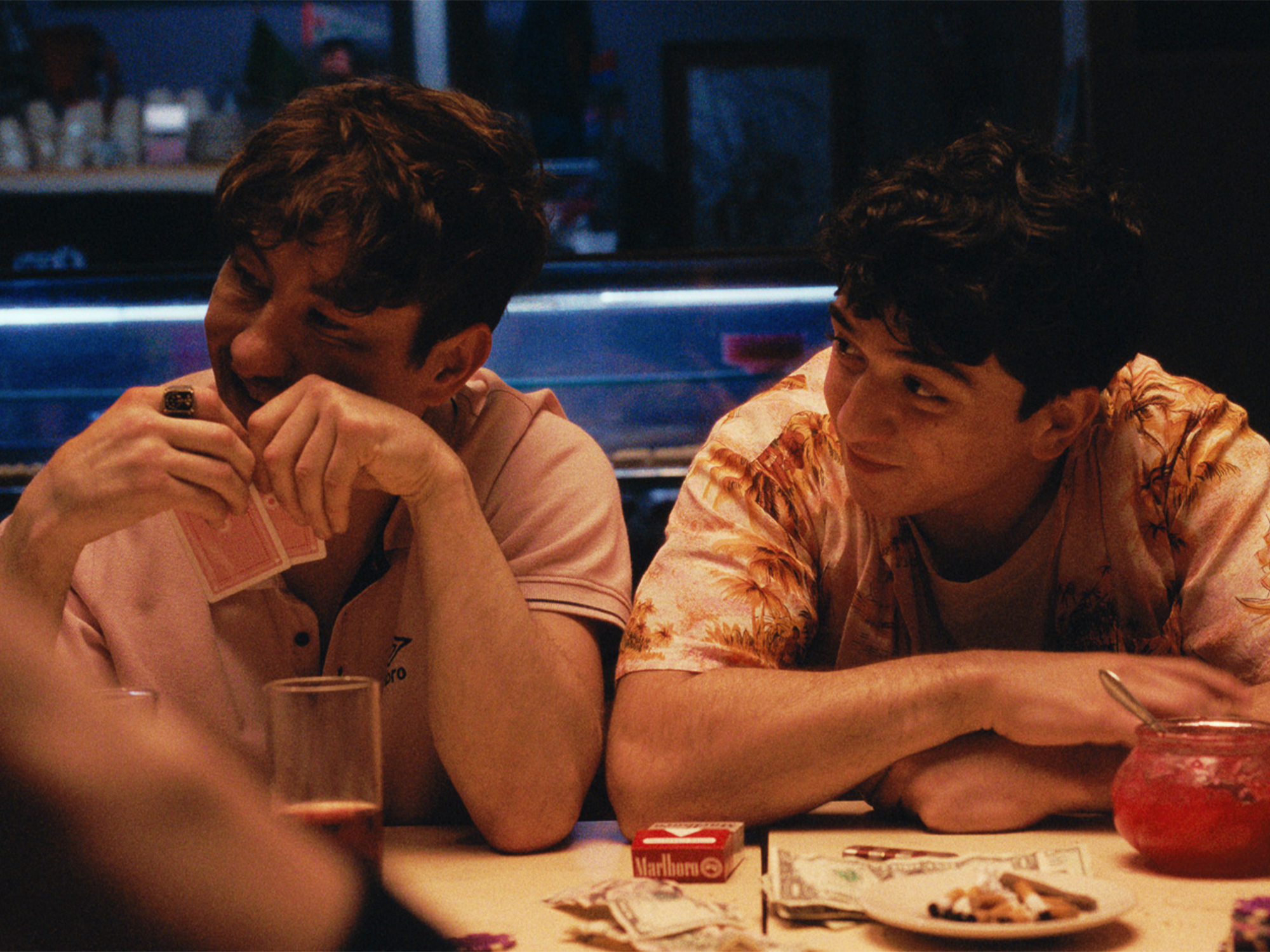
Azik, Temir (nicknamed Pyteh, meaning “little one”, by his father), and their friends are a boisterous clan who stand out for their heightened, primal behavior in ways that feel alternately forced and observant. They talk about things they saw on “the TV” as if naifs from a village that social media hasn’t reached; Keoghan gives Azik a rambunctious physicality, always rolling over and off the furniture. When his best friend Marat (Harry Melling) challenges Pyteh to wrestle, he gets choked unconscious after refusing to tap out — this is a classic trope, and one that Balagov stages with an avid, too-much musicality, mostly in the background of the scene, as chaotic punctuation to expository dialogue, occasionally crashing into focus.
Played by Melling as a less charismatic version of De Niro’s Johnny Boy from Mean Streets, Marat has a grating looseness and get-rich schemes like buying a broken cotton candy machine. Azik, who emigrated to the United States as a teen, is less of an out-and-out lowlife, but has by this point reinvested his remaining hopes in his American-born son. When one impulsive play to demonstrate his ambition to Pyteh backfires, he makes a transparent attempt to save face, only for his own son to call him weak. So he shows off, taking risks, including birdnapping a pelican in an extravagant attempt to impress his frustrated sister.
Remarkably, we have here a second film in which Barry Keoghan plays a young dad who obtains an exotic pet as part of a cunning plan to win a woman’s favor, though Butterfly Jam’s realism is even more stylized than that of Andrea Arnold’s fable Bird. We know from the film’s flash-forward opening that Pyteh’s father will die; the manner in which it happens underlines the film’s themes in heavy black ink, and also makes the clearest point of continuity with Beanpole, which also showcased Balagov’s talent for choreographing throat-catching violence in a single virtuosic take. (Butterfly Jam was shot, and gorgeously lit, by Nickel Boys cinematographer Jomo Fray.) As jostly and handheld as all the film’s wrasslin’ and grapplin’ feels, its inquiry into animal competition and emasculation is rigorously schematic. Muscular, insecure Pyteh wears something pink in every scene, and the narrative contorts psychology into metaphor, forcing Balagov’s characters to speak and behave in a way that, now that they speak the same language as me, seems far more stilted than it did in Beanpole.
Drawing on his own cultural context and working with the Safdie brothers’ street-casting whiz Eleonore Hendricks, Balagov illuminates corners of Newark that food tourists can only guess at. Akdogan, a teenage Kazakh immigrant with no previous film experience, is a find, as is the professional mourner who weeps into a Bluetooth microphone connected to a karaōke speaker. Every time the film begins to seem fatally overdetermined, Balagov doubles down and produces a moment of absurd grace. The film’s most dubious elements – the pelican and the pink color scheme – pay off in a knowingly absurd coup de cinema, and the final scene, graced as it is by an apt and hilarious cameo, blesses Butterfly Jam with a dusting of movie magic, and elevates it from the everyday American realm where it struggles to gain purchase.