
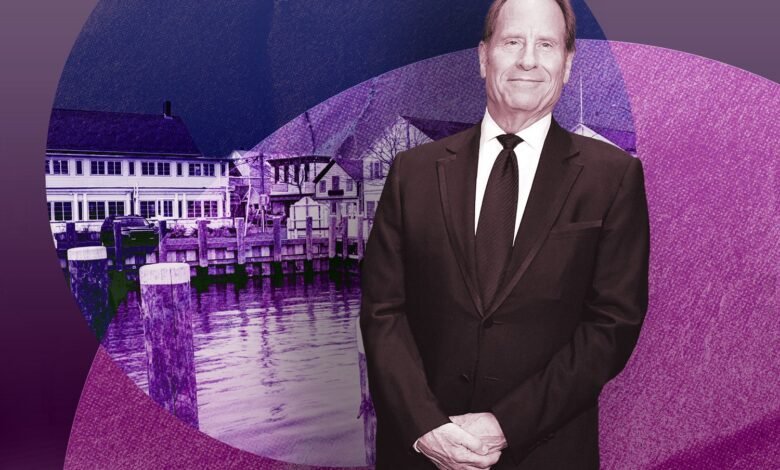
A longtime operator in New York City commercial real estate has found his next frontier: Greenport, a village near the Eastern tip of Long Island’s North Fork.
Though the North Fork’s residential market shot to record levels since New Yorkers fled the city in 2020, growth in the commercial scene has been less steady, leaving some retail properties vacant or financially troubled.
To remedy that, Kent Swig, through his commercial firm Helmsley Spear, is working for the village’s Business Improvement District on an economic development plan rooted in the tourist spot’s underutilized real estate.
Swig said he’s focusing on marketing the village’s storefronts to the right mix of tenants, redeveloping some properties and energizing the waterfront, near where the ferry from Shelter Island docks. The relationship between Helmsley Spear and Greenport is advisory, according to Rich Vanderburgh, president of Greenport’s business improvement district (BID).
“The firm brings great expertise in retail leasing, market analysis, and representation of tenants and owners, that will accelerate occupancy in vibrant Downtown Greenport,” he said.
Swig, whose own Hamptons homebase is Water Mill on the South Fork, has spent much of his career at the highest levels of the Manhattan development world and still serves as co-chairman of Terra Holdings, Swig Equities and the Swig Company.
Over 25 years, Swig developed 4 million square feet of commercial office space and more than 1.5 million square feet of Manhattan residential, according to the website of his Swig Equities.
His experience includes a series of well-documented ups and downs, including a buying spree just before the 2008 financial crisis that ended in him losing key properties to lenders. Swig bought Helmsley Spear in 2007. Outside the firm, he is on the board of directors of the Downtown Alliance and also started the neighborhood group that later became the Times Square BID.
In his new gig with the village, the third-generation real estate investor has a range of issues to confront, from seasonality to parking shortages, as well as other growing pains that have hit the main drag of a region where the median sale price rose to nearly $1 million in the first quarter. That’s 6 percent more than a year earlier, according to appraiser Jonathan Miller’s data. Miller’s data also showed the share of deals above $2 million reached a record high during the same period.
Creative solutions
Greenport has previously tried to manage its growth: In 2022, the village’s trustees enacted a development moratorium that lasted nine months, while officials crafted a rezoning intended to add parking, permit entertainment and allow retail as of right in waterfront commercial areas. Southold, the overarching municipality of Greenport, is also working on a comprehensive zoning reform.
Swig’s plan for Greenport isn’t just about picking out operators to add attractive stores for the summer. He says he is negotiating deals, along with navigating tax and renovation details so that they’ll get signed quickly and expects to announce new projects and tenants before Memorial Day, continuing through the summer.
“Landlords have to understand if they want tenants there, you have to be a tenant-oriented person,” he said. “If you overcharge, it won’t work well. Conversely, a tenant needs to see that a landlord needs to make money.”
The challenge of seasonality — even at a time when fall, winter and spring bring more visitors than they used to — can be beaten with smart lease terms, like staggering rents so they’re higher in summer than winter, or by working on economic development projects that increase traffic in shoulder months.
And, in some cases, he’s in the tough position of helping commercial owners who overpaid during the pandemic boom realize they’ll get less rent than they hoped.
“People paid a dear price for their property,” he said, “And they aren’t willing to lower their rent to the marketplace.” He tells them: “You’re better off renting and getting some money back.” A few properties are in probate after an owner’s death, and Swig is trying to fill them up even while they’re in a state of flux.
There’s never enough parking for when visitors swell, and Helmsley Spear is trying to add more by persuading Monday-to-Friday businesses to relinquish private parking spots on the weekends.
Swig believes the retail mix can go beyond trinket shops and cafes, arguing that tenants from art, medicine and education could fit in (and not compete with stalwarts) and trying to attract them.
Every tenant counts.
“In New York City, [a property in probate] happens a million times over, but it has less impact because it’s a big city,” he said. “If you have one or two places in Greenport, it stands out.”
Read more

Kent Swig sued over alleged default on Tribeca redev