
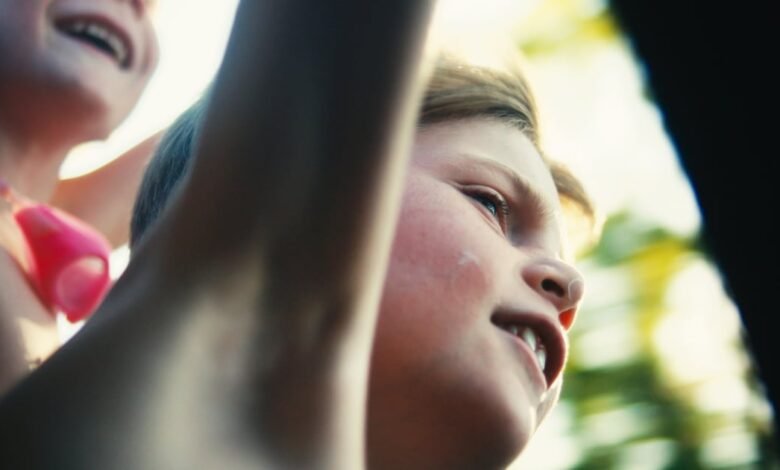

Alexander Murphy’s Tin Castle follows the O’Reilly family living in Tipperary, Ireland – the “tin castle” in question is their detached mobile home that lies on an illegal halting site. The O’Reillys – Pa and Lisa and their 10 children – are Irish travellers, and we get an insight into their life and how incongruous it can be with the modern world. Irish people but especially Irish Travellers are often given one-note stereotypes, portrayed as drunk, loud, and violent criminals. Murphy’s documentary shucks any such preconceptions and lends a tender lens to a close family unit who want to remain true to the only life and culture they’ve ever known.
Murphy’s film follows the family from cold misty winter nights to euphoric summer days. Aged between 16 and four, the O’Reilly brood spend any free time outside if the weather permits it, happiest amongst their siblings as forging friendships with non-travellers has never been easy. Pa is the stoic, pensive father who says little and relies on his firm but warm wife Lisa for all life admin. When their generator breaks, their mobile home starts to show signs of disrepair, and Pa faces another criminal conviction and possible jail time, the O’Reillys are forced to choose between the convenience of modern living and the sacred practices of their culture.
Get more Little White Lies
While Tin Castle is forthright in its empathy and sympathy for the O’Reillys, who are living in what a lot of people would consider squalor sharing one portable toilet between the 12 of them, relying on an old, unpredictable generator to keep warm during freezing nights. But Murphy also makes sure to include the more unseemly details of Traveller life such as riding horses at great speed on concrete public roads and Pa’s several criminal convictions. The film nevertheless remains tender towards the family, who feel the world has never, and will never be, built for them. The young men aspire to be on welfare because they have accepted that no one will hire them; the young girls only dream of getting married, and none of them believe they can socialise with those outside their community. Murphy does not turn the O’Reillys into gallant heroes fighting against prejudice, but illuminates how inhospitable the world is to the beliefs and practices of their community.
With 10 young children in the main cast, the chaos and energy of the O’Reillys rarely lets up. There are some breathtaking sequences of the children running through the Irish countryside, as Murphy transforms the green and yellow fields into their sprawling kingdom. The stilling presence of Murphy’s camera firmly guides us through the tiny caravan, ensuring that the screaming and roaring children don’t distract us from what we should be focusing on.
There are many shots of a near-catatonic Pa, who suffers from depression and anxiety, staring blankly into the abyss while his children vie for his attention. The repressed Irish father has long been depicted as a volatile drunk, but Murphy avoids any such caricatures. As an Irish person, I found it incredibly refreshing to see a film about Irish life that wasn’t centred around the pub or drinking. Pa resembles so many soft, gentle Irish men who are devoted to their family but whose reluctant approach to addressing mental health has left them emotionally reticent. Viewers from outside the community will surely see something of themselves and their family in Tin Castle. With there being a long history of tensions between travellers and non-travellers in rural Ireland, Alexander Murphy’s documentary is an essential piece of filmmaking that succeeds in generating empathy for those leading a way of life that seems so unfamiliar to ours.