
This story gives you a peek at the content coming to our new platform, TRD Policy Pro. Sign up to get early access here.
Hey there, let’s get into today’s news at the intersection of policy and real estate:
- The real estate lobby and tenant advocates have formed an unlikely alliance to pressure the Mamdani administration to expand CityFHEPS.
- It’s crunch time for Albany lawmakers to advance and amend bills to get them over the finish line. That includes the REST Act.
- A bill requiring rent-stabilized landlords to let tenant-retained experts inspect building improvements cited in rent-hike applications has gained momentum.
- City building owners are having another utility increase this year: their water bill.
In this edition we mention: President and CEO of WIN Christine Quinn, state Sen. Brian Kavanagh, Assembly member, Sarahana Shrestha, state Sen. Andrew Gounardes, state Sen. Kevin Parker, Assembly member Linda Rosenthal and others.
We Heard
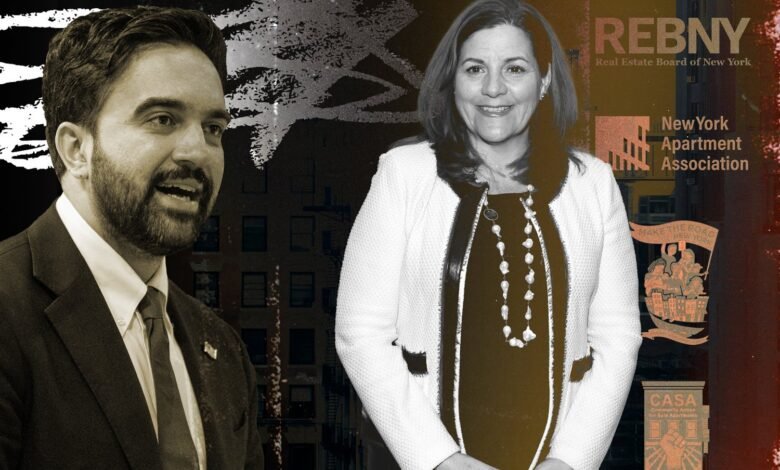
- Unlikely allies: Real estate trade groups and advocates for tenants and the unhoused don’t often find themselves on the same side of an issue. But the two sides have formed an unlikely alliance to press the Mamdani administration to drop its lawsuit over the city’s housing voucher program and broaden the benefit’s reach — a move the mayor pledged to support on the campaign trail but has since resisted amid pressure to curb spending and close the city’s budget gap. The CityFHEPS housing voucher launched in 2018 and covers portions of rent for New Yorkers who are or in danger of becoming homeless. On Monday, Women In Need, the city’s largest provider of shelter for families with children, delivered a letter exclusively obtained by The Real Deal to the mayor, signed by 28 organizations, calling on Mayor Zohran Mamdani to “deliver on your campaign promise of making New York affordable for all.” The signatories form an unusual coalition, bringing together real estate industry groups, supportive housing providers, homeless services organizations and tenant advocates. Among them are the Real Estate Board of New York, the New York Apartment Association, the Supportive Housing Network of New York, HELP USA, Make the Road New York and Community Action for Safe Apartments. “Though we do not always agree, today the undersigned groups stand united,” the letter states. The missive points to the CityFHEPS program as a “pillar of New York City’s housing infrastructure” by providing operating subsidies for new development, providing reliable rent payments for landlords and injecting dollars into the city’s aging multi-family buildings that can finance upgrades. “Quite simply, without CityFHEPS, many of our city’s critical affordable housing projects would not exist; others risk failing without,” the letter adds. In March, Mamdani backed away from a campaign pledge to implement a 2023 expansion of the CityFHEPS voucher program that former Mayor Eric Adams had opposed. While running for office, Mamdani vowed to drop the city’s legal challenge to the expansion. Instead, his administration has continued the litigation. That has put him at odds with City Council Speaker Julie Menin, who has urged the city to abandon the lawsuit, as well as tenant advocates, homeless services providers and landlord groups that view the program as a key source of rental assistance for low-income New Yorkers. Mamdani has also faced pressure from Gov. Kathy Hochul and budget watchdogs to curb the program’s rapidly growing costs. CityFHEPS spending has nearly tripled over the past three years and is projected to reach $1.7 billion this fiscal year, according to the Citizens Budget Commission. The mayor’s executive budget includes “cost containment” strategies for the program by implementing administrative reforms, while maintaining, but not expanding, the vouchers that currently house approximately 150,000 New Yorkers in more than 65,000 apartments across the five boroughs. “We really wanted to convey that this is an issue that impacts a broad swath of folks and numerous different industries,” said Christine Quinn, president and CEO of WIN. “When people are thinking about what should happen as it relates to settling this court case, they need to keep that in mind and not relegate this to a fringe issue.” Mayoral spokesperson Matt Rauschenbach called CityFHEPS a critical tool to prevent homelessness and that the city is “working to ensure the program is fiscally sound and sustainable for the long term.” He added that the city is focused on building more affordable housing, releasing its Block By Block housing agenda last week with the goal of building 200,000 income-restricted apartments over the next decade. “Ending street homelessness and ensuring every New Yorker has a safe, stable place to live requires all of us working together, and this administration is committed to partnering with anyone who shares that mission,” said Rauschenbach.
- Crunch time: Albany’s Legislative session is in the final stretch. State lawmakers are set to adjourn Thursday evening, kicking off the annual end-of-session scramble as legislators race to move hundreds of bills before the clock runs out. That is especially true this year since budget negotiations ate up lawmakers’ time. The final days of session are when bills can suddenly pick up momentum and when last-minute amendments may slip under the radar. For instance, one bill the real estate industry is watching closely, the Rent Emergency Stabilization for Tenants (REST) Act, received a series of technical revisions Monday. Sponsored by state Sen. Brian Kavanagh and Assembly member Sarahana Shrestha, the measure would make it easier for municipalities outside of New York City to adopt rent stabilization. The amendments would reduce the hearing requirement to at least one public session, give local officials greater flexibility in the data used to justify rent regulation and standardize the process for both establishing and ending rent regulation. The bill has gained traction in recent weeks and continues to advance through committees in both chambers. It also earned two more sponsors on Monday: Brooklyn State Senators Andrew Gounardes and Kevin Parker. Kavanagh previously told TRD that the measure is among his top priorities this session. We’ll continue to track the bills with the biggest implications for the real estate industry as the session draws to a close.
- Access granted: Another bill that has quietly built momentum in the session’s final days would require rent-stabilized landlords to allow an engineer or architect retained by tenants to inspect building improvements used to justify rent increase applications. To obtain a major capital improvement rent increase, landlords must submit an application to the Division of Housing and Community Renewal detailing the work completed. The agency then notifies tenants, who are given an opportunity to review the filing and challenge any claims before a rent increase is approved. Current law allows landlords to deny access to engineers or architects hired by the tenant. The bill would change that, requiring access to their properties and enabling tenants to use reports prepared by their experts to object to proposed rent increases. The Senate passed the bill on Thursday, which is sponsored by state Sen. Parker and Assembly housing committee chair Linda Rosenthal. The bill was previously on the Assembly floor, where it could have been brought to a vote, but it’s now back in the chamber’s committee on codes. State lawmakers have introduced versions of this bill since 2009, but this year could be the year it finally passes.
- Water levels rising: New York City property owners are facing another utility cost increase this year. The New York City Water Board has proposed a 6 percent rate hike, raising water and sewer bills for multifamily landlords and homeowners across the five boroughs. While the increase is steeper than last year’s 3.7 percent bump, it comes in below the 7 percent increase initially projected thanks to stronger-than-expected revenue collections. It’s also less severe than the 8.5 percent jump approved in 2024. For multifamily properties, the increase is expected to add about $5 a month, or $55 annually, to the average bill. Single-family homeowners would see bills rise by roughly $6 a month, or $73 a year. The additional revenue will help fund water and sewer infrastructure upgrades, system maintenance and debt service costs. Property owners will have a chance to weigh in before the increase takes effect on July 1. The Water Board is holding public hearings in every borough this week, giving landlords and homeowners an opportunity to learn more about the proposal and voice any concerns.
Have a tip or feedback? Reach me at caroline.spivack@therealdeal.com.
Bill Tracker
| Bill Number | Lead Sponsor(s) | Summary | Committee | Last Action Date / Status |
| S4659/A4877 | State Sen. Brian Kavanagh and Assembly member Sarahana Shrestha | Would make it easier for localities to enact rent regulation outside of New York City | Referred to Senate finance committee, Assembly housing committee | June 1 |
| S4099/A1886 | State Sen. Kevin Parker and Assembly member Linda Rosenthal | Would require rent-stabilized landlords to allow an expert retained by tenants to inspect building improvements | Passed the Senate, referred to the codes committee in the chamber | May 28 |
The Agenda
On Tuesday at 10 a.m. the New York City Council’s Committee on Housing and Buildings will hold a hearing on the city’s executive budget for the Department of Housing Preservation and Development and the New York City Housing Authority. More here for the details.
On Wednesday at 6:30 p.m. the Mamdani administration will hold a co-called NYCHA in Your Neighborhood forum for public housing tenants to share their concerns with city officials at the Van Dyke Community Center in Brooklyn. More here on registration and where to go.
On Thursday, at 5 p.m. the city’s Rent Guidelines Board will hold a meeting in Queens to gather feedback as it considers whether to increase or freeze rents for tenants living in stabilized apartments. More on the event here.
The Catch-Up
The Adams administration put Queens homeowner Sadé Singh at the center of its ADU push. Now, she’s largely been sidelined from the very program she helped promote, reports The City Reporter.
The Trump administration plans to drastically change how it funds the nation’s largest homeless assistance program, a move that could push thousands of formerly homeless New Yorkers who currently have a place to live back into the city’s shelters and streets, writes Gothamist.
New York residents could legally use plug-in solar to lower their electricity bills if Hochul signs the so-called SUNNY Act that the Legislature passed Thursday, reports Politico.
The Kicker
“Why don’t you just stop for a second and focus on keeping the good things going?” said Matthew Hiltzik, a board member of the Economic Development Corporation, who is confused by the agency’s lack of leadership and direction under the Mamdani administration.
Read more

The Daily Dirt: Voucher wars

The Daily Dirt: Rent subsidy grew, yet homelessness did too

PolicyPro: Upstate rent reg bill builds momentum, COPA secures Council support