
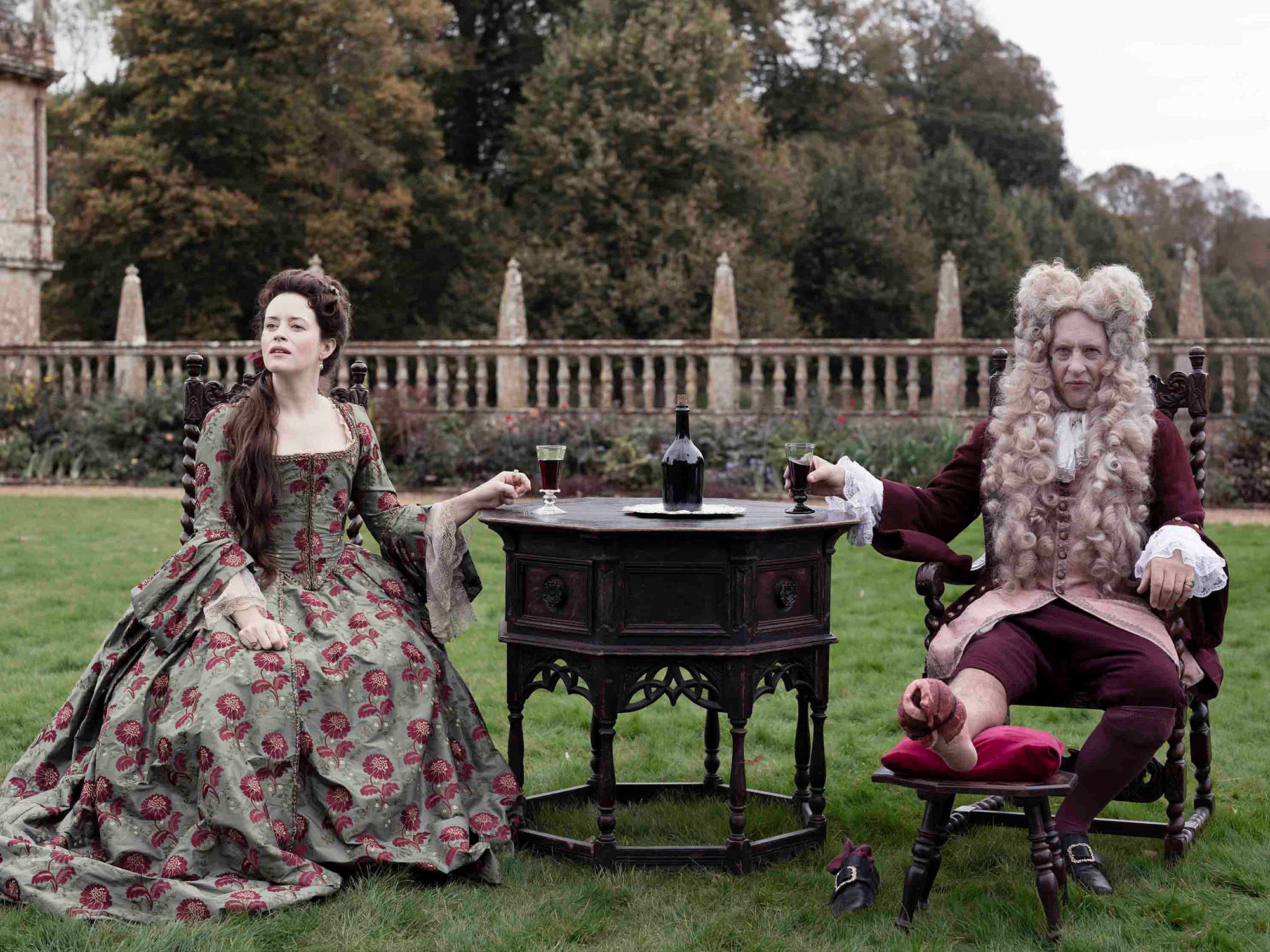
The rich are revolting in Savage House, Peter Glanz’s powdered-wig satire of aristocratic rot that works best when it stops trying to be funny and allows the decay seep in. Set in 18th-century England against the backdrop of the Jacobite uprising and a pox epidemic, the film follows Sir Chauncey Savage (Richard E Grant) and Lady Savage (Claire Foy), a debt-ridden upper class couple clinging to the remains of their wealth and status. Grant plays Chauncey as a preening, desperate little man, all twitchy smiles, and delusion, while Foy gives Lady Savage an icier comic poise, suggesting someone trapped by the absurd rituals of her status.
Glanz clearly intends the period setting as a funhouse mirror for the present, a world of inherited privilege and political hysteria, where people will do almost anything to climb the social ladder. It gestures towards a story of upward mobility and class conflict, but never quite turns its scheming servants and ruined nobles into a coherent portrait of a recognisable society. There is still a Hogarthian pleasure in its attention to filth and finery, the candlelit rooms and heavily made-up faces showing the true nature of the decaying interiors of both the characters’ minds and the household itself.
Get more Little White Lies
The film is at its best when its grotesque comedy is sharpened by something darker. A shaving scene cuts neatly to the hacking of a pig’s head, while narration gives way to a pile of rejection letters sliced open like wounds. Later, the image of Chauncey walking back towards the house, fires blazing on either side and orchestral notes blaring out, has an infernal grandeur to it. These moments suggest a stranger, nastier film trying to claw its way out from beneath the engineered and obvious punchlines.
The often one note-film is partly saved by the performances, particularly when Grant plays Chauncey as less rake than a creepy, fragile impostor, shown best when practising his smile in the mirror and clearly falling apart. For all its excess, Savage House is most persuasive when it stops laughing at decadence and starts treating it as a sickness.