

Coming out of the pandemic era, a national anti-NYC hate narrative has been steady and quite pronounced. I could see this hate in the social media comments about my observations on Florida’s property tax proposal. Wow. It reminded me of a luncheon I attended a few months ago, where I struck up a conversation with an editor at a well-known tabloid who described their job as “covering any story that chronicles the exodus from New York City.” Obviously, as a reader here, you know I harbor a pro-NYC bias (backed by data), so it was disheartening to hear, especially when there is so much good going on right now (Knicks in five!).
Wall Street is no longer NYC’s one-trick pony
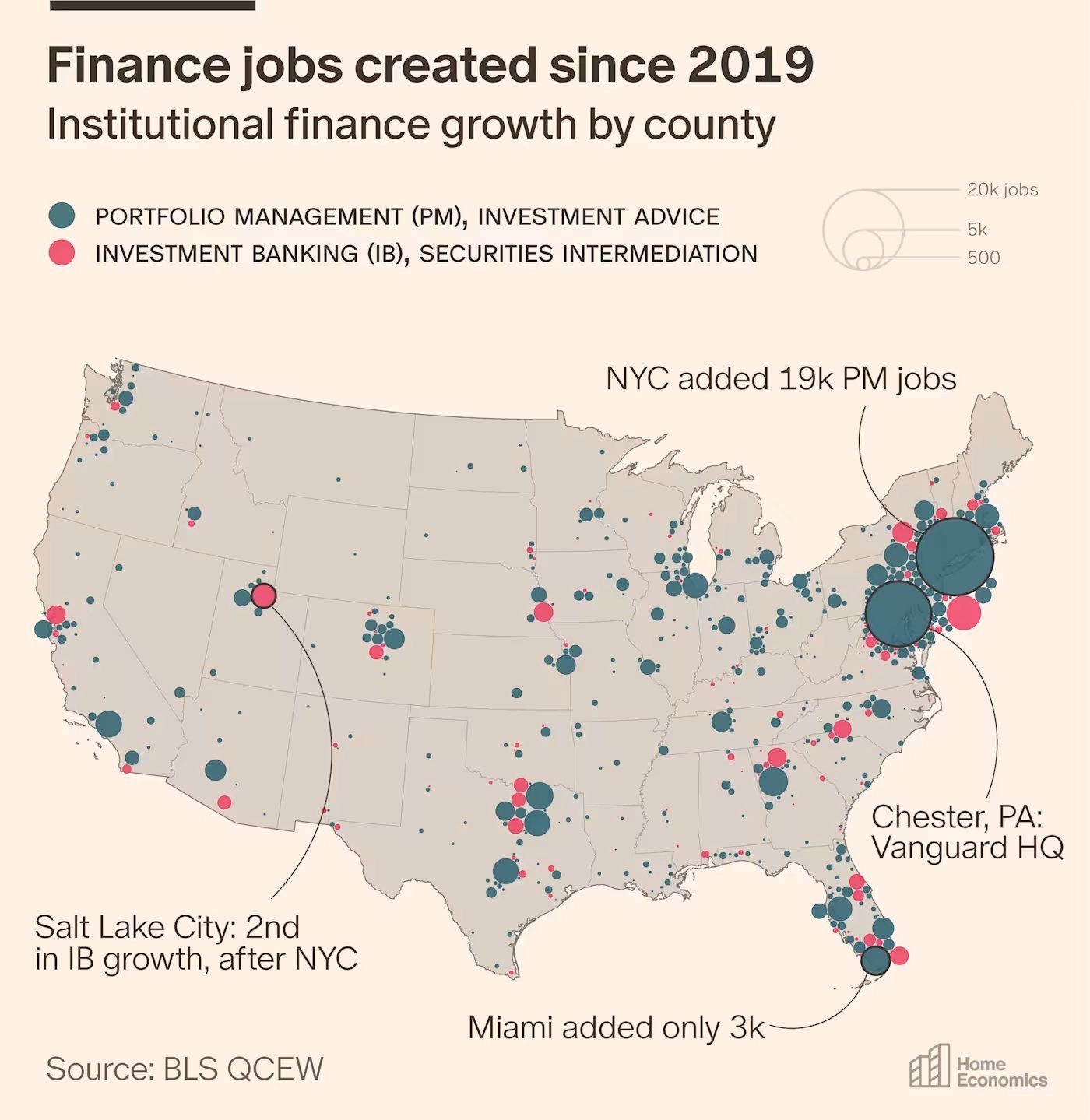
NYC got the lion’s share of new finance jobs since 2019, seeing 19,000 more versus Miami’s 3,000, but many of the Miami jobs came at NYC’s expense. The following chart, created by Aziz Sunderji for the FT, is spectacular. I subscribe to his Home Economics Substack, where he creates some of the best charts in the economic space.
Most of us in the real estate space seem to underappreciate just how big the tech sector has become. There are more NYC private-sector tech employees than on Wall Street, accounting for 9 percent of NYC’s wages in the economy, versus 20 percent for Wall Street. While Wall Street employees make 2.5 times the average tech sector wage, tech workers make 3.4 times the private sector average wage of $86,300. Both tech and Wall Street are vital to the NYC economy, and tech has been a pleasant high-wage addition over the past decade.

How old are these NYC employees and where do they work?
Finance is roughly 2.4 years older than tech and carries a meaningfully larger 55+ tail. This reflects deeper career ladders and greater concentration of seniority in Wealth Management and Private Banking.
Tech runs younger, with the youngest median age (41.2 years) and the largest population segment (28.2 percent), the largest of any major industry for 25–34-year-olds. Tech:NYC’s 2025 Snapshot reports that roughly 490,000 recent college graduates moved to NYC between 2021 and 2024, with tech as the leading destination, lowering the average age.
Partnership for NYC’s March 2025 RTO survey shows 57 percent of Manhattan office workers in their workplace on an average weekday (76 percent of pre-pandemic levels), with Financial Services at 62 percent. About 69 percent of NYC employers maintain hybrid policies, and 25 percent plan to increase office requirements in the next 12 months. NYC office visitation per Placer.ai data exceeded 2019 levels by 1.3 percent in July 2025, making it the first major U.S. city to see an increase after the pandemic.
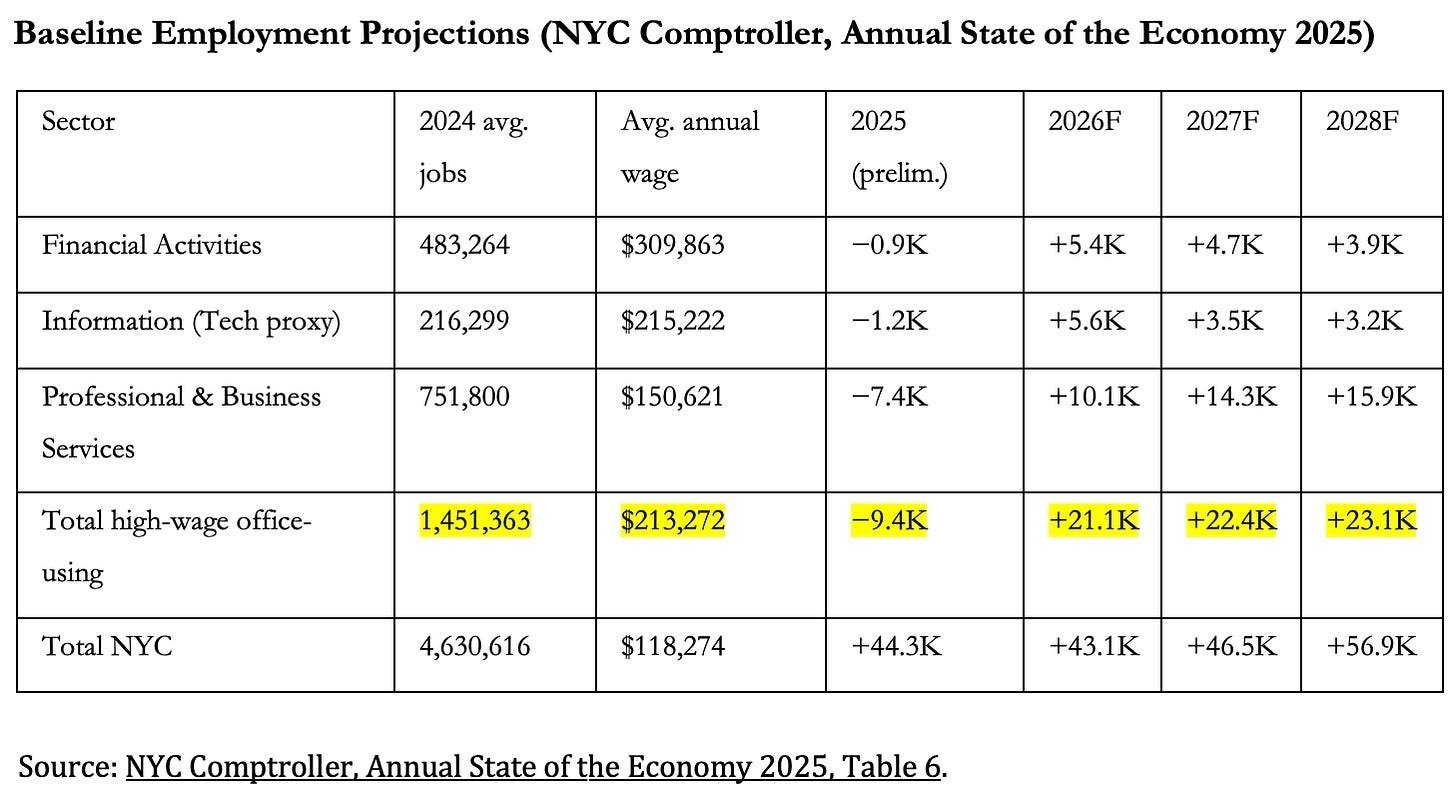
Using the NYC Comptroller’s data, the outlook for high-wage office employment is rising.
Final thoughts
The “NYC decline” narrative appears increasingly disconnected from reality, as the city’s economy is not shrinking but evolving into a more diversified, younger and tech-driven mix alongside finance. Rather than replacing Wall Street, tech is reinforcing overall high-wage job growth, while the rebound in office activity shows that the benefits of density still matter. For housing, this indicates continued demand, especially among higher-income and younger workers, supporting both rental and sales markets, which remain active.
The actual final thought — Sometimes the best seats are the riskiest seats!
Read more Housing Notes columns and sign up for email newsletters here.
Read more

The Daily Dirt: Is AI the office market’s best friend or biggest threat?