You’re currently enjoying free access to this subscriber-only newsletter. If you find it valuable and want it delivered to your inbox every week, subscribe to TRD Data.
Welcome to The Data Drop by TRD Data, a weekly look at the numbers shaping real estate.
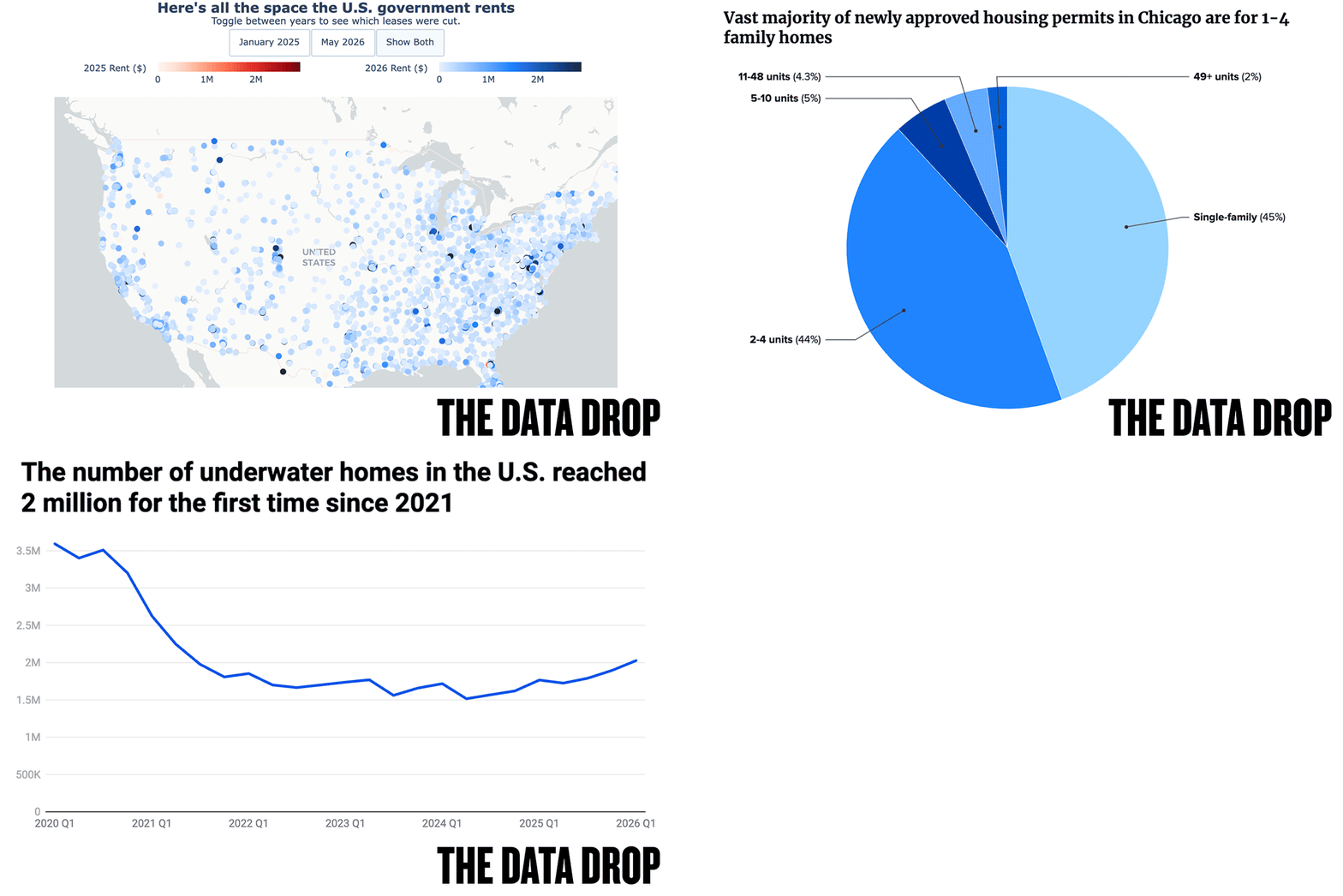
This week, we revisited a question we first explored last year: What happened to the federal office leases targeted by the Department of Government Efficiency, or DOGE?
Cost-cutting has been a centerpiece of President Donald Trump’s second term. But it’s been about 18 months since he was inaugurated, and the federal government’s rent bill has barely budged. Actually, it inched up by 0.5 percent, when analyzing leases managed by the General Services Administration.
DOGE initially claimed more than $144 million in lease-related savings through hundreds of planned terminations. But that figure was always a drop in the bucket compared to the billions in rent the government pays every year. In the end, the number of leases DOGE helped eliminate came in far below those early ambitions.
Meanwhile, the government moved forward with hundreds of other leases. Experts say that’s not surprising: federal leases take time to negotiate and they’re not easy to unwind. More broadly, the government appears to be taking a measured approach to evaluating its real estate portfolio.
Read the full story to get the full breakdown, and explore our map to see where the federal government currently leases space, and which properties have been cut.
Here’s what else TRD Data covered this week:
📉Sinking in debt: Number of underwater homes in the US reached 2M
The number of homes that have outstanding mortgages that are at least 25 percent higher than their market value is climbing.
In the first quarter, the number of these “underwater” properties passed 2 million for the first time since 2021, representing a 15 percent yearly increase, according to research firm Attom, which said the surge stemmed from slowing home-price growth and elevated borrowing costs.
Should we panic? Not quite. One industry expert said this is unlikely to become a bigger issue and represents a relatively small share of homeowners. Plus, over time, home prices tend to recover.
Subscribe to TRD Data to unlock this content
🏠Chicago housing approvals on track to increase this year
More housing is on the way in Chicago, even as Cook County has the highest number of properties with foreclosure filings.
The city approved 346 residential permits in the first half of the year, which will bring more than 1,800 new units to the Windy City, according to an analysis by TRD Data. Both permits and units are up year over year.
Most of the units are for single-family or two- to four-family homes, but the largest project underway is for a 199-unit apartment complex in the West Loop.
Meanwhile, in March and April, Cook County lenders filed 1,633 foreclosure lawsuits, according to another analysis of public records by The Real Deal. The value of the mortgages in the suits totals $482.7 million, with the distress concentrated at the lower end of the market.
The findings come as Cook County had the most properties with foreclosure filings than any other county in the country, according to an analysis by research firm Attom. Chicago also ranked third, among markets with populations of at least 200,000, for foreclosure starts during the same period.
Why it matters: Housing affordability is a key issue in Chicago, where the construction market has stalled over the past year because of high interest rates and a sluggish investment environment. More homes just may put a dent in the city’s affordability crisis.
Subscribe to TRD Data to unlock this content
🗣️ ICYMI
Need an explanation for the endless parade of mega-mansions, gut renovations and luxury cars? Jonathan Miller traces it back to one powerful force: the post-pandemic surge in household wealth. While Americans broadly got richer, the biggest gains went to the ultra wealthy, helping reshape expectations in high-end real estate.
💸Big Deals
The top NYC sales of the week
🏆 Commercial: The biggest commercial sale to hit records was for the residential and retail units at 7 Dey Street in the Financial District for $222.6 million. The building stands 34 stories tall with about 260,000 square feet. The buyer was GO Residential. The seller was SL Green Realty, who will retain the office space in the building.
🏆 Residential: The top home sale to hit records in New York was in Lincoln Square at 15 Central Park West for $21 million. The seller was Olinville Road LLC; the buyer was DG8B LLC. The four-bedroom, four-and-a-half bathroom condo spans about 3,500 square feet. The home last sold in 2018 for $21.5 million. The Mercedes Berk Team with Engel & Völkers handled the listing.
🧠Stat of the Week: $850 million
The final price tag for the construction of the Obama Presidential Center in Chicago, opening this weekend, is approaching $1 billion. That’s almost three times its original projected cost.
Thoughts? Questions? What would you like to see us cover? Send us a message at mary.diduch@therealdeal.com.