
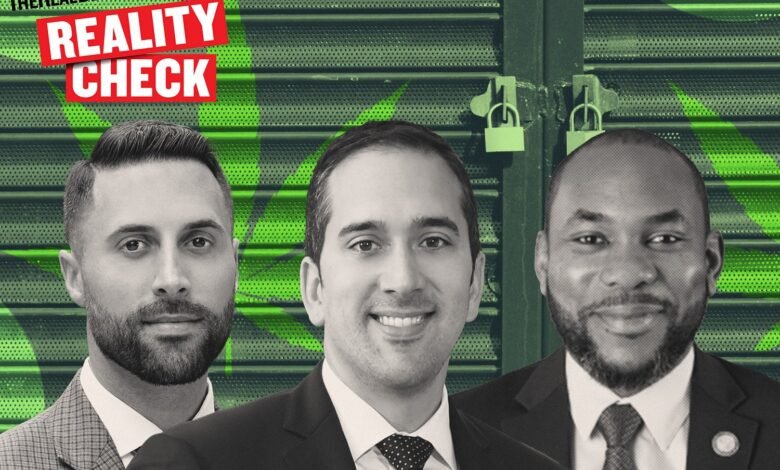
When New York enacted a law to create a legal cannabis industry, it took nearly two years to set it up. The first legit dispensary didn’t open until December 2022, and things continued to move like molasses.
Aggressive entrepreneurs rushed into the void. Smoke shops popped up across New York City, with many of them selling cannabis illegally — confident that no one would stop them.
For a while, no one did. After all, weed was legal, right? Cops turned their attention to more serious matters.
But complaints poured in from elected officials and from investors trying to launch legal dispensaries under the state’s clunky framework. Unauthorized sellers were undercutting their business.
The Adams administration responded in May 2024 by raiding and padlocking stores illegally selling cannabis. More than 1,400 have since been closed.
This was a big problem for landlords leasing that retail space. The shuttered stores stopped paying rent and owners couldn’t even get inside, let alone put in a new tenant.
Elected officials were not sympathetic, believing — absurdly in most cases — that commercial owners knew or should have known their tenants would engage in illegal behavior. The city even sued some East Village owners.
Landlords were presumed guilty by the City Council, which passed a law to fine them if their tenants proved to be illegal cannabis sellers — $5,000 for the first offense and $10,000 for each one after that.
State lawmakers got in on the act, forcing landlords to begin eviction proceedings within five days’ notice of a tenant violating cannabis rules. Fines were set at triple whatever the rent was during the period of illegal activity.
“The agency makes the determination, but the statute puts the burden on the landlord to bring the case and bear the cost,” said Rosenberg & Estis attorney Ariel Bresky.
The state law even authorized property liens as part of the cannabis crackdown, putting owners’ mortgages at risk.
The press conferences about padlocked smoke shops have now given way to the dirty work of reclaiming retail space and rent arrears.
Bresky and colleague Devin Kosar represented a landlord who got the five-day notice from state investigators after the Office of Cannabis Management ruled a tenant in violation.
“Our client never engaged in the [illegal] conduct, but still had to prosecute its own tenant,” Bresky said.
Shut-down cannabis sellers often refuse to give back the keys. In Bresky’s case, the owner and tenant could not work things out, so they went to trial. The owner eventually evicted the tenant and won a judgment.
But how will they collect?
Bresky and Kosar froze the tenant’s and guarantor’s bank accounts and are working with the sheriff to recover whatever inventory is left. “We have served restraining notices upon the judgment debtors’ bank accounts and personal property, including the remaining inventory, and are actively pursuing levies against those assets,” they said in a statement.
Collecting on personal guarantees is challenging. Confiscating the bongs and display cases won’t go very far in covering the lost rent and legal fees. And the store’s most valuable products — the cannabis and hemp — are out of reach. They were seized by the state.
Read more

Cannabis chaos: Padlocks, bureaucracy plague smoke shops’ landlords

Manocherian Brothers first to give New Yorkers a legal high

What marijuana cheating scandal says about housing crisis