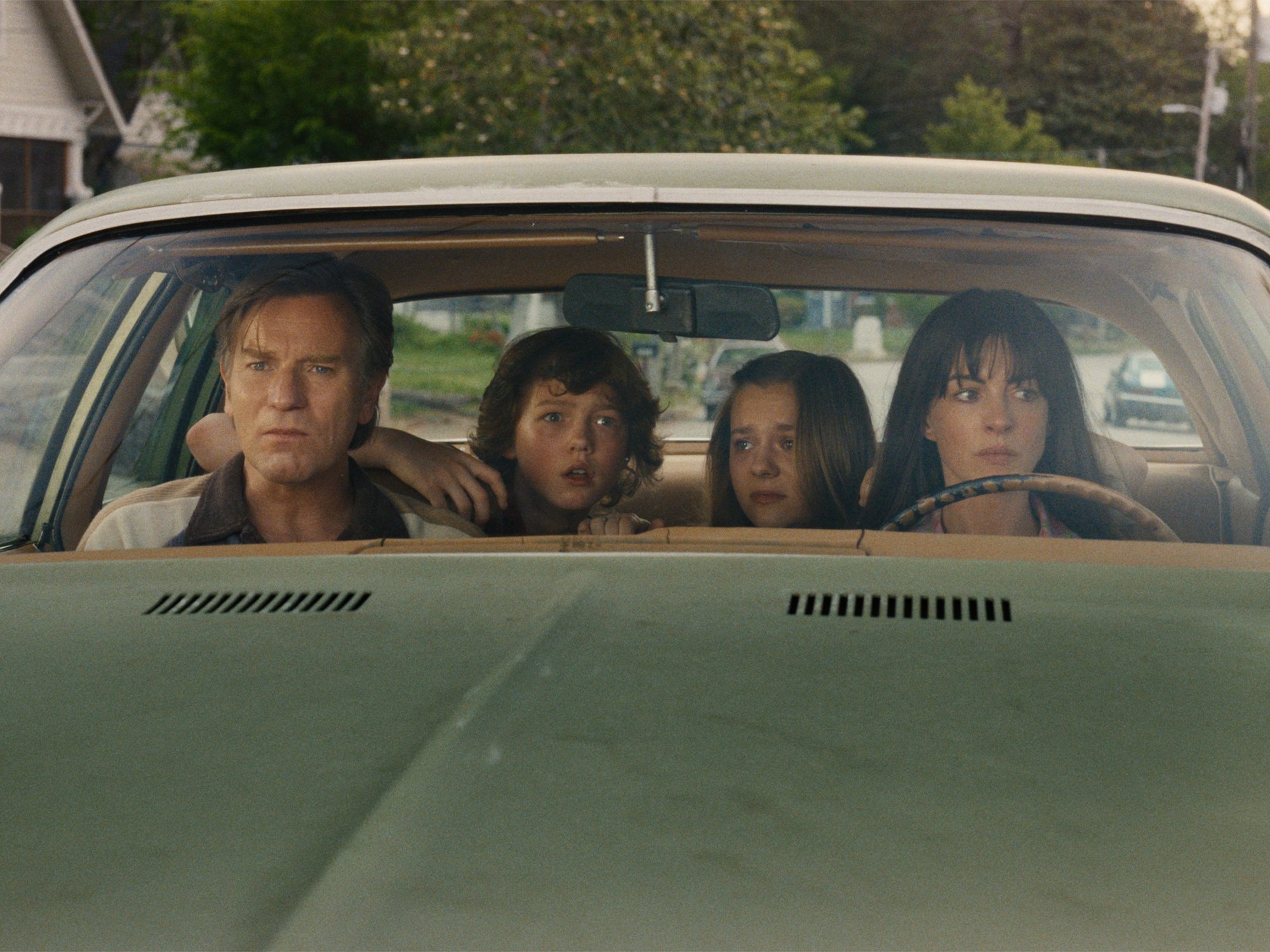
There is an Oak Street, like an Elm Street, in every suburban American neighbourhood. It is a generic, commonplace street name, suggestive of strength, solidarity and goodness, as wholesome and nostalgia-tinged as American pie. Those values are instantiated in the opening sequence of David Robert Mitchell’s The End of Oak Street, which shows everyone happily participating in a group barbecue and games on the idyllic, sunlit street. Still, that word ‘end’ in the title comes with a certain apocalyptic menace.
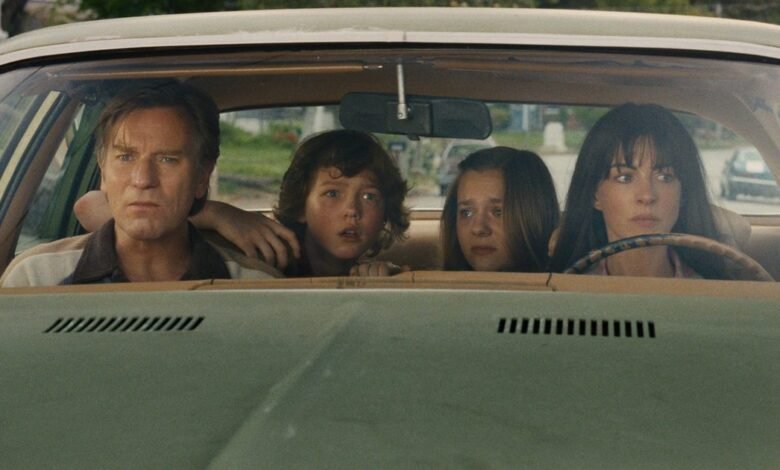
“You’ve got a great family, you’re a lucky man,” a neighbour tells Greg Platt (Ewan McGregor). But there are cracks already showing in the community spirit that the Platts appear to embody. Greg and his wife Denise (Anne Hathaway) keep secrets from each other, and endlessly bicker, to the extent where even their children Audrey (Maisy Stella) and Brian (Christian Convery) openly speculate about whether and when divorce is coming. Audrey, though smart, cannot afford to go to an expensive university like her peers. And Brian lives under constant threat of being viciously attacked by a local bully (Hudson Meek), who circles like a raptor.
Get more Little White Lies
It is 1982, a time of great prosperity for the middle-class American family, even if the Platts are feeling the economic strain of Greg’s employment problems. This is Spielberg territory, a suburbia of picket fences, leafy cul de sacs and boys on bicycles, and when strange lights start appearing at night, intruding upon the neighbourhood’s sense of normalcy, it is hard not to think of the more-or-less contemporary alien invasions from Spielberg’s Close Encounters of the Third Kind (1977) and E.T. the Extra-Terrestrial (1982) – although the threat that Oak Street eventually faces will come from a later Spielberg film, Jurassic Park (1993). Meanwhile, Michael Giacchino convincingly apes the grand orchestral flourishes of Spielberg’s favourite composer, John Williams. Of course, the dinosaurs hunting on Oak Street are no less surreal a suburban presence than the deadly shape-shifting persecutors in Mitchell’s previous It Follows (2014).
Once Oak Street has been transported wholesale back in time several millions of years, the crises that the family faces in their new old world are still spoken of in language (“We’ve all just gotta stay together”, “I’m not getting separated from you and the kids”) which points to the Platts’ previous tensions, as though all this running and fighting and Darwinian struggle to survive were just relitigating the family’s problems in a bigger court.
The End of Oak Street merges the political and the personal. It is personal because it is dedicated to the filmmaker’s own father, who died in 2024 – and whose representative within the film, the genuinely decent, loving Greg, comes with a fate rooted in aching wish fulfilment. And it is political, because today’s America really does feel under siege from predatorily atavistic forces and antediluvian ideologies that threaten to reduce the nation to its Jurassic bedrock. Mitchell’s solution for surviving America’s current reversion is to look out for each other and stick together. What MAGA would no doubt term ‘communism’, everyone else calls community. End that, and there will no more Oak Street.