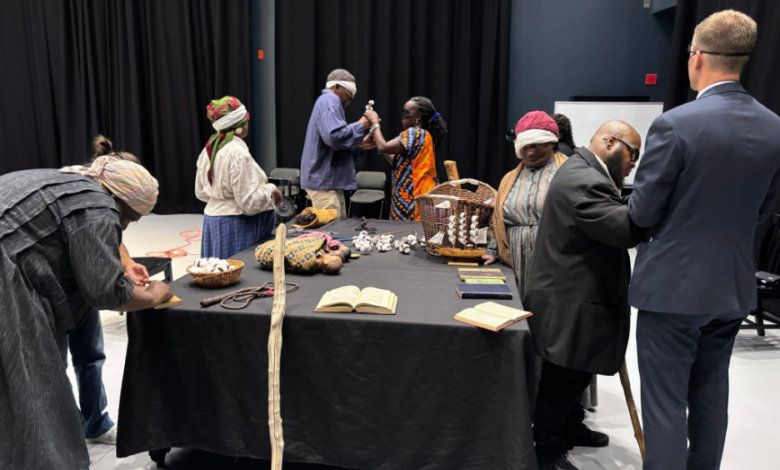
During the performance, each of these stories was conveyed through tactile cues such as scratches, taps, and rhythmic pressure. These cues substituted for the traditional theatrical elements of gesture, voice, tone, and visible body language to powerfully reimagine theatrical possibilities. As I entered the space, the first navigator gently signed their name on my palm. I was then guided toward a ring of rectangular tables with carefully arranged objects and accessories on them: books, baby dolls wrapped in cloth, a frying pan, a whip, a washboard, cotton bolls in a wooden basket, lengths of metal chain, and more. These props carried dense layers of meaning and evoked the lived realities and embodied memories of each character’s experience of slavery. For instance, at some point, one of the performers placed cotton in my hands and then conveyed thirst and exhaustion through rapid, labored breathing and a pronounced limp. This evoked the physical toll of working under the scorching sun. Another performer placed a book on my chest, a tactile symbol of education that enslaved people deeply desired yet were systematically denied.
These objects were used as extensions of memory, labor, and loss. The tactile elements deepened the emotional depth and texture of the performance and provided narrative clarity. They offered an alternative mode of storytelling in which body and object become a living archive. What stood out most was that this violence of these stories was not sensationalized. The whole experience relied on the slow gravity of touch. Together, the performers/navigators Touch of Slavery built a shared history through layered, bodily encounters.
The moment that impacted me most was when I was handed a small doll wrapped in cloth. I was gently guided to cradle it in my arms, and then the performer/navigator slowly took it from me. I was handed another doll, also wrapped in a cloth, and was directed to grab a small spoon to feed it. Again, the performer/navigator took it from me. At that moment, I recognized the doll represented a child and its removal the abduction or separation of child and mother. This act, simple yet deeply symbolic, evoked an emotional intensity I had not anticipated. It was a moment of loss, of interrupted maternal care, of forced separation that resonated viscerally with my own experience of motherhood.
Here, meaning emerged through tactile, reciprocal exchange; the experience unfolded at a slow, intentional, and embodied pace. The agents of this storytelling were not only Black DeafBlind artists shedding light on an underrepresented aspect of their cultural memory, but also audience members willing to step beyond their sensory privilege. By intertwining the slavery narratives and disability histories, the production expanded the historical archive of slavery and foregrounded lives that conventional historical accounts and theatrical representations have largely overlooked. In addition, it challenged audiences to recognize that slavery’s violence extended not only across race but also through disability and communication. The effect was profound: a theatre experience that spoke directly to the body and bypassed the visual privilege many often take for granted. Moreover, as someone who is neither deaf nor blind, I found that experiencing Touch of Slavery profoundly shifted how I receive and process theatrical storytelling. Stripped of visual and aural linguistic cues, I found myself relying on touch, rhythm, and embodied presence. This reliance reminded me that there are forms of communication that transcend spoken language or perfect pronunciation.
This sensory immersion opened a pathway to emotions and understandings that felt at once unfamiliar and profoundly human. As an immigrant and non-native English speaker, I know that meaning goes beyond language or visual comprehension, and participating in this performance proved once again that true connection can be made through presence and touch. For many immigrants, language can fail to offer comfort or immediacy. Touch of Slavery revealed language as a relational practice that can be reconstituted through presence and shared physical experience. In this sense, it stands among the most deeply humanist performances I have encountered since arriving in North America.