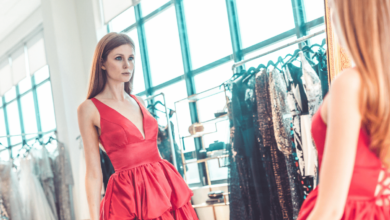
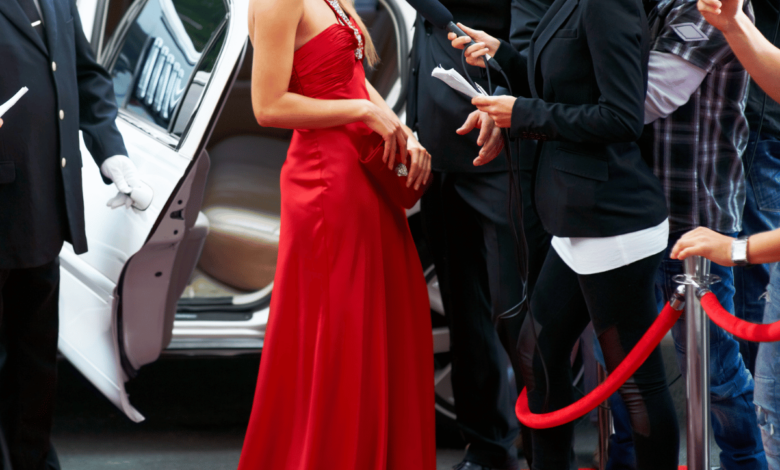
A red-carpet gown may be custom-made, borrowed from a major fashion house, or fitted hours before the cameras arrive. Still, what makes it look good is surprisingly familiar: great fit, the right fabric, a strong silhouette, and styling that doesn’t fight with the dress.
Those things aren’t exclusive to couture. Mermaid gowns, sleek columns, one-shoulder dresses, dramatic ball gowns, satin, crepe, sequins, illusion panels: they’re all part of formal wear you can shop for.
So instead of trying to copy a celebrity dress, steal the useful bits.
What Gives a Dress That Red Carpet Look?
Start with fit. If a gown pulls across the hips, gaps at the bust, or is an inch too long, you’ll notice that before you notice the label.
Celebrities have an advantage here: tailoring. Dresses are adjusted for the person wearing them, sometimes right down to tiny changes in straps, hems, or proportions. You can do the same thing without having a stylist and three assistants hovering nearby.
Fabric matters just as much. Satin catches light. Crepe gives a dress a smooth, sculpted finish. Tulle creates volume without necessarily adding much visual weight. Sequins and beading change every time you move.
Then there’s the dress itself. Most memorable red-carpet gowns have something that grabs your attention immediately. A neckline. A beautiful back. A huge skirt. An unusual shoulder. They don’t need ten big ideas at once.
The Mermaid
Few silhouettes say evening gown quite as clearly as a mermaid. It follows the body through the waist and hips, then opens out around the knee or lower leg. In satin, it can feel very classic. Crepe makes it cleaner and more modern. Add sequins and you’re firmly in spotlight territory.
This is also a dress you need to test properly. Sit down. Walk around. Take a few stairs if you can. A mermaid gown that only works when you’re standing upright in front of a mirror is going to become annoying remarkably quickly at prom.
The Column
At the other end of the spectrum is the column dress. There isn’t much volume and there may not be much embellishment either. That’s why fit and fabric become so important. There’s nowhere for a bad seam or awkward proportion to hide. A slit, low back, asymmetric neckline, or some clever draping can be enough to make a very simple column gown interesting.
This is one of the easiest red-carpet silhouettes to translate into an actual event dress because it doesn’t automatically look theatrical. It works for a gala, formal dinner, evening wedding, or prom without making you feel as though you arrived with your own wind machine.
The A-Line and Ball Gown
Sometimes, though, you want the big dress. A-line and ball gowns create their impact through the waist and skirt. An A-line moves away from the body more gradually; a ball gown gives you considerably more volume.
Tulle and organza are especially good at this because layers can create size and movement without turning the skirt into something stiff and heavy. For prom, this is still one of the great dress opportunities. There aren’t that many occasions in ordinary life when a huge skirt makes perfect sense. If you love one, wear it.
The One-Shoulder Dress
One shoulder bare, one covered. That’s already enough to make a simple gown look less expected. The asymmetric line does much of the styling work, which means you don’t necessarily need heavy embellishment or lots of jewelry. In fact, necklaces can be tricky with this neckline. Earrings or a cuff are often easier.
The fabric can completely change the mood. Chiffon makes it softer, satin adds glamour, and crepe keeps everything sharp and simple.
Satin, Crepe, Tulle or Sequins?
Fabric may make a bigger difference than you think. Take the same basic floor-length dress and make it in black crepe, red satin, pale tulle, and silver sequins. Nobody is going to read those as the same look.
Satin has movement and shine, so it naturally works well for evening dresses. Crepe is quieter and particularly good for fitted or minimalist gowns. Tulle and organza bring volume. Sequins and beads catch light, which is exactly why they show up so often in formalwear.
If you’re shopping online, zoom in on the fabric and detail shots rather than looking only at the full-length model image. Texture can tell you a lot about how a dress will look in person.

Details That Earn Their Place
A slit can make a long fitted skirt easier to move in while also breaking up the silhouette. An open back gives you impact without adding anything to the front of the gown. Illusion panels allow for cuts and necklines that would otherwise need much more coverage or structure.
Beading works best when it has a job. It might define the waist, cover the bodice, trace a neckline, or turn one strap into the focus of the dress. The common thread is restraint. If the gown already has a dramatic slit and an open back, it probably doesn’t need feathers, crystals, cutouts, and giant sleeves as well.
Styling: Know When to Stop
This is where good dresses sometimes go wrong. You buy the gown. Then the statement earrings. Then a necklace. Then a sparkly clutch. Then shoes with crystals because it’s a formal event and apparently nobody has called security yet.
You don’t have to fill every available space. If the dress is covered in sequins, simple jewelry may look better. With a very minimal gown, a stronger earring or cuff has room to work.
It’s also worth checking the whole outfit from the back and side. We tend to judge dresses straight-on because that’s how fitting-room mirrors are positioned. Other people will see the other 270 degrees.
Tailoring Is Worth the Trouble
This is probably the most useful thing to borrow from celebrity dressing. Get the gown altered if it needs it.
It doesn’t have to involve reconstructing the entire dress. Shortening the hem, taking in the waist, or adjusting a strap can be enough to make an off-the-rack gown look far better.
Take your event shoes to the fitting, especially with a floor-length dress. A three-inch heel and a flat shoe obviously leave the hem in very different places.
Wear the undergarments you plan to use too. They can change the fit of the bodice more than you’d expect.
Borrow the Idea, Not the Dress
If you save a celebrity red carpet photo, look at it again and ask what you liked. Maybe it was the mermaid shape. Maybe it was the color. Maybe you loved the clean column silhouette or the fact that a plain satin gown was worn with almost no jewelry. That’s far more useful than searching for an exact copy.
Red carpet style isn’t one particular kind of dress, and it certainly doesn’t require a celebrity budget. Get the silhouette, fabric, fit, and finishing details right and you’re most of the way there.
Explore NewYorkDress for evening dresses, prom gowns, and formal dresses inspired by the silhouettes and details seen on the red carpet, and find one that works just as well away from the cameras.