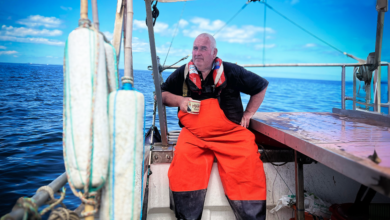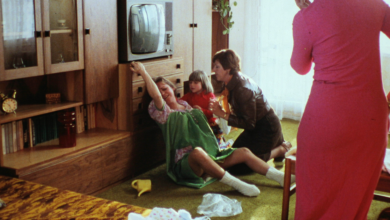
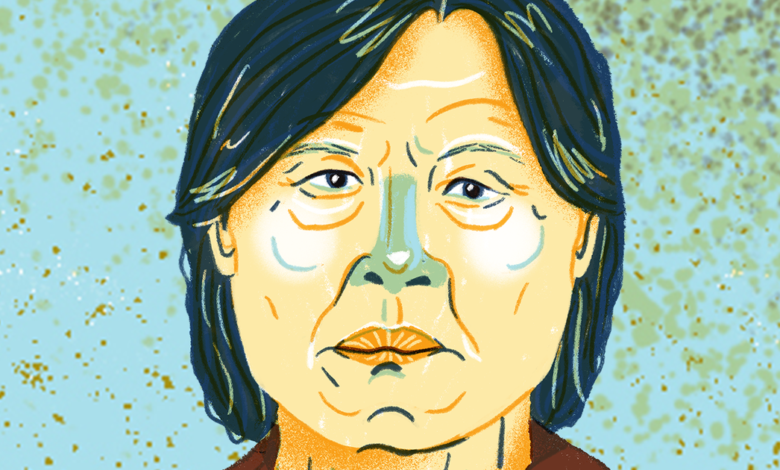
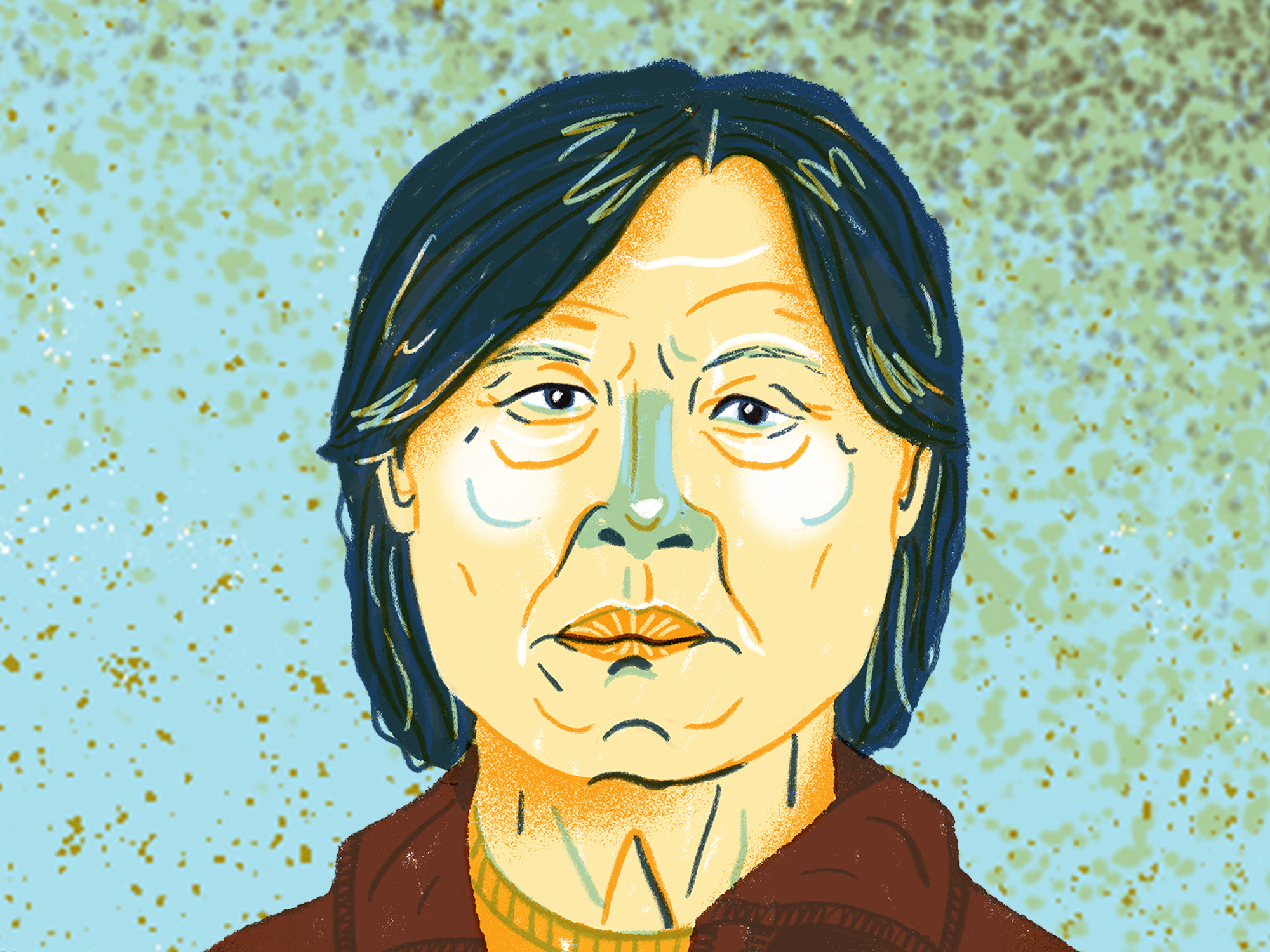
Lee Chang-dong only makes films when he’s good and ready, as Possible Love is his follow-up to 2018’s astounding love-triangle drama, Burning. This new film explores class, gender, generational conflict and filmmaking through the prism of two couples who breach the economic divide to collaborate on a documentary.
LWLies: Do you see any aspect of performance linked to the idea of class? Does social status cause us to act in certain ways?
Get more Little White Lies
Lee: I would say that you could maybe see it as these people possibly accepting the role that society has given them and maybe being performative in their roles. However, rather, I think it’s by way of knowing for sure what role you are playing that people connect that to their own identities. And I think it’s especially that way for labourers. For example, if your area of expertise is welding, through that line of work is how you gain your identity. You gain that awareness of your relationship with others, including your family maybe and you make that connection. Of course, depending on what occupation you have, sometimes it does require some level of performance. It is when you are certain of the type of work you do that allows you to be able to protect your sense of self-awareness and your self-identity. As the concept of labour changes and as we see a much more weakened sense of a particular type of work these days, by not knowing exactly what role you are given, or you are playing in society, that leads to the loss of identity. And I think I was very focused on exploring that idea in this film.
When you were writing the film, how did you create that tonal balance between depicting characters from different ends of the class spectrum?
In this film, you see the lives of two married couples who belong to distinct social classes. However, as you put it, I didn’t want that gap between the classes, or the thought that you could easily make one belong to evil and one belong to good. With regard to the conflict between the classes, I didn’t want that to be at the centre of the film. The reason for that is because when you look at the gap between the two groups, it’s almost so vast that it almost feels awkward to even refer to it as a class gap. We no longer live in an era where you can distinctly pinpoint the gap between classes, because people have so much wealth and so much equity versus those who struggle to keep their own jobs, that gap has become irreconcilable. You think about the power and impact that people have that much wealth have on the other side and that is extreme. If you look the lives of the ordinary people, those who have less, the way they are impacted by those on the other side is so severe. So much so, the people who are under that influence can’t really even feel it because they live in a structure that has been formed and defined by those that have the wealth. Despite that, I wanted to explore the idea that you can still be equal as human beings and sometimes through ideas, like the willpower to pursue freedom, you can escape that.
There is a sense in the film that you are sceptical about documentary filmmaking as a way to capture a pure kind of truth. Is that so?
While the character Ye-Ji is a documentary filmmaker, that’s not to say that I am critical or sceptical of documentary filmmaking. Rather, I wanted to go beyond documentaries to dramatic films, or even all kind of creative works that involve narrative, which includes novels as well. I wanted Ye-Ji to represent all of this. She is the character who stands closest to me in terms of point-of-view, or even attitude towards the subject. For me, as a filmmaker, I try to make films that are as intimate to reality as possible. In technical terms, you might even say I try to make films that are like documentaries. Ever since I was a young man in my novelist days I’ve always asked a question of myself when it came to dealing with people’s pain, or for people who struggle with their lives, the marginalised, and that is: am I worthy of telling their story? That question still stands today. So Ye-Ji is a character that not only represents documentary filmmakers, but everyone who tells stories of others in their creative worlds. Especially in the realm of cinema, in many cases we just consume other people’s pain and struggle just as a subject matter. In many cases, we fail to deliver their stories in a genuine and authentic way.
In the background of the two main couples is a young kid named Cheol who is quite chaotic and tragic and very authentic as a depiction of a child. How did you write this character?
In the case of the character Cheol, if I had to put it into words, he is a boy who is on the spectrum. He has Asperger’s, that’s the setting, and the reason we wanted to add that detail to that character is that I wanted to give him an innocent, transcendent perspective. I wanted him to look at what happens when these two married couples come together and go through this series of events. In order to achieve that, we needed him to have something that differentiated him from other kids of his age. You could also say that it is a light homage to director Krzysztof Kieslowski’s Decalog where he has that transcendent perspective.
One of the most moving moments in the film involves that character being watched by his mother as he waters plants and the fear of history being doomed to repeat itself.
You’re very accurate in saying that. That is the scene where Mi-ok is reminded of her childhood when she was scalded by her mother while holding a hose as the carwash. This, I believe, is a moment of awareness – the sense that, when it comes to the labouring class, it is a generational thing. You pass it on to the next generation, and that is really the only choice you have. However, having said that, I didn’t want that moment to be a heartbreaking moment. From a different perspective, I wanted it to be a beautiful moment, because the generational passing down of labour is very sacred. I think there is an unspoken connection between the labourers as well. That’s what you see with the connection that Cheol has with a manager character at the family home. That is also depicted through the whistle, as in the past the whistle was blown by Sang-woo to this character who he almost treated as a servant. It was a connection of a vertical relationship. In the later parts of the film, when Cheol is blowing the whistle, you see the manager reacting to it as if he’s hearing it, almost like a fantasy. I wanted that to depict an unspoken sense of connection between the labourers.
You mentioned before this question of, am I worthy of this subject. When do you get to the point where you know you can say yes?
I have always asked that question and I honestly don’t know why. It’s almost pathological. And that is the reason why I can’t easily get into making films. For Possible Love, it was about ten years ago when a Korean conglomerate company went ahead and laid off huge number of their staff, I wanted to tell the story of those workers. At the time, during pre-production I had to shelve it. The reason I had to do that is because I kept asking myself, is there reason enough for me to create this story into a dramatic film when there is already a documentary that tells the lives of these people in such a candid and thorough way. Many years passed and my co-writer Oh Jung-mi came to me with the idea of including this married couple of documentary filmmakers and connect that, that’s when I felt I could tell this story finally because thorough them I would be able to explore my attitude towards the subjects. It would become my story to tell. So yes, I have always asked that question and I can’t seem to stop asking it.