
The “did that actually just happen?” mentality found its most fertile ground during the Covid-19 pandemic in 2021, when shifts in the cultural landscape were so seismic that cosy norms were off the table and literally anything could happen. And it kinda did, when Sian Heder managed to furtively scoop a Best Picture Oscar for her unassuming, tender second feature, CODA. Perhaps there was something poetic about the win as a reflection of a world momentarily shorn of bombast, though it’s not a work that has retained much – if any – cultural cachet, and will likely exist as the answer to a pub trivia question that no-one gets.
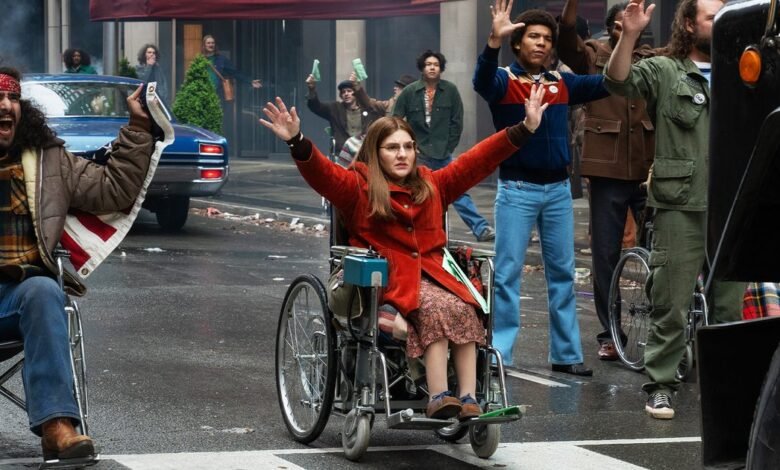
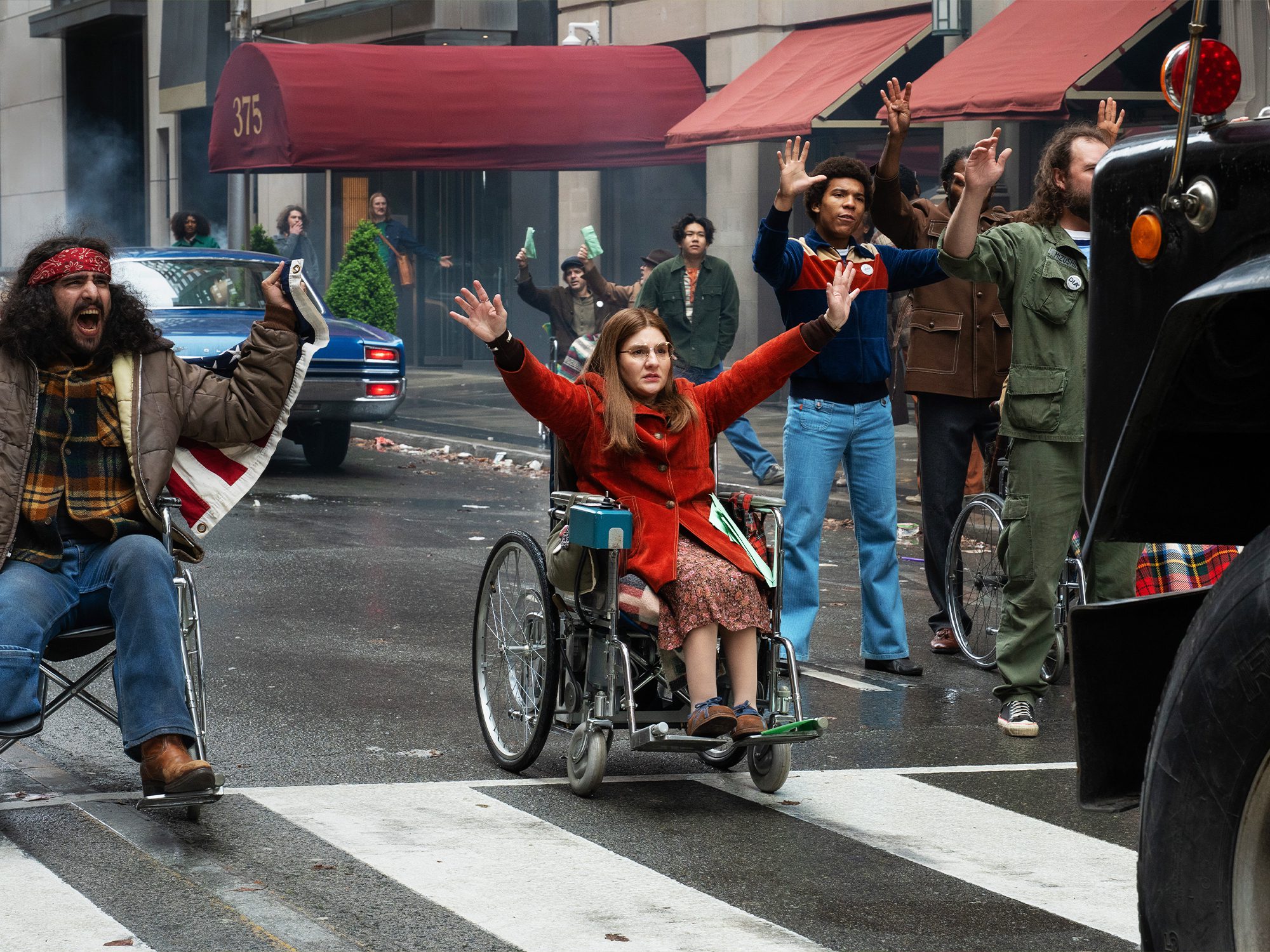
Which brings us to Being Heumann, Heder’s follow-up that is cut from similar thematic cloth (a celebration of human adaptability and acceptance), but this time with a few more glossy bells and whistles to the production. The title puns on the name of disability rights activist Judy Heumann (Ruth Madeley) who has used a wheelchair for most of her life due to a formative bout of polio. In some over-aggressive tone setting, the film opens with Heumann shifting from the pavement to the road on a busy boulevard, flipping a backwards bird while traffic piles up behind her. It’s a moment that captures her character to a tee, but also leaves little path for progression – it’s a “what you see is what you get” proposition.
Get more Little White Lies
It’s 1977, Jimmy Carter has been freshly minted as the iconoclast Democratic president, and Heumann has one item on her agenda: force members of congress to ratify Section 504 of the Rehabilitation Act, which would expand access and comfort to those living with a variety of disabilities. Her irrepressible moxie is primed to prove that people whose lives are beset with countless domestic struggles should not be dismissed as second-class citizens, and that America should not be practicing social eugenics by proxy.
The crux of the story here comprises Heumann’s ad hoc demonstration in front of the government building in San Francisco which evolves into a sit-in when she sees that no-one is taking her seriously. A TV news reporter (Dylan O’Brien) is on the scene, commissioned to whip up some funnies, but quickly becomes part of the ragtag gang and evolves into the mouthpiece for their cause. At the top of the chain is Joseph A. Califano Jr (Mark Ruffalo), whose hectic schedule and fear that 504 would break his budget means that he constantly refuses to take Heumann’s persistent calls.
It’s a likeable film which never comes across as much more than a feelgood nineties throwback of inevitable triumph over adversity. Formally, Heder has no real tricks up her sleeve, but it’s admirable that she practices what she preaches by foregrounding a broad ensemble of disabled actors and gives each one their time to shine. Madeley makes for a compelling, fiery lead, the character’s Brockovich-like brassiness making her a no-brainer subject for the big screen treatment. Yet despite its supremely valuable message of unity and care (which still applies to 2026), it’s still a superficial, meandering film whose pleasures are fleeting and its underlying political fire often feels a little tame.