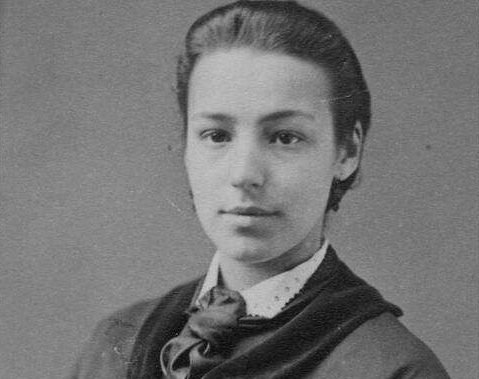
 Lucy Carlile Watson (1855-1938) was born in Utica, New York. Lucy was educated at Young Ladies Seminary and Utica Free Academy in Utica, graduating in 1872.
Her father, Dr. William H. Watson, had an active interest in politics, something he handed down to his daughter. She dedicated her adult life to community service and women’s suffrage causes.
Watson was a charter member and president (1899-1903) of the New Century Club, whose building stood at 253 Genesee Street in Utica. She was also a charter member of the Utica Political Equality Club, serving as president from 1900 to 1917.
As a member of the Political Equality Club, she played an active role in bringing the suffrage campaign to Central New York. In 1915, she told the New York Times, “We have made a good fight, and if all the men who promised to support us keep their word, we shall win.”
Women won the right to vote in New York State in 1917.
In addition to her civic causes, Lucy Watson was an active philanthropist. She was co-founder of the Central Association for the Blind, and served as president of the Utica Memorial Hospital board of trustees. She endowed a room at the hospital.
A special exhibit at the Oneida County History Center in Utica showcases Watson’s life and the contributions of local women in achieving equality and enhancing the lives of those in their community.
This exhibition is a companion to “Voices and Votes: Democracy in America,” on display at Utica’s Munson museum through December 13th. “Voices and Votes” is a Museum on Main Street (MoMS) exhibition developed by the Smithsonian Institution Traveling Exhibition Service.
It’s based on an exhibition by the National Museum of American History. It has been made possible in New York State by the Museum Association of New York. Support for MoMS in New York State has been provided by the United States Congress and the William G. Pomeroy Foundation.
You can see some of the Oneida County History Center’s Lucy Carlile Watson Collection online at New York Heritage here.

Source link