 The Adirondack Council reports that its members and supporters had generated significant public input and feedback to the Adirondack Park Agency regarding the APA’s proposed changes to the primary management plan for the “forever wild” Adirondack and Catskill Forest Preserves.
The organization cited an increased level of participation and engagement by its members who wrote expressing concerns about changes to the Adirondack Park State Land Master Plan they say could weaken wilderness protection and limit the APA’s own authority within the Park.
In response to an electronic action alert, hundreds of comments were submitted to the APA before the comment period ended on Monday, December 2, the Council said.
With only four major revisions having been made to the Master Plan since its adoption over 50 years ago, it is important that proposed amendments be reviewed closely and carefully to assess their consistency with the science and law, Council leaders said. Proposed changes that may appear benign now – and in today’s contexts – could look very different in 10 years when technology, climate change and other conditions have shifted, they noted.
The organization’s written comments on the APA’s proposed amendments to the master plan for management of the Forest Preserve included:
Natural Resources Paramount: The existing master plan sets as the highest priority “protection and preservation of the natural resources of the State lands within the Park,” and that should not change. The incorporation of the Six Best Management Practices for Wildlands by Chad Dawson and John C. Hendee would strengthen the master plan and not bend this mandate towards over-prioritizing human enjoyment. Protection of natural resources and the ecological integrity and wild character of the Adirondack Park is paramount.
Maintaining Agency Oversight: The APA serves as a critical counterbalance to the Department of Environmental Conservation (DEC) by upholding the integrity of the master plan. The Agency should seek to hold the DEC accountable in complying with the master plan, including limiting motorized access to Wilderness to emergency and other limited circumstances, rather than taking away or weakening those accountability measures.
Scientific Support: Science should support any amendment as enhancing the current and future protection of the natural resources of the state lands and waters. Any proposed wildlife management structures, such as loon nesting rafts, should be made based on science that reasonably confirms that the net results will enhance, or not significantly degrade or impair, any natural resources.
No Net Expansion of Motorized Access: Proposed changes must secure improved public land management that prevents the degradation of natural resources from intensive human uses. This includes limits on motorized vehicle operation, by the DEC or by the public, as well as other uses that require extensive tree removal, terrain alteration or construction. There should be no net expansion of snowmobile or motorized recreation in the Forest Preserve.
Improved Transparency for Accessibility: Powered wheelchairs and other devices designed specifically for both indoor and outdoor use by persons with disabilities are allowed anywhere on the Forest Preserve that a hiking boot may go. However, a new class of “Other Power-Driven Mobility Devices” is creating a challenge. These are motor-driven vehicles designed only for outdoor use on uneven terrain by both disabled and non-disabled individuals.
Some of these may be appropriate for use in the 55% of the Forest Preserve where motorized access is already legal, but should not be allowed in motor-free areas of the Forest Preserve such as Wilderness, Primitive or Canoe Areas. The APA has proposed classifying these devices as non-motorized to avoid conflict with bans on motors in those areas. It should allow the DEC to develop a statewide policy for access to all public lands. Federal law doesn’t require states to allow outdoor-only motor-vehicles on public lands where motorized vehicles are banned.
Guidance on Climate: To comply with the NY Climate Leadership and Community Protection Act, the APA should develop of guidance documents describing how landowners can achieve maximum nature-based greenhouse gas sequestration and storage, and climate resiliency. Emissions on state lands must be assessed, cutting of trees, movement of forest pests and pathogens across the landscape, and other climate-exacerbated threats should be considered and mitigated.
Established in 1975, the Adirondack Council is a privately funded, not-for-profit environmental advocacy organization dedicated to ensuring the ecological integrity and wild character of the Adirondack Park.
The 9,300-square-mile Adirondack Park is one of the largest intact temperate deciduous forest ecosystems left in the world. The Adirondacks are home to about 130,000 New York residents in 130 rural communities.
The Council carries out its mission through research, education, advocacy and legal action. The Council envisions a Park with clean water and clean air, core wilderness areas, farms and working forests, and vibrant, diverse, welcoming, safe communities.
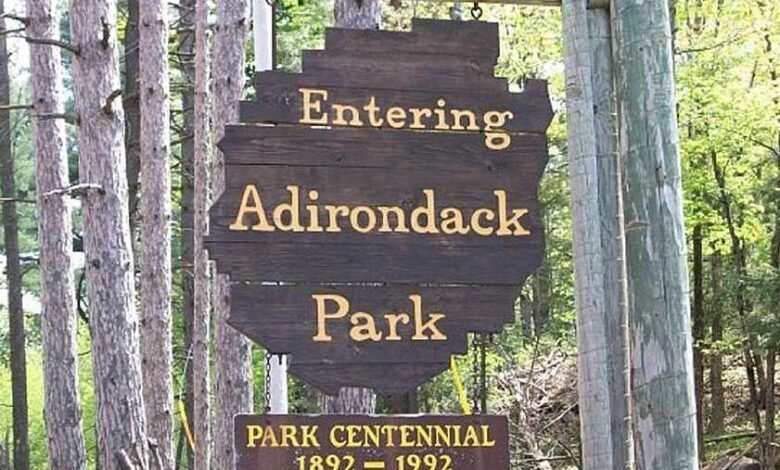
Photo of Entering Adirondack Park sign by Eric Meier.

Source link