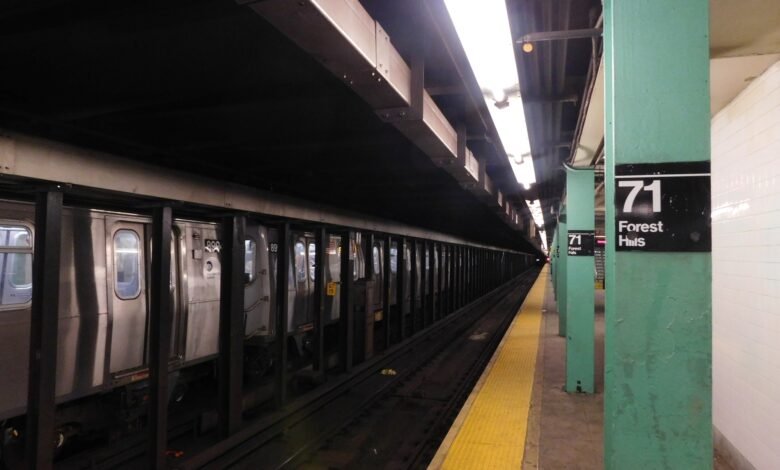
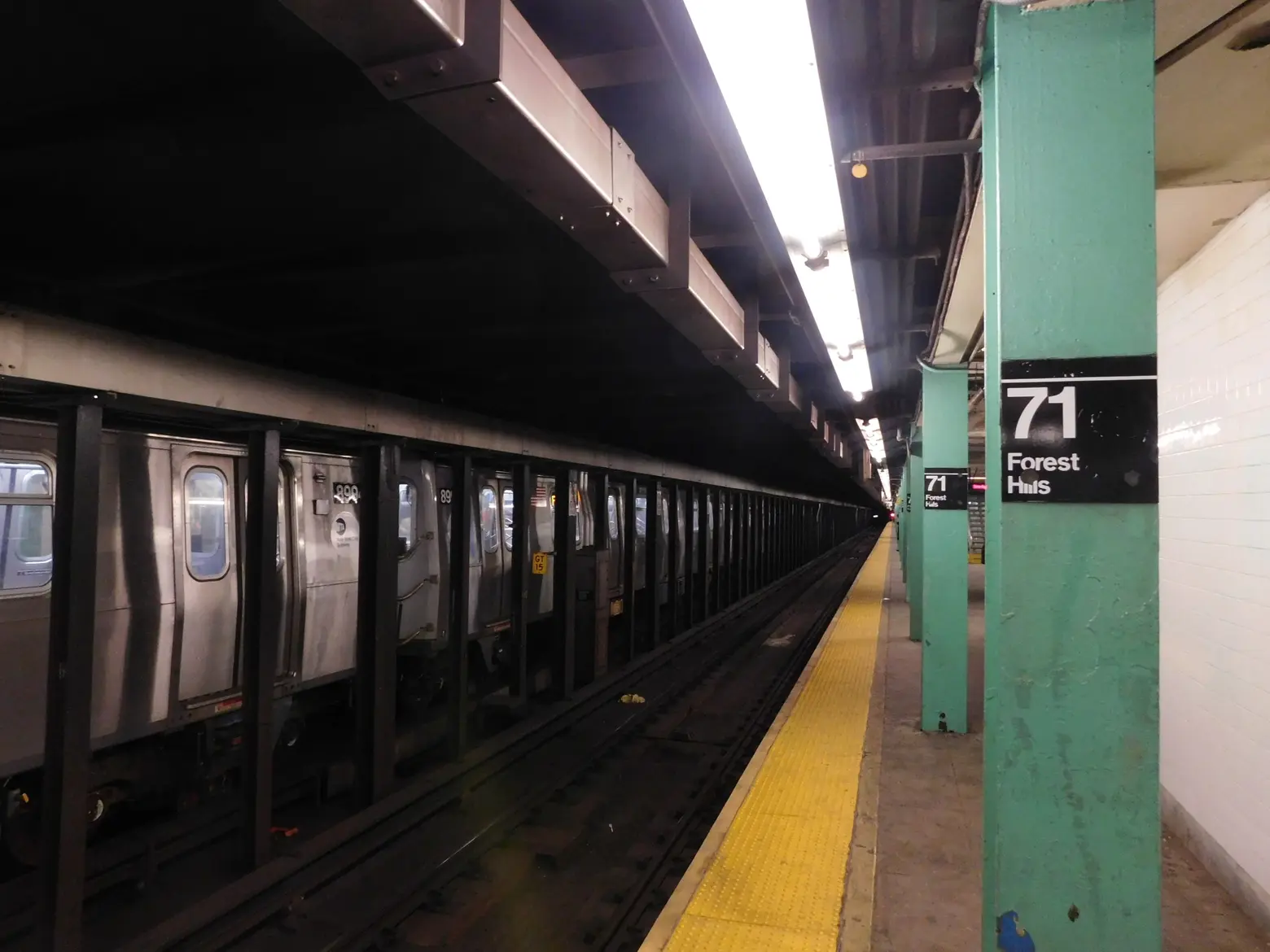
A coalition of public transit advocates is pushing the MTA to extend the G train to Forest Hills, bringing the line to central Queens for the first time since 2010. In a letter sent Thursday, more than 30 advocacy organizations and business leaders, including the New York Mets, urged city and state officials to bring back weekend G train service to Forest Hills–71st Avenue, arguing it would be a transformative improvement for outer-borough riders long underserved by a Manhattan-centric transit system. The group also noted that G train ridership has surged since service to Forest Hills was cut, with an increase of roughly 50,000 riders—one of the fastest growth rates in the subway system.
The G train has a long history of serving Queens, having opened in 1933. At various points, the line ran as far east as Flushing and Jamaica. After the 1940 World’s Fair, the G terminated at Forest Hills–71st Avenue. In the decades that followed, service in Queens was gradually reduced, and by 2010, the G ran to Forest Hills only on weeknights and weekends before service was fully discontinued, according to an op-ed in Streetsblog.
Now, as commutes between Brooklyn and Queens have grown “unnecessarily difficult,” the signatories say commuters are forced to travel through Manhattan or rely on limited bus options, when direct subway service could provide faster, more reliable connections—ultimately wasting New Yorkers’ time and money.
Advocates say ridership data backs the extension. According to the letter, weekday G ridership has surged to 166,000 passengers, driven by increased housing, jobs, and activity along the corridor between Court Square and Church Avenue, as well as by remote work patterns that have shifted more trips within Brooklyn and Queens.
While the group praised Gov. Kathy Hochul and the MTA for projects like the Interborough Express, the Second Avenue Subway extension, and other transit upgrades, they insisted that commuters should not have to wait until 2030 for better service. The signatories argued that extending the G train would provide immediate benefits for riders.
In the letter, the group says that extending the G could allow the MTA to create new connection opportunities at major bus transfer stations such as Jackson Heights-Roosevelt Avenue, Elmhurst Avenue, Grand Avenue-Newtown, and Woodhaven Boulevard.
Buses such as the Q52 SBS, Q53 SBS, Q59, Q60, and Q70 SBS—also known as the LaGuardia Link—would gain direct connections to a north-south subway line running through western Brooklyn, significantly expanding access for both bus and subway riders.
It would also enhance transit access to major destinations, including LaGuardia Community College, the Museum of the Moving Image, LaGuardia Airport, Elmhurst Hospital, and Forest Hills Stadium.
In a statement, Jaqi Cohen, director of climate and equity policy at the Tri-State Transportation Campaign (TSTC), said restoring the G train to Forest Hills would signal a stronger commitment by transit officials to improving public transit connections for outer-borough residents.
“For too long in our city, transit planning has focused primarily on getting people into and out of the core of Manhattan,” Cohen said. “Restoring weekend G service to Forest Hills would demonstrate a commitment to the direct connections that residents of Brooklyn and Queens alike desperately need.”
She added: “This would benefit restaurant workers, healthcare workers, retail employees, and countless others who need efficient ways to reach jobs, visit family members, and access opportunities across Brooklyn and Queens, not just in Midtown.”
Alongside TSTC, the coalition includes the Riders Alliance, Transportation Alternatives, and New Yorkers for Parks, alongside neighborhood organizations, environmental groups, and prominent Queens business entities, including the Queens Chamber of Commerce, Queens Economic Development Corporation, and the Mets.
Supporters also include popular venues along the route, such as Forest Hills Stadium and Under the K Bridge.
The coalition acknowledged operational challenges, such as the tight platform at the 71st Avenue station, where local M and R trains share a single track. However, they noted that these constraints are significantly reduced on weekends, when the M train terminates at Delancey Street. Weekend-only service would allow the MTA to test the restored G service while minimizing complexity and capital investments.
In a Tuesday state budget hearing, Assembly Member Claire Valdez asked MTA Chair and CEO Janno Lieber about the prospect of restoring weekend G service to Forest Hills. Lieber cited the operational challenges as a key obstacle.
“There are two issues you need to be aware of. One is track capacity,” Lieber said. “When we’re running on the weekends, you’ve got three services: E, F, and R on the Queens Boulevard line.”
“We are inevitably doing some work and it is a problem to try and put yet another line onto a more limited Queens Boulevard line. The proof that that issue is real is that when the G train still did run to Forest Hills, 80 percent of the weekend [trains] couldn’t run because of track or other work.”
Despite the data showing increased ridership along the G line, Lieber also said MTA surveys indicate that the vast majority of G riders are traveling to and from Manhattan, with only a small percentage headed to Queens on weekends.
“The other issue is ridership. We’ve done a lot of surveys of the Queens Boulevard line riders, and only three percent of them are headed to destinations in Queens on the weekends. Most of them are going to and from Manhattan,” Lieber said.
“Respectfully, I know there’s a lot of enthusiasm—we got the message. We’re never going to say never, but at the moment, those are the issues that are pushing us against not taking this action,” he added.
With Lieber rejecting the idea, the feasibility of extending the G remains uncertain. Another contentious transit improvement proposal, QueensLink, could also restore G train service to Forest Hills.
The plan would repurpose the defunct Rockaway Beach Branch and extend the M line into southeastern Queens. By diverting the M south before the 71st Avenue station, the proposal would allow a 33 percent increase in the frequency of local trains, creating additional capacity for G service.
RELATED:
Source link