AIDLR’s upcoming conference in Spain will bring together UN voices, academics, advocates and faith leaders for a wide-ranging debate on freedom of religion or belief in a changing world.
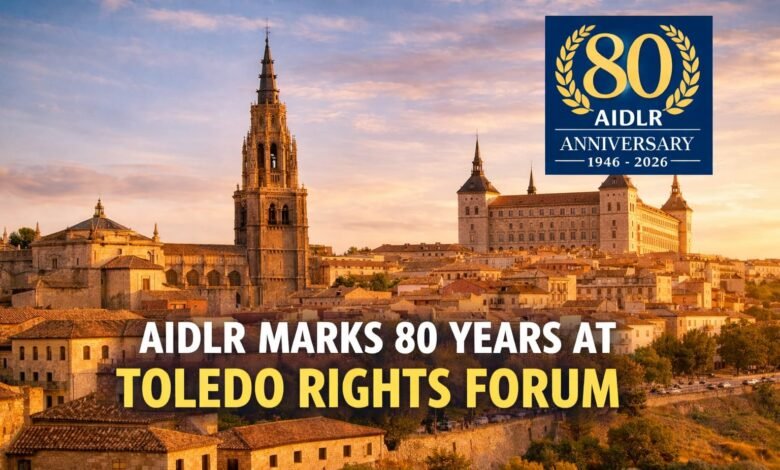
Toledo is preparing to host an unusually broad international conversation on freedom of religion or belief as the AIDLR Conference 2026, titled “New Era in Human Rights? Impacts on FoRB”, opens from 24 to 26 March in the Spanish city. The gathering is designed not simply as a legal or academic meeting, but as a forum where international institutions, religious-liberty advocates, scholars and civic voices will examine how conscience, pluralism and human rights are being tested by geopolitical disorder, ideological polarization and technological change.
The opening ceremony alone signals the scope of the event. It will be moderated by Paulo Macedo, Secretary General of AIDLR, and Rubén Guzmán of AIDLR Spain. A message from United Nations Secretary-General António Guterres is scheduled to be read by Dr. Nazila Ghanea, the UN Special Rapporteur on freedom of religion or belief. Institutional addresses are also expected from Óscar López, president of AIDLR Spain; Dr. Barna Magyarosi, president of AIDLR; Dr. Adama Dieng, president of the AIDLR Honorary Committee; an as-yet unnamed representative of the Diputación Provincial de Toledo, still listed as TBC in the programme; and Carlos Álvarez Romo, mayor of Toledo.
The anniversary dimension of the meeting is also prominent. The programme includes a reading of the AIDLR 80th anniversary statement by Rosa María de Codes, vice-president of IRLA, in Spanish, Reinhard Schwab of AIDLR Austria in English, and Francesca Evangelisti of AIDLR Italy in French. A historical documentary on AIDLR’s eight decades is due to be screened, followed by awards of honor for Alberto de la Hera, Ganoune Diop and John Graz. In that sense, the Toledo conference is not only looking ahead to new human-rights pressures but also presenting itself as a moment of institutional memory and continuity.
The first substantive session on Tuesday afternoon, “Current State of Freedom of Religion and Belief,” will be moderated by Jens Mohr, secretary general of AIDLR Germany. The keynote is to be delivered by Nazila Ghanea, who will speak on the state of FoRB in 2026 from the perspective of the UN mandate. She will be followed by Jónatas Machado of the University of Coimbra, addressing tensions between faith, freedom and heritage in modern liberal democracies, and Ibrahim Salama of the British University of Egypt, who is scheduled to speak on the political instrumentalisation of religion. Commentary in that session will come from Dan Serb of Newbold College in the United Kingdom.
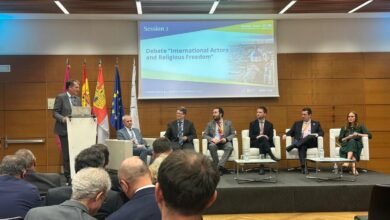
The second session, framed as a debate on “International Actors and Religious Freedom,” is likely to draw particular attention because of the range of institutions represented. Moderated by Ezequiel Duarte of AIDLR Portugal, the panel brings together Anastasia Hartmann of Open Doors International, Ivan Arjona Pelado of the NGO Committee on FoRB at UNOG, Jonathan de Leyser of EPRID in Brussels, Juan José García Carreño of the European External Action Service, Michael Wiener of OHCHR in Geneva, and Maksym Krupsky of PARL SDA in Ukraine. The commentator for that debate is João Martins of ADRA Europe. Read together, that panel suggests an effort to bridge advocacy, diplomacy, multilateral institutions and faith-based engagement rather than keeping them in separate silos.
Wednesday morning shifts the discussion toward systemic stress on human rights. Session 3, “New Challenges to Human Rights,” will again be moderated by Rubén Guzmán. Its speakers are Harald Mueller, listed as a judge in Hannover, Amal Idrissi of Moulay Ismaïl University in Morocco, Alexandru Rafila of Romania’s Chamber of Deputies, and Shabnam Moinipour of Oxford University. Commentary is assigned to Paulin Giurgi of HopeMedia Europe. Their topics, as laid out in the programme, range from the weakening of the rules-based world order and the meaning of the Marrakech Declaration to post-COVID conscience questions and the broader fragmentation of human-rights responsibilities.
That same morning, Session 4 turns to one of the sharpest contemporary tensions in the field: “Multilateralism vs Religious Nationalism.” The moderator is David Millard of AIDLR France, while the keynote will be delivered by Rosa Mª Martinez de Codes of Complutense University in Madrid, returning after her role in the anniversary statement. The session’s speakers are Fernando Soares Loja of Portugal’s Religious Liberty Commission, Jeremy Gunn of the International University of Rabat, and Mihnea Costoiu of the University of Science and Technology Politehnica Bucharest. Commentary will be provided by Rúben de Abreu of the AIDLR Board of Trustees. The combination points to a discussion not only about legal standards but also about identity politics, education, and the ways religion is invoked in contemporary public power struggles.
After lunch, the conference moves into questions that would have seemed peripheral a generation ago but now sit close to the center of rights debates. Session 5, on the “Impact of Information and Communication Technologies on FoRB,” will be moderated by Raphael Nagler of AIDLR Switzerland. The keynote is to be given by Jaime Rossel Granados of the University of Extremadura on the lights and shadows of artificial intelligence and religious freedom. The listed speakers are Alexis Artaud de la Ferrière of the University of London, Susana Machado of the Polytechnic Institute of Porto, and Ecaterina Andronescu, described in the programme as coming from academia and politics in Romania. The commentator is Peter Cik of AIDLR Czech Republic. This session may prove one of the conference’s most forward-looking, examining value alignment, governance, workplace surveillance, discrimination and education in an AI-shaped environment.
The sixth session, a debate titled “Voices of Conscience,” returns to wider strategic reflections. It will be moderated by Paulo Macedo, with an introductory intervention by Robert Rehak of IRFBA on changes and trends in the international system and their impact on freedom of religion and belief. The participants are Asher Maoz of the Peres Academic Center Law School in Israel, Ganoune Diop of IRLA and PARL in the United States, Ibrahim Salama, appearing again from the British University in Egypt, José Eduardo Vera Jardim of Portugal’s Religious Liberty Commission, and Mario Brito, director of CIRLAP and AIDLR liaison to the UN in Geneva. The commentator for the session is Ian Sweeney of PARL UK. By the time this panel begins, the conference will already have moved through law, diplomacy, nationalism and technology, making the conscience theme a fitting way to connect institutional and personal dimensions of freedom.
The formal closing session will feature Francisco Cerro Chaves, Archbishop of Toledo, alongside Óscar López, Barna Magyarosi and Adama Dieng. That ending reinforces the event’s effort to hold together religious, civil and international perspectives without collapsing them into one another. A touristic visit and special dinner are also listed in the programme, underscoring the role such gatherings play not only as intellectual exchanges but as spaces for relationship-building among people who often work in different sectors of the same global debate.
The programme then continues into Thursday with side talks under the umbrella of “The Future of FoRB.” One session on the future of FoRB studies is assigned to Francesca Evangelisti, S. Baldassarre and A. Cupri of AIDLR Italy. Another on the future of international organizations is tied to Michael Wiener. A third side talk is devoted to the future of AIDLR itself. Even these closing segments matter, because they suggest the conference is not only asking how freedom of religion or belief is being challenged now, but also how the field will be studied, defended and institutionalized in the years ahead.
What makes the Toledo event notable is not just the number of names on the programme, but the breadth they represent. From António Guterres and Nazila Ghanea to Ivan Arjona Pelado, Anastasia Hartmann, Jonathan de Leyser and Juan José García Carreño; from Jónatas Machado and Shabnam Moinipour to Jeremy Gunn, Susana Machado and Ecaterina Andronescu; from Ganoune Diop and Mario Brito to Francisco Cerro Chaves and Carlos Álvarez Romo, the conference brings together people working in markedly different arenas of public life. That is also its central promise. At a moment when freedom of religion or belief is being shaped by conflict, digital systems, competing national narratives and institutional uncertainty, Toledo is preparing to host a conversation broad enough to match the complexity of the challenge.
Beyond its policy debates and academic panels, the Toledo gathering also carries the weight of institutional history, as AIDLR marks its 80th anniversary by placing that legacy at the heart of the conference itself. The programme weaves the commemoration into the opening ceremony through the reading of an 80th Anniversary Statement in Spanish, English and French, the premiere of a historical video documentary, and Awards of Honor for Alberto de la Hera, Ganoune Diop and John Graz, while the conference’s organization — led by Paulo Macedo, Rubén Guzmán, Óscar López, Barna Magyarosi and Adama Dieng, alongside AIDLR’s national branches and partner voices — presents the event not simply as a celebration of past achievements, but as a deliberate effort to renew the association’s international mission at a time when freedom of religion or belief faces new legal, political and technological pressures. That sense of continuity is reinforced by the final side talk on “The Future of AIDLR,” making clear that in Toledo, the association is honoring eight decades of work while also positioning itself for the challenges ahead.
Source link