 Long before the recent calls for “Patriotic Education,” New York State undertook its own program to promote “Americanism” in the classroom.
The effort kicked off in Brooklyn’s Commercial High School. On January 14, 1919, teacher Benjamin Glassberg opened a discussion about Bolshevism in his history class.
The next day, twelve students, about one-third, signed a statement that their teacher had portrayed Bolshevism as a form of political expression not nearly so black as people painted it.
The students cited specifics Glassberg gave them – that the State Department forbade publishing the truth about Bolshevism; that Red Cross staff with first-hand knowledge were prevented from talking about conditions in Russia; that Lenin and Trotsky had undermined rather than supported Germany and helped end the war.
 The school’s principal forwarded the statement to Dr. John L. Tildsley, Associate Superintendent of Schools, who suspended Glassberg pending a trial by the Board of Education.
Glassberg’s trial played out through May. Several students repeated the charges in their statement, while others testified their teacher had said nothing disrespectful to the US government.
Over that period, the sentiments of school officials became clear. Dr. Tildsley proclaimed that no person adhering to the Marxian program should become a teacher in the public schools and if discovered should be forced to resign. He would be sending to everyone in the school system a circular making clear that “Americanism is to be put above everything else in classroom study.”
He directed teachers to correct students’ opinions contrary to fundamental American ideas. The Board of Education empowered City Superintendent William Ettinger to undertake an “exhaustive examination into the life, affiliations, opinions, and loyalty of every member” of the teachers union.
After the Board declared Glassburg guilty, the pace picked up. In June, the city’s high school students took a test entitled Examination For High Schools on the Great War.
The title was misleading. The first question was designed to assess students’ knowledge of and attitude toward Bolshevism. The instructions to principals said this question was of greatest interest and teachers should highlight any students who displayed an especially intimate knowledge of that subject.
The results pleased school officials when only 1 in 300 students showed any significant knowledge of or leaning toward Bolshevism. These “self-confessed radicals” would be given a six-month course on the “economic and social system recognized in America.” Only if they failed that course would their diplomas be denied.
In September, the state got involved. New York Attorney General Charles D. Newton called for “Americanization,” describing it as “intensive instruction in our schools in the ideals and traditions of America.”
Also serving as counsel to the New York State Legislative Committee to Investigate Bolshevism, commonly known as the Lusk Committee after its chairman, Newton was in a position to make it happen.
In January 1920, Lusk began hearings on education. Tildsly, Ettinger, and Board of Education President Anning S. Prawl all testified in favor of an Americanization plan.
In April, the New York Senate and Assembly passed three anti-Socialist “Lusk bills.” The “Teachers’ Loyalty” bill required public school teachers to obtain from the Board of Regents a Certificate of Loyalty to the State and Federal Constitutions and the country’s laws and institutions.
“Sorely needed,” praised the New York Times, a long-time advocate for Americanization in the schools. But any celebration was premature.
Governor Alfred E. Smith had his objections. Stating that the Teacher Loyalty Bill “permits one man to place upon any teacher the stigma of disloyalty, and this even without hearing or trial,” he vetoed it along with the others.
 Lusk and his backers would have to wait until the governor’s election in November when Nathan L. Miller beat Smith in a squeaker. After Miller’s inauguration, the Legislature passed the bills again. Miller signed them in May despite substantial opposition from prominent New Yorkers.
Over the next two years, the opposition grew. Even the New York Times backed off its unrelenting anti-Socialist stance.
With the governor’s term only two years, opponents got another chance in November, 1922, in a Smith-Miller rematch. Making the Lusk laws a major issue, Smith won in a landslide. He announced his intention to repeal the laws days after his inauguration.
Lusk and his backers fought viciously but the Legislature finally passed repeal in April. Calling the teacher loyalty and a second Lusk law on private school licensing “repugnant to the fundamentals of American democracy,” Smith signed their repeal.
More than any other factor, the experience of the teachers fueled the growing opposition to the Teachers’ Loyalty bill. After its enactment, state authorities administered two oaths to teachers statewide.
 That effort didn’t satisfy Dr. Frank Pierrepont Graves, State Commissioner of Education. In April, 1922, he established the Advisory Council on Qualifications of Teachers of the State of New York to hear cases of teachers charged with disloyalty.
He appointed Archibald Stevenson, counsel to the Lusk committee and arch-proponent of rooting out disloyalty in the schools, as one member. By summer the Council had earned a reputation as a witch hunt.
Its activities drew headlines such as TEACHERS SECRETLY QUIZZED ON LOYALTY and TEACHERS DEFY LOYALTY COURT. Teachers and principals called before it refused to attend.
Its reputation grew so bad that New York’s Board of Education asked for its abolishment and the President of the Board told teachers that they need not appear if summoned.
Bill Greer, PhD, is the author of A Dirty Year: Sex, Suffrage, and Scandal in Gilded Age New York. During his earlier work focused on New York’s Dutch era, he served as an officer and trustee of the New Netherland Institute and chaired the Institute’s program to establish the New Netherland Research Center with the New York State Library. He has spoken on New York’s Dutch era and Gilded Age throughout the Hudson Valley.
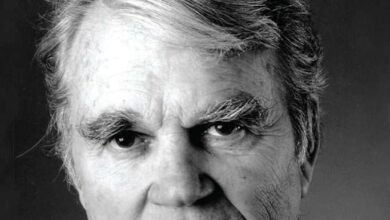
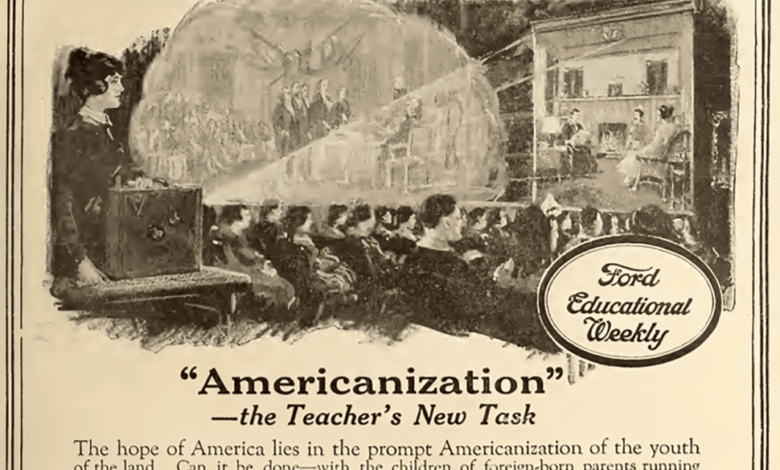
Illustrations, from above: Americanization film for teachers advertisement (Moving Picture Age, January 1920); Commercial High School, Albany Avenue, Brooklyn, NY, where Benjamin Glassberg taught history (Brooklyn Eagle Post Card, Series 22, No. 130); The Lusk Committee raided the Rand School of Social Science in August 1919 and seized documents to fuel its investigations; and Dr. Frank P. Graves, New York State Commissioner of Education (Library of Congress).

Source link