
 New York State Department of Environmental Conservation (DEC) has announced the release of two report regarding Visitor Use Management (VUM) for the Adirondack High Peaks Wilderness and Kaaterskill Clove region of the Catskill Park.
DEC is soliciting feedback from the public to help inform additional actions the State may take to enhance safety and the visitor experience. These actions include recreation limits at the two Park’s most popular areas.
Over the last decade, visitation to public lands across the country, including New York’s Forest Preserve, has been on an upward trend and the Adirondack High Peaks and the Catskill Park’s Kaaterskill Clove are among the most highly visited regions in the State.
Each location has been experiencing the compounding effects of traffic and parking congestion, potentially unsafe conditions along busy state highways, crowded trails, summits and other points of interest, and physical degradation of trails and other facilities.
Development of the VUM reports was recommended by two Advisory Groups convened to provide DEC with recreation recommendations for the High Peaks and Catskills.
The reports were prepared by planning firms DJ&A and Otak. In 2023, DEC awarded a two-year contract to Otak, Inc., a research, planning, and design firm to develop the reports in consultation with the public, local officials, and other stakeholders.
Now completed, the High Peaks Wilderness and Kaaterskill Clove reports focus specifically on strategies to address impacts from increasing visitation and public safety impacts.
The consultants’ reports highlight findings related to visitor use patterns, behaviors, and preferences while recreating within each area, and provide recommendations on adaptive management strategies that support a safe and high-quality visitor experience.
Among the many recommendations are visitor restrictions at four of the most popular High Peaks trailheads: Cascade Mountain on State Route 73; the Garden Trailhead in Keene Valley; Adirondak Loj at Heart Lake and South Meadows Trailhead, both on Adirondack Loj Road.
There are currently plans to the Cascade Mountain trailhead to the Mount Van Hoevenberg parking area.
The trailhead at the end of Adirondack Loj Road at Heart Lake is the busiest backcountry trailhead in the state of New York, seeing over 100,000 visitors annually. The Adirondack Mountain Club has managed the High Peaks Information Center there for over 50 years to orient and help keep hikers safe and to protect the Forest Preserve.
The report also find that high visitation at Kaaterskill Clove in the Catskills is causing significant trail degradation, unsafe parking, and environmental damage to sensitive montane bird habitats.
Recommendations there also include setting visitor capacity limits at popular trailheads, improved parking management, and implementing educational initiatives to encourage Leave No Trace principles.
The release of the reports does not signify DEC adoption of the recommendations. The reports represent one set of tools and recommendations that DEC will utilize in future land management decision making.
These independent consultant products will be evaluated alongside ecological assessments, trail and other recreational facility assessments, community input, statutory and regulatory requirements, and other land management principals and partnership opportunities.
For example, DEC partners with the State University of New York College of Environmental Science and Forestry to monitor the physical impacts of recreation on nature at select recreational sites including trails, lakes, streams, camp sites, lean-tos, rock climbing areas, and boat launches in the Forest Preserve.
This monitoring helps assess change dynamics and facilitate adaptive management decisions to support ecosystem health on the Forest Preserve.
“At a time when the federal government is diminishing its leadership in wilderness protection and recreation management, it is good to see New York moving toward modernized management,” Raul J. Aguirre, Executive Director at the Adirondack Council said about these developments. “Implementing science-based modern management will serve the Park and people of New York well,” he added.
Public Feedback
DEC is holding virtual meetings for each report: the High Peaks Wilderness meeting will be held on April 22, 2026, at 6 pm; the Kaaterskill Clove meeting will be held on April 29, 2026, at 6 pm. Information about these events can be found here.
Comments on the reports can also be submitted by email to forestpreserve@dec.ny.gov by June 1, 2026.
Although all comments are welcome, DEC encourages the public to consider the following questions in sharing feedback:
- Are there management strategies in the report for the High Peaks you support or would like to see prioritized? If so, why?
- Are there management strategies in the report for Kaaterskill Clove you support or would like to see prioritized? If so, why?
- Are there management strategies in the report for the High Peaks you do not support? If so, why?
- Are there management strategies in the report for Kaaterskill Clove you do not support. If so, why?
To view the Recommendation Reports, public meeting details, and additional background information about Visitor Use Management on the Forest Preserve, visit DEC’s website.
Read more about Overuse in the Adirondack and Catskill Parks.
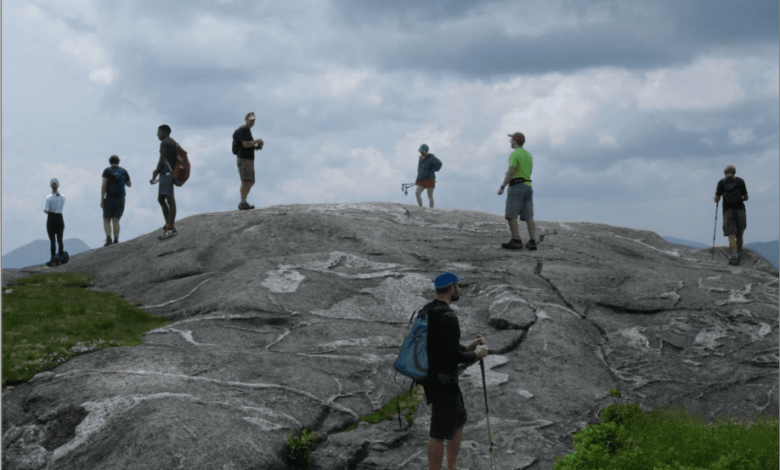
Photo: Cascade Mountain summit from Final High Peaks VUM Recommendations Report.
Source link