 The New York State Department of Environmental Conservation (DEC) is advising the public to exercise an abundance of caution when recreating in the Adirondack and Catskill backcountry areas, including the High Peaks Wilderness Area, and consider alternative plans or adjusting your travel dates.
Warmer temperatures and rain have contributed to intense, severe, and dynamic conditions across the Adirondacks and Catskills. Key winter routes are now impassable due to washed out bridges, thawed water crossings, and flooding.
Even navigable trails present additional hazards, as compacted snow may appear to be a solid surface but often leads to post holing or sinking through to the ground level.
This can happen with boots, skis, and even snowshoes. DEC staff have encountered up to two feet of standing water on frozen lake surfaces, damage to high water bridge crossings, and snow slides on steep terrain.
In the Central Adirondacks and up to about 1,500 feet there remains about 6 inches to a foot of snow, although less, and more patchy on southern slopes There is about 3 feet of snow at Lake Colden, at about 2,700 feet and up to several feet more in places above there.
Drainages have been seriously affected by the recent thaw with several bridges damaged in the High Peaks, including the Calamity Brook crossing, where the high-water bridge 1.8 miles from the Flowed Lands is washed-out, the Cold Brook Bridge near Lake Colden, and others.
Water crossings that are frozen and reliable in the winter should no longer be considered safe. Indian Pass Brook, the Opalescent River, Seward Brook, Phelps Brook, the Boquet River crossing in the Dix Range, and other major river crossings are now dangerous and may be impassable.
With the current closure of the Avalanche Pass Trail, access to the area around Lake Colden and Flowed Lands will be even more difficult for the remainder of the winter due to high waters and out or damaged bridges.
The Cold Brook Pass Trail between the Indian Pass Trail and Lake Colden has not been maintained by DEC in over a decade and is not a good option either given the water crossings on the Indian Pass Trail.
These areas also present additional hazards as high snowbanks and ice must be navigated to get down to water level for crossing. Water crossing conditions can change dramatically throughout the day, especially on warm and rainy days.
A passable stream at the start of a hike can quickly become a life-threatening crossing on the way out. The East Branch of the Neversink River in the Town of Denning, Ulster County, has been quick to rise and fall.
Each year, experienced backcountry hikers unnecessarily risk their lives attempting to cross dangerous water crossings in order to avoid a longer trip in the backcountry.
DEC advises all recreationists to know your route and multiple alternatives, be prepared to wait for water levels to lower, and plan on longer-than-anticipated detours.
If you do venture out there, remember to Hike Smart NY! Inform loved ones of your detailed trip itinerary, travel with an experienced hiking partner, and pack headlamps, emergency shelter, additional food and non-cotton clothing, along with the rest of the 10 Essentials systems.
To learn more about hiking safety essentials, visit DEC’s Hike Smart NY webpage.
Stay up-to-date with backcountry conditions and advisory updates on DEC’s website.
Read more about Outdoor Recreation in New York State.
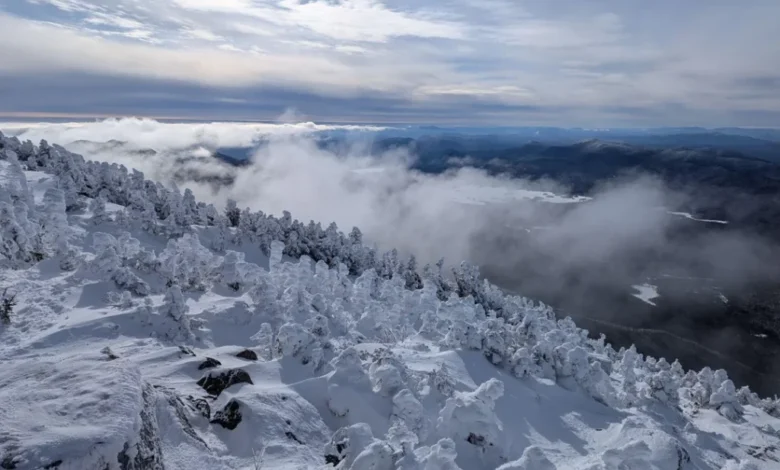
Illustration: Dix Range in winter, Adirondack High Peaks, 2025.
Source link