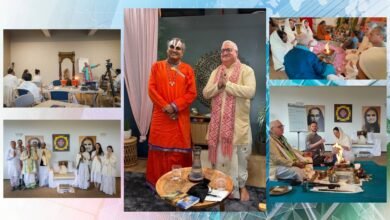

A green heritage plaque has been unveiled at the Fazl Mosque in Southfields, southwest London, marking the historical importance of a site often described as the first purpose-built mosque in the British capital. The recognition comes as the mosque approaches the centenary of its opening in 1926.
The plaque was installed through the heritage plaque program of Wandsworth Council, which highlights buildings connected with significant moments in the local history of the London borough. The ceremony took place on March 24, 2026, outside the mosque on Gressenhall Road and was attended by local officials, members of the Ahmadiyya Muslim Community, and residents of the neighborhood.
The unveiling was carried out jointly by the Mayor of Wandsworth, Councillor Jeremy Ambache, and Imam Ataul Mujeeb Rashed, who has served the mosque for many years. Among the other speakers present were Simon Hogg, leader of Wandsworth Council; Nasser Khan, Vice-President of the Ahmadiyya Muslim Community UK; historian Raheel Ahmad; and community member Munir Dean.
The event included a short ceremonial program, beginning with a recitation from the Qur’an and followed by remarks reflecting on the mosque’s historical role and its place in the life of the local community.
The Fazl Mosque occupies a special position in the history of Islam in London. When it opened in October 1926, it was the first building in the city designed and constructed specifically to serve as a mosque, rather than a converted house or meeting space. Earlier Muslim prayer gatherings in London had often taken place in adapted premises.
The mosque was established by the Ahmadiyya Muslim Community, which had begun organizing in the United Kingdom in 1913. Its construction was made possible through donations from members of the movement, including contributions from women in India.
Today the building is listed as a Grade II heritage site, a designation that recognizes structures of particular architectural or historical interest in the United Kingdom. Over the past century, the mosque has functioned not only as a place of worship but also as a center for educational, charitable, and interfaith activities.
In a message issued for the occasion, Rafiq Hayat, National President of the Ahmadiyya Muslim Community UK, said the plaque highlights both the architectural significance of the building and the role it has played in the social and religious life of the area.
Wandsworth’s green plaque program commemorates locations associated with notable historical figures, organizations, or events connected to the borough. According to the council, the recognition of the Fazl Mosque forms part of a broader initiative that has seen several historic sites marked across the borough over the past year.
For the Ahmadiyya Muslim Community, the ceremony also provided an opportunity to reiterate the movement’s well-known motto, “Love for All, Hatred for None,” which it frequently presents as a guiding principle for its engagement with wider society.
Source link