 An Oneida County historic landmark has received a big boost to its status nationally, and students and staff at played a role in making it happen.
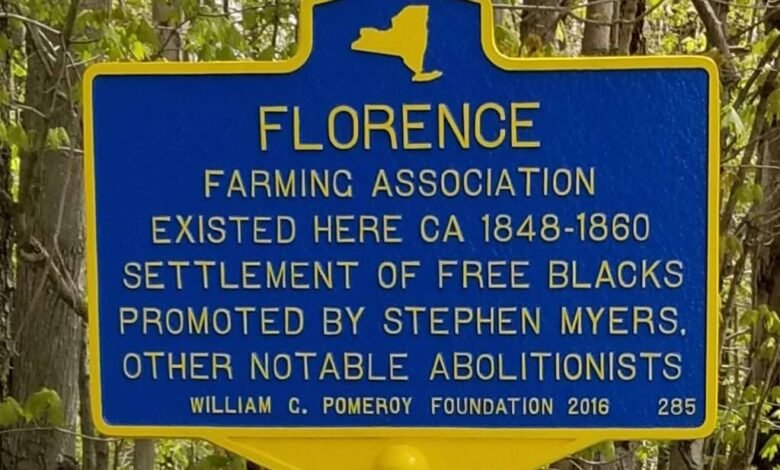
The National Park Service recently announced that the Florence Settlement of 1848 is one of 14 new landmarks added to their National Underground Railroad Network to Freedom program. The program is a list of over 800 historical sites, facilities, and programs integral to preserving the legacy of the Underground Railroad and the many individuals who bravely escaped slavery in pursuit of freedom.
The Florence Settlement, also known as the Florence Farming Association, presented a groundbreaking clean slate for free Black people to create sustainable and self-sufficient economic and social mobility for themselves. It began in 1848 with abolitionist Stephen Meyers arranging for settlers to live there on land gifted by wealthy white abolitionist Gerrit Smith.
Smith had established Central New York as a haven for freedom seekers and freedmen. An archaeological study has been taking place at Florence Settlement for about a decade, with Camden High School teacher Jessica Harney participating from the beginning.
For six of those ten years, over 150 of Camden High School’s Mohawk Valley Community College dual-credit US History and New York State History students have participated in an immersive research experiences at the site, as part of a long-term study.
Students also complete document-based study in the classroom before heading out into the field. The students, and teacher Jessica Harney, work directly with archaeologists and historians from organizations like Hartgen Archaeological Associates, the Stephen Meyers Residence, the Underground Railroad Education Center, and the New York State Museum to discover new evidence and develop a greater understanding of the activities that took place in Florence.
The effort has discovered long-forgotten cellars, wells, and foundations that validate much of the known information about the site and its story.

Source link