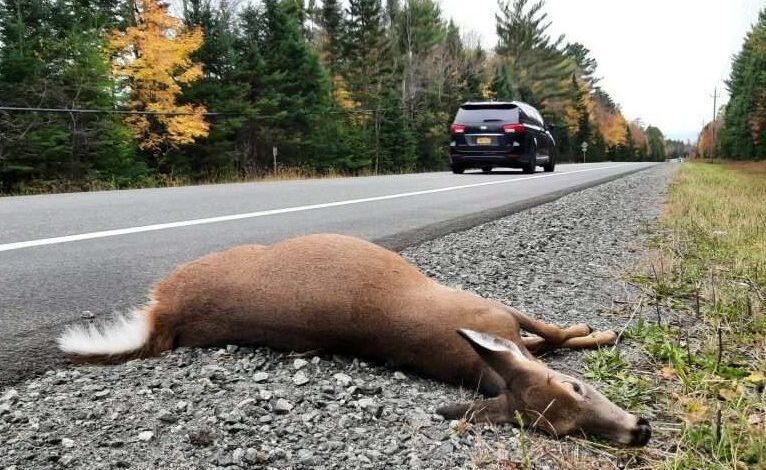
 New York State Governor Kathy Hochul has vetoed the Safe Wildlife Crossings Act, a bill designed to make highways safer for motorists and wildlife with purpose-built crossings in the New York’s North Country. The bill would have required the NYS Department of Transportation (DOT) and the NYS Thruway Authority to conduct studies to determine the most hazardous areas of highways for vehicle-animal collisions and develop a plan to reduce those hazards.
It also would have allowed New York to qualify for federal funding to pay for wildlife passages above or below the road grade, where wildlife would not be exposed to traffic.
“It is extremely disappointing to see this critical wildlife protection legislation get vetoed by the Governor,” said Adirondack Council Executive Director Raul J. Aguirre. “This bill was a win-win for wildlife and for the personal safety and health of New Yorkers across the state, especially in the Adirondacks and the North Country.”
He said the organization would not give up on the idea of making wildlife crossings a practical solution in managing unnecessary collisions with motorists and wildlife. Noting that while the veto language used by the Governor stating that the bill amounted to an unfunded mandate, the veto failed to address a real and growing hazard that undermined public safety and the health of critical species of all types.
“We will continue to see the health of our region’s motorists and critical Adirondack wildlife species, such as Moose, Fishers, Wood Turtles, and Timber Rattlesnakes at risk until legislation such as this is signed,” he said. “As New York’s whitetail deer herd grows, these crossings could be helpful in limiting deer-motorist impacts in high collision areas as well. It works in other parts of the country with similar landscape challenges. New York should be leading on this issue.”
Aguirre noted that the bill was not the only way for New York to qualify for the federal funding needed for a wildlife crossings program.
“New York can still qualify for those federal funds to carry out this work,” Aguirre said. “The DOT and Thruway Authority can include language in their budget requests to the Legislature that incorporates the need to fund those studies. The Legislature supports this program; the bill passed both houses with ease in May of this year.”
There are more than 5,000 miles of public highways in the Adirondack Park, some of which pass through the state’s wildest and most remote landscapes. The Adirondacks are home to most of the state’s moose population, and a significant population of bears and whitetail deer, all of which are large enough to cause significant damage to an automobile and injure its passengers in a collision.
Climate change is making highway wildlife collisions more common. With substantial precipitation and temperature changes projected, wildlife need to be able to move to find suitable habitat in the face of shifting conditions.
New York’s Climate Impacts Assessment has projected a 5–11°F increase in temperature and a 6-17% increase in precipitation across the state by the end of the century.
In the last 40 years, wildlife populations have declined by 60 percent globally due to habitat loss, climate change, and other environmental factors. Analysis from the United Nations shows that more than one million species face extinction due to these threats. It is essential that innovative actions are implemented to protect the ability for wildlife to migrate for their survival in the face of climate change.
Studies have shown that wildlife crossings are a good investment, often paying for themselves quickly by preventing property damage and the need for medical assistance to accident victims. They also reduce the labor and financial burden of highway departments by reducing the number of accidents, collisions, and dead animals that need to be cleaned off of public roads.
There is a pool of more than $350 million in federal funding available to municipalities, states, and tribes for construction of bridges, tunnels, and other infrastructure to allow wildlife safe passage. The New York Wildlife Crossing Act would have helped the state be more competitive in accessing this federal funding, advocates of the measure said.
Photo: Whitetail deer killed by automobile collision on NYS Route 30 near Tupper Lake in October, 2024 (photo by Justin Levine of the Adirondack Council).

Source link