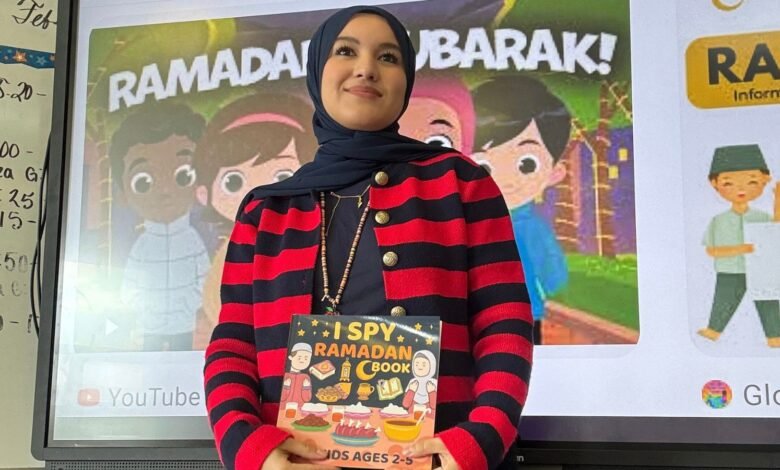
Meet Zebo Shaazizova, a California‑based educator whose journey from ESL student to classroom teacher has deeply shaped the way she approaches learning, culture, and connection. Drawing from her own experiences as an immigrant, a Muslim woman, and a mother, Zebo is passionate about creating inclusive spaces where students feel safe, seen, and curious about the world around them.
You can also follow Zebo on Instagram.
Q: Can you share a little about your journey from being an ESL student to becoming a teacher?
I came to America in 2010 knowing no English at all—none. We arrived during summer break, and when school started, I began 9th grade. After testing my English level, the school placed me in ESL classes, and to this day, I’m so grateful for that decision.
I loved my ESL classes. Being surrounded by students from all over the world, sharing our cultures, languages, and learning together was something truly special. It’s an experience I still cherish.
As my English improved, I eventually graduated from ESL. By my senior year of high school, I was taking regular English classes. Coming from knowing zero English to sitting in mainstream classes was overwhelming, but it was also incredibly rewarding.
I’ll never forget my first ESL teacher, Ms. O’Connor. She was tough, firm, and strict—but I loved that about her. Along with Ms. Tappu, they shaped my journey in ways I’m still grateful for today. I’m even still in touch with them.
From being an ESL student to becoming a teacher myself, this journey will always have a special place in my heart.
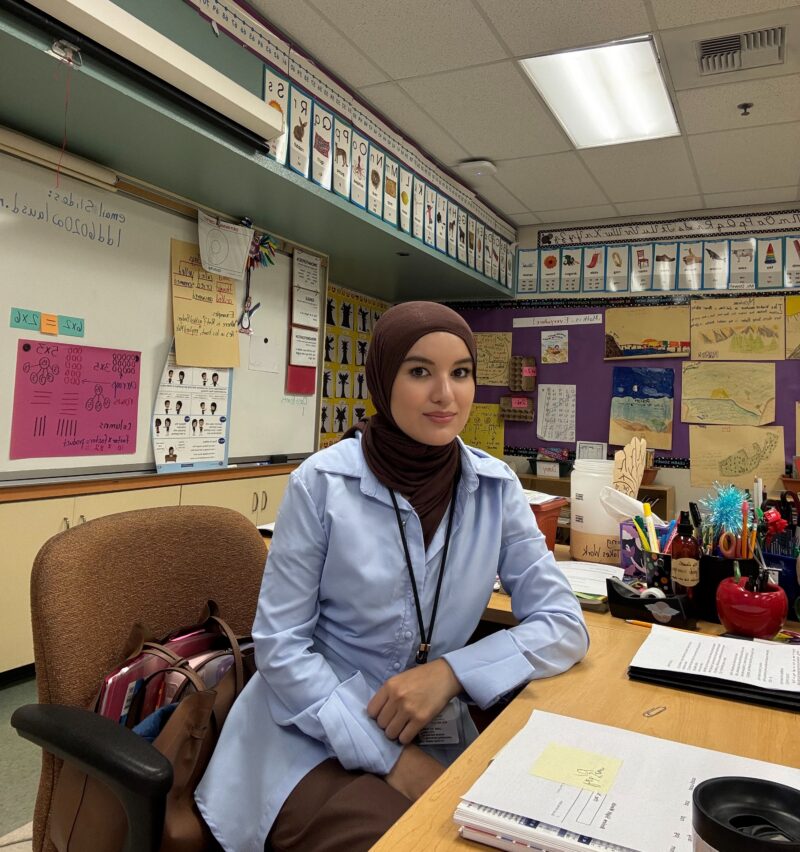
Q: What does it mean to you to teach while wearing hijab, and how has that shaped your experience in your school community?
At first—I won’t lie—I overthought a lot. I wondered what people would think of me because of my hijab, how I would be treated, and whether I would be accepted.
Before becoming a teacher, I worked as a teacher assistant at my children’s school, and that experience changed everything. From the beginning, the staff and community were incredibly welcoming, kind, and supportive. I was treated just like everyone else, whether I wore hijab or not.
That acceptance meant so much to me. It made me feel confident, proud, and comfortable in who I am. Now, as a teacher, I carry nothing but pride. I see my hijab as my crown—it represents who I am, my values, and my strength.
The students are completely comfortable with it. They’ve learned about it, asked their questions, and now it’s just a normal part of who their teacher is. Teaching while wearing hijab has shown me that representation matters, acceptance matters, and that you can be fully yourself while doing the work you love.
Q: You’re known for teaching students about Ramadan each year. What does that look like across grade levels?
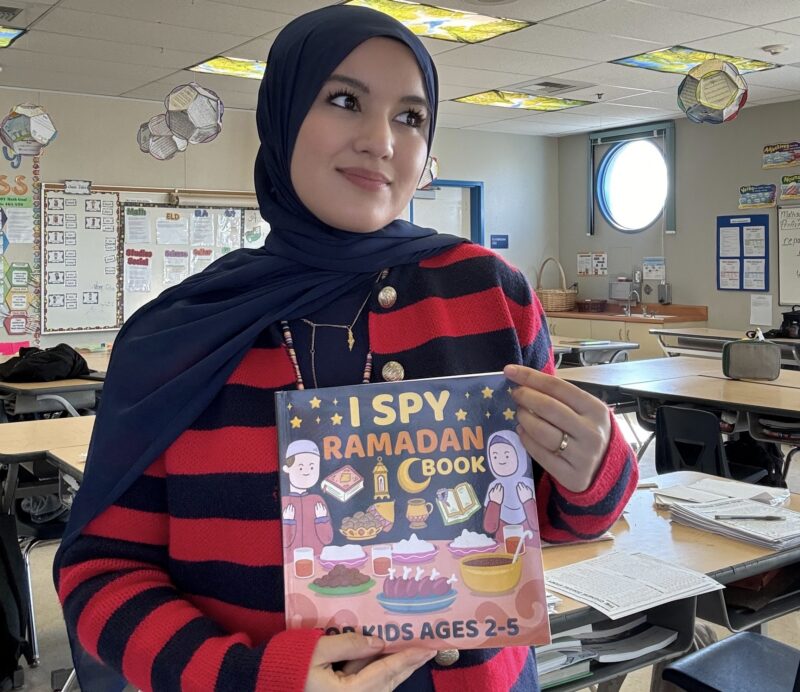
Each year, I visit classrooms as a guest speaker and teach students about Ramadan and Eid in an age‑appropriate way. I create simple mini presentations, followed by hands‑on activities like pictures, songs, and discussions that match each grade level.
I also prepare Ramadan goodie bags so the experience feels joyful and memorable. The goal is always to make the lesson welcoming, fun, and educational, while helping students understand the meaning behind Ramadan and Eid in an inclusive way.
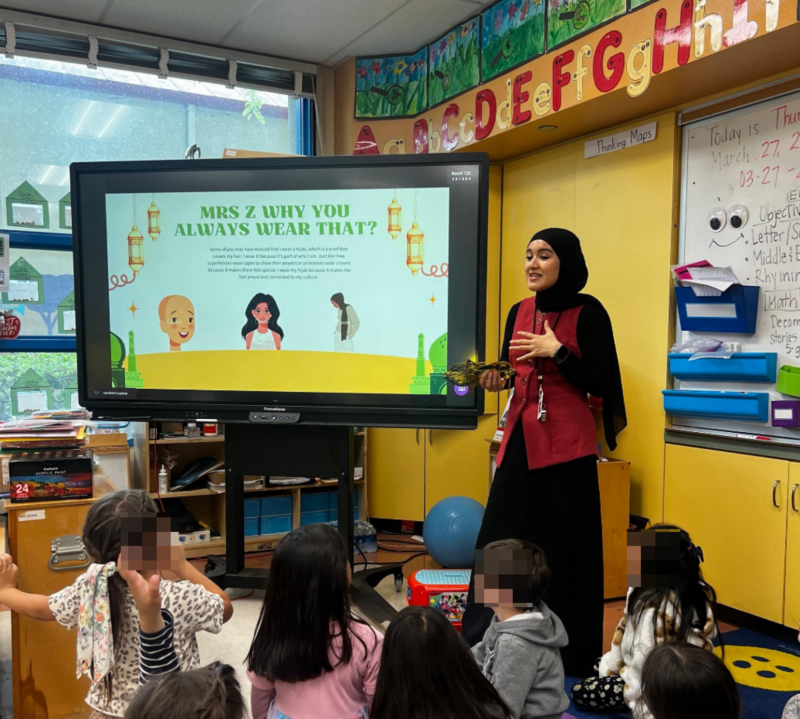
Q: Why do you feel it’s important for all students to learn about Ramadan?
Representation and understanding matter. My children regularly learned about and received goodie bags for other holidays at school, and I felt it was just as important for them—and their classmates—to see their own culture recognized too.
Teaching about Ramadan helps build awareness, respect, and appreciation for different cultures. It allows students to understand not just the celebration but the meaning behind it. By sharing our traditions, we create space for inclusion, empathy, and cultural understanding.
Q: Kids often ask about your hijab. What kinds of questions do you get?
At the beginning of the school year, students are usually very curious. Their questions are innocent and genuine like “What is that thing on your head?” or “Why do you always wear that?” Some ask, “Do you have hair?” or “Are you bald?”
My Special Ed students usually ask the funniest questions: “What is that mysterious thing on your hair?” or “I can see your hair, yay!” if it’s peeking out. I also hear “Why don’t you ever show your hair?” or “Can you show me your hair?”
Q: How do you create a classroom environment where kids feel safe asking questions?
I always consider the students’ ages and grade levels before answering. I keep my answers kid‑friendly and focus on culture and traditions rather than going too deep into religion.
I use simple, real‑life examples and try to make it fun, sometimes turning it into a story, a game, or an activity. When students feel comfortable and respected, they feel safe asking questions, and that’s how real learning happens.
Q: What message do you hope your students take away from these conversations?
I hope they learn that it’s OK to be curious and that differences should be respected, not feared. Everyone comes from a unique background, and those differences are something to be proud of.
Most of all, I hope they learn kindness, empathy, and that asking questions—when done with respect—is a beautiful way to learn about the world and the people in it.
Q: What advice would you give to teachers who feel unsure about discussing culture or religion?
It’s OK to feel unsure because that means you care. You don’t need to know everything or have the perfect words. Start small, stay age‑appropriate, and focus on culture, traditions, and shared values like kindness and respect.
When teachers model openness and respect, students learn to do the same.
Q: Anything else you’d like people to know?
Teaching should be meaningful, joyful, and rooted in connection. We take on many roles—listeners, counselors, protectors, supporters—and whatever role a child needs, it’s important to show up.
I want my classroom to be a space where students feel safe, happy, and cared for. My culture is something I’m deeply proud of, and I’m always open to sharing it.
Every student is unique. I think of my students like the Trader Joe’s flower section—full of different kinds of flowers. Each one is beautiful, each one is different, and each one deserves the care they need to grow.
For more teacher stories like this, be sure to subscribe to our newsletters to find out when they’re posted!