
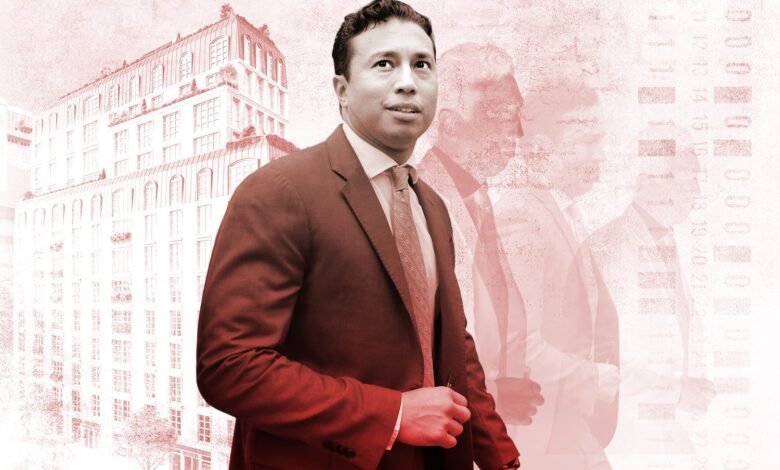

Josh Schuster appeared in a Manhattan courtroom on a dreary afternoon in February and — after years of denials and cover-ups — admitted to stealing more than $10 million from his investors.
“I’m ashamed,” the disgraced developer said as he pleaded guilty to what federal prosecutors describe as a Ponzi-like scheme.
It was an epic fall from grace for the 42-year old, a once-promising hot shot who impressed those around him with his lavish lifestyle. Things began to unravel five years ago when partners discovered his theft and booted him from his marquee development: a $150 million condo building near Gramercy Park.
Schuster spent years denying his crime and insisted he was innocent when he was arrested last year, before finally pleading guilty.
The Gramercy partners picked up the pieces and moved forward with the East Side development. And, despite its shaky start, it has become a success.
But Schuster’s deception and double-dealing has pitted his victims against each other as they try to recoup what was taken. Schuster pledged interests in the project to multiple people. To aid in his fraud, he created a complex business structure, which has made sorting things out difficult.
While the developer awaits sentencing, there’s a web of civil suits where his victims, lawyers and judges are left to find answers to a question that the criminal prosecutors didn’t have to contend with: Who’s entitled to the profits from his Ponzi project?
Unstable foundation
With its limestone facade and European-style mansard roof, the condo building at 250 East 21st Street gives off the quiet luxury vibes of the Gramercy neighborhood.
Yet under the surface lies one of real estate’s most chaotic backstories.
It started in the summer of 2016 when Schuster was introduced to Argentinian investor Claudio Soifer, who a few years earlier had assembled three lots at the corner of Second Avenue and East 21st Street.
The two teamed up and in July 2018 signed a joint venture agreement to develop the site into a 13-story condo building with 56 apartments.
“I contributed the property, as well as funds — ultimately millions of dollars — time and personal guarantees,” Soifer wrote in one of several civil lawsuits that have entangled the project. “I have put more into the venture and risked more… than anyone else.”
For his contributions, Soifer received a 50.5 percent stake in the JV. Schuster got the rest and raised capital to get it off the ground.
He met his first investors through a charity event. A complaint that the Securities and Exchange Commission filed against Schuster identifies them only as Investor A and Investor B. When organizational charts from the complaint are compared with those attached to the civil suits, we can identify two individuals: Jay Angeles and Wayne Romano.
The two paid a total of $650,000 to buy a stake in Schuster’s share of the project. He told them that they would at least double their investments and put their money into a bank account that had a balance of about $920,000. Over the next two months he spent all but $30,000 — very little of which actually went toward the development.
“The majority of these outflows were not spent on expenses related to the Second Avenue project,” according to the SEC.
Instead of spending his investors’ money on the condo, Schuster made payments to himself, used the money to cover payroll and other expenses for his firm Silverback Development and payments for other real estate projects, according to the SEC.
The receipts
By the following year Schuster faced a liquidity crunch and sought new sources of funding.
In 2019 he was introduced through mutual acquaintances to Harry Karten, a wealthy real estate developer whose father Isidore had started investing in Tribeca in the 1960s. Karten had recently sold a Manhattan property and was looking to reinvest $5 million from the sale.
Karten claimed in a lawsuit that he has “long been the largest financial investor in this project.”
But Schuster never invested the money into the project. According to prosecutors, he “almost immediately misappropriated the investor’s funds for improper purposes” including $2.35 million to pay off two loans that he owed and $440,000 to pay off earlier investors.
Within days of Karten depositing his $5 million into Silverback’s bank accounts, Schuster used at least $1.6 million to pay himself, his company’s payroll and expenses for other projects, prosecutors said. He transferred a portion of the money into other bank accounts he controlled (including $500,000 to his personal account) in order to cover up his trail.
“You’ll see a different person out of me moving forward. I promise.”
He even used Karten’s money to pay $137,000 towards his own credit cards and a $100,000 gambling debt.
In spite of all his efforts to cover up his tracks, Schuster couldn’t help but leave an incriminating paper trail.
Text messages the SEC recovered between Schuster and Silverback’s controller show that even before Karten (who is identified as Investor C) sent the money, Schuster was planning to misuse it.
On December 9, the controller texted Schuster saying they needed to figure out their cash situation to pay two investors and the upcoming payroll.
“And I need to wire the $310+ for 2nd Ave in the am Where are we getting the $ from? And what am I telling [the two other investors],” the Silverback employee texted. “they’re going to shoot me.”
“[Investor C] will close tomorrow[.]” Schuster texted back.
The SEC said the text messages clearly show that Schuster took Karten’s money “while intending to use these funds for unrelated purposes.”
Pay up
Construction began in 2020, and things got off to a rough start.
Schuster was late in providing Soifer with financial reports and updated business plans, and those that he did produce raised red flags. One report showed the project made a $1 million distribution to Soifer that he said he never received.
The project faced further delays due to the pandemic shutdown and a dispute with a property owner next to the development site.
Things really blew up in early 2021 when Soifer received a letter from a person named Nicholas Lettire.
Lettire, the founder and CEO of Lettire Construction, had worked with Schuster on past projects and floated him a $1.5 million bridge loan in April 2019. When the loan came due two weeks later, Schuster didn’t pay, and a court issued a $1.9 million judgement against him in favor of Lettire.
The Lettire letter said he was reserving his right to go after Schuster’s assets to satisfy the judgment.
But Lettire wasn’t the only one coming out of the woodwork.
In the spring, Soifer received another letter from Daniel Silber. Silber had invested equity in the Gramercy project with Schuster, but sometime in 2019 the two got into a dispute. To solve it, Schuster agreed to buy out Silber.
Schuster had several of the project’s LLCs take out a pair of loans from Silber totaling just shy of $1 million. For collateral, he pledged a portion of the LLC that Karten had invested in. Not only did it diminish the value of Karten’s investment, it also “created uncertainty concerning the management of the Second Avenue project” if the LLCs defaulted on the notes, according to the SEC.
Schuster failed to pay Silber when the loans came due, and Silber’s letter was now claiming he took over Schuster’s financial stakes and management rights in the project.
The various legal claims piling up started to put the whole development in jeopardy.
Following the Silber letter, the project’s construction lender, Sculptor Capital Management, notified Soifer that Schuster’s concealment of material litigation constituted a violation of the loan agreement. Sculptor was reserving its rights to accelerate the $90 million loan.
Soifer realized that Schuster was up to something fishy, and removed him as the managing member in April 2021.
After taking over, Soifer learned Schuster “was cutting corners and using cheaper materials then [sic] what was agreed to in the business plan and budget,” he wrote in an affidavit.
Soifer hired FTI Consulting to do an audit, which found more than $2 million had been improperly paid to Schuster and projects he was working on in Brooklyn and the Bronx.
Schuster’s removal created a power vacuum among Karten, Lettire and Silber. There was still another person in the picture, too.
In late 2024 Soifer and Karten received a letter from a lender named Alex Weiss, who said he had just purchased Schuster’s interests in the Gramercy project through a court-ordered auction.
In 2019, Weiss gave Schuster a $1.3 million loan at an interest rate of 18 percent. As collateral, Schuster pledged interests he held in a pair of projects in Stamford, CT and Long Island City. He paid off a portion of the loan but when he failed to pay the rest, Weiss got a court to enter a judgment of $1.4 million.
Schuster still didn’t pay, and a judge ordered an auction of some 30 of his entities necessary to satisfy the judgment, including his interests in the Gramercy project. Weiss won the auction on the steps of the Manhattan court house in November 2023.
Earlier emails between Schuster and Weiss show the developer pleading for more time as things got out of control.
“Last couple of weeks have been pretty shitty but I’m managing the best I can,” Schuster wrote on the last day of 2020. “I’ll say sorry again, I really am — though I know you’re sick and tired of hearing that… Please bear with me a little longer. 2021 is going to be a lot different.”
He added, “You’ll see a different person out of me moving forward. I promise.”
Deals and side deals
With Schuster out, Soifer brought in another developer — Kenneth Browne’s Urban Development Partners — to finish the condo building.
“At the time of my firm’s engagement, the project faced enormous challenges due to Schuster’s mismanagement and apparent misconduct,” Browne wrote in a March 2023 affidavit. “My team and I worked to salvage a number of key relationships and succeeded in getting the project back on track.”
That included avoiding a looming foreclosure and other threats to the project.
In one of the lawsuits, Silber had asked a judge to hand the development to a receiver. If that happened, Browne said it would be a violation of the construction loan agreement and trigger expensive default interest that would wipe out any future profits.
Construction finished in November 2022 and Browne wrote that sales “have been highly successful.” The condo’s latest offering plan from late 2023 shows the total sellout to be $153 million.
However, when the construction loan that Soifer had personally guaranteed came due in June 2023, they weren’t ready to repay. He said that when he went to refinance, Schuster tried to use the power he still had as a member of the JV to extort him.
Schuster wanted $20,000 cash in exchange for consenting to the refi, according to Soifer, and he wanted an agreement saying the money was to pay lawyers to execute loan documents.
Soifer also accused Karten and Silber of trying to extract a ransom. Soifer said he was negotiating with a lender and needed the two to sign off due to the pending lawsuits. He said that in exchange for their consent, they demanded he escrow the first $7 million of distributions, even though they weren’t entitled to it.
Soifer chose to pay Schuster “to avoid the disaster of a loan default” and refinanced with a loan from Lancewood Capital that he personally guaranteed.
But a year later there still wasn’t enough to repay Lancewood, so Soifer took out a loan and bought four apartments — including two of the best penthouses at the top of the building. He also took control of a retail unit (valued at $12 million) that he was set to receive as the first installment of the waterfall payment per the terms of the JV agreement.
Karten’s side characterized it as a shady deal between Soifer and Schuster to move the properties — which essentially represented all of the profits left in the project — out of the reach of the other investors. They said if Soifer sells the apartments, he could move the money to Argentina where it would be outside the jurisdiction of U.S. courts.
“Mr. Soifer and Mr. Schuster made all sorts of deals and side deals with each other which, essentially, now would allow Mr. Soifer to take all of the profit out of the project and leave nothing for the [Josh Schuster] Member side,” Karten’s attorney said at a hearing.
Karten asked a judge to issue a temporary restraining order preventing Soifer from selling the condos while his lawsuit is pending, which was granted in 2024.
Soifer’s perspective is that Karten’s beef is with Schuster, and it shouldn’t interfere with the JV.
“Whatever Karten thought he was getting from this investment is between him and Schuster, and has nothing to do with the project entities,” his lawyers wrote.
Frenemies
Schuster was arrested in May of 2025 and charged with securities fraud. Prosecutors said he stole the money to “fund his own lifestyle, pay off other investors in a Ponzi fashion and maintain the appearance of success.”
His initial not-guilty plea appeared to be sending the case to a trial, but that changed when he admitted his guilt in February. The fraud charge carries a maximum sentence of 20 years, but federal guidelines for a first-time offender caps it at 63 months.
The judge in his case scheduled a sentencing hearing for July, but warned that these things typically get pushed back.
Prosecutors also said they had come to terms on a $13 million forfeiture agreement, though they haven’t been able to identify assets Schuster can use to repay his victims.
The SEC’s case against Schuster is still open, along with many civil lawsuits surrounding the project. Together, they paint a fuller picture of his crime and its consequences.
The SEC said Schuster “cultivated a personal relationship” with Karten that discouraged him from asking questions about the financial status of his investment. Schuster even convinced Karten to provide a $1 million personal loan that he only partially repaid.
Angeles and Romano were not repaid any of their initial investment or distributions from the profits as of the SEC’s lawsuit last May.
In the meantime, Karten, Weiss and a partner of Silber (who died in 2023) have had something of an uneasy alliance since the restraining order went into effect and they try to get the profits they say are due to the Schuster side of the JV.
“At that point I will say that the [Schuster] member side was united however we want to use the word ‘united,’” one of Karten’s lawyers said at a hearing last June.
For now, the enemy of their enemy is their friend. But if they’re successful in getting the profits dispersed to the Schuster side, they’ll likely be fighting among each other for what’s left.
Soifer’s attorney acknowledged the mess Schuster had made with his deceptions, but said the agreement with Soifer wasn’t one of them.
“I respect that Mr. Karten may well have lost the $5 million, your Honor, but it wasn’t to the project, and they shouldn’t be able to go after the project,” the attorney said at the June hearing.
“So where we stand now is it’s done. So what are we left with? We are left with complaints.”