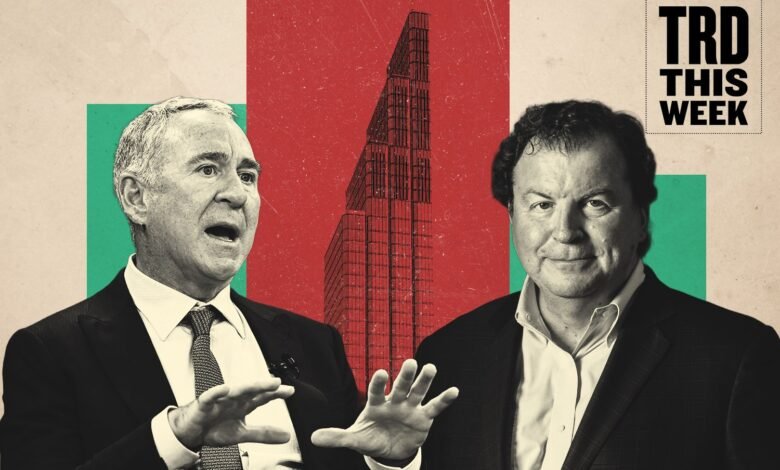
Ken Griffin isn’t waiting around for 2030.
The Citadel founder opted this week to accelerate his bet on 350 Park Avenue, electing to take a 60 percent stake in the joint venture developing the 2 million-square-foot tower rather than wait for his original deadline to either buy the site outright or assume control later. The move reshuffles the balance of power between Griffin and his partners, Vornado Realty Trust and Rudin Management, while speeding up one of Midtown’s most closely watched office projects.
Under a 2022 agreement, Griffin had until June 2030 to either acquire a majority stake in the venture or purchase the site for $1.4 billion, which would have sidelined Vornado and Rudin from the development. Instead, he chose in December to lock in the 60 percent position now, according to comments from Vornado president Michael Franco during the REIT’s fourth-quarter earnings call.
The decision also amends the original ownership split. Vornado and Rudin have until July to secure between 23 percent and 40 percent of the joint venture, with Vornado’s share ranging from 21 percent to 36 percent. Previously, Vornado was slated for 36 percent and Rudin 4 percent. Demolition is expected to begin in April following City Council approval of the rezoning and permit filings late last year.
Citadel, the anchor tenant, previously committed to 850,000 square feet, but Vornado executives signaled that footprint could grow. CEO Steve Roth said the hedge fund is still finalizing its space needs, while Franco noted interest from tenants with leases expiring between 2031 and 2033 seeking as little as 50,000 square feet.
The accelerated timeline is a vote of confidence in a top-tier Park Avenue product at a moment when much of the office market remains bifurcated. Griffin is doubling down on trophy space as other landlords retrench, a high-stakes wager that demand for best-in-class offices will outpace broader market malaise.
It’s Valentine’s Day weekend, which means it’s time to turn down the lights, pour a glass of pinot noir and snuggle up to your loved one while reading the week’s most important New York stories from The Real Deal.
Waldorf Astoria hits market after eight-year condo conversion
Dajia Insurance Group, a state-run Chinese firm, plans to sell the historic Waldorf Astoria property in Manhattan.
A lengthy renovation reduced the hotel portion to 375 rooms and created 372 condominium units, which would be sold separately, though the overall property sale will include adjoining restaurants and retail sites.
The project, which launched in 2017, faced major disruptions, including the seizure of the original developer, Anbang Insurance Group, by the Chinese government.
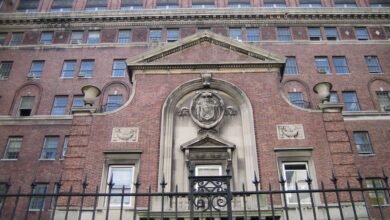
Manocherian Brothers float resi conversion despite Midtown South carveout
The City Council’s Midtown South rezoning carved out 37 Garment District properties, including a building at 257 West 39th Street, to preserve the area’s “unique cluster of businesses.”
Despite this exclusion, the owner of 257 West 39th Street is pursuing a site-specific zoning change to allow for a partial residential conversion of the commercial building.
The Garment District Alliance opposed the carveout, citing a nearly 30 percent vacancy rate in the excluded properties and arguing that the city is needlessly preventing housing and growth in an area well-served by transit.
Jonathan Miller and Douglas Elliman break up data partnership after 32 years
Appraiser Jonathan Miller’s 32-year relationship with Douglas Elliman has come to a close, with the final market report under the partnership published on Thursday.
Miller, who heads Miller Samuel appraisal firm and is an adjunct professor at Columbia, is shifting his focus to a new neighborhood-level housing index venture called StreetMatrix.
Launched with economist Nick Huntington-Klein, the venture offers market performance data down to bedroom count and neighborhood, aiming to provide a more granular view than traditional city-wide housing indexes.
Tech took Manhattan office leases by storm in January
January was a good month for tech companies, going by the number of leases they signed within the five boroughs of New York City. Of the top ten office leases in January, four of them were for tech companies and two of those were for AI platforms.
“My very wealthy Russians”: Insider brokers’ frenzy to access Epstein’s townhouse
And finally, Jeffrey Epstein tightly controlled access to his Upper East Side townhouse, arbitrarily rejecting offers and expressing suspicion about potential buyers.
Emails show brokers attempted to gain entry by name-dropping ultra-wealthy individuals, often without success and in some cases using the names as bait.
Epstein never sold the property while alive, seeking exorbitant prices (claiming to have rejected offers up to $250 million) and turning down a $125 million offer around 2010, indicating he was likely averse to selling.
Read more

Citadel’s Ken Griffin takes stake in 350 Park, readies for demolition

Waldorf Astoria hits market after eight-year condo conversion

Manocherian Brothers float resi conversion despite Midtown South carveout