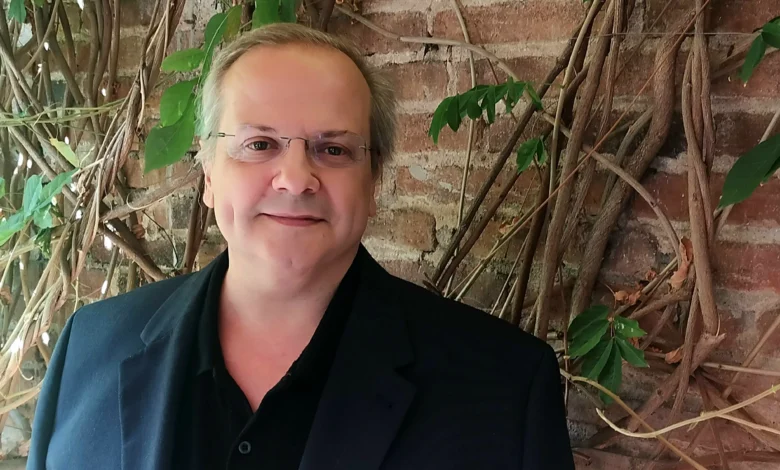
A communicator, former city official and public-facing advocate for religious freedom, Bassas has brought a practical and notably open approach to one of Catalonia’s most sensitive portfolios.

In Catalonia, where religious life is both deeply rooted and increasingly diverse, the role of government is not simply to regulate institutions but to help make coexistence workable. That is the landscape in which Ramon Bassas i Segura was appointed Director General of Religious Affairs in September 2024, taking charge of the Generalitat office responsible for relations with religious communities, research and public policy in matters of belief.
Since then, Bassas has emerged as a distinctive figure in the Catalan public sphere: neither a distant bureaucrat nor a culture-war polemicist, but a public official who speaks about religion in the language of rights, pluralism and civic normality. In a Europe where religion is often discussed only when conflict erupts, his tone has been different. He has argued repeatedly that religious practice is not a concession but a right, and that ignorance about religion often feeds prejudice rather than social peace.
A trajectory shaped by politics, communication and religion
Bassas did not arrive at the post as a specialist from a narrow administrative track. His official biography published by the Catalan government shows a long and varied trajectory. Born in Mataró in 1968, he trained in protocol and institutional relations, then spent two decades in municipal politics in his home city. Between 1991 and 2011 he served in a succession of responsibilities at Mataró City Council, including youth, central services, public safety, urban planning and the post of first deputy mayor.
That municipal experience matters. Religious affairs in Catalonia are not only discussed in conference halls or theological faculties; they are negotiated in neighbourhoods, planning decisions, school settings, local festivities, burial questions and community facilities. Bassas’s background in local government appears to have given him a practical understanding of how belief enters public life through concrete administrative questions, not abstract slogans.
After leaving elected office, he moved more deeply into the world of ideas and communication. From 2011 to 2024 he worked as head of communication for Fragmenta Editorial, one of Catalonia’s best-known publishers of religious and spiritual literature. He has also been a long-time contributor to Catalunya Religió and has written for a range of religious and cultural outlets. That combination of public administration and religious-literary communication helps explain the style he has brought to office: administrative, yes, but also attentive to meaning, language and the symbolic place of religion in society.
Religious freedom as a public good
One of the clearest features of Bassas’s public discourse has been his insistence that religious freedom is not a niche concern for believers alone. In an interview after taking office, he said that “religious practice is a right” and warned that when the media stop covering religion seriously, prejudice tends to fill the gap. He also argued that journalists should be better equipped to understand the country’s religious plurality and its different forms of expression. That framing is significant because it places religion within democratic literacy, not outside it.
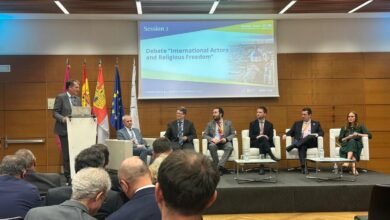
His interventions since then have stayed close to the same idea. At the closing session of the III International Congress on Religious Freedom and Freedom of Conscience at Blanquerna in early 2026, Bassas described the event as a sign of what religion means in Catalonia today: something real, socially relevant and worthy of serious debate and research. It was a revealing choice of words. Rather than treating religion as a private remnant of the past, he presented it as an enduring social fact that institutions must understand if they want to govern well.
This approach also fits the mission of the Directorate General of Religious Affairs, which is tasked with attending to religious communities established in Catalonia, producing studies and reports, and maintaining institutional relations on religious matters. Under Bassas, that role has appeared less defensive and more openly engaged with the idea that public institutions should know the country as it is, including its spiritual diversity.
An agenda that reflects real contact
The strongest evidence of Bassas’s openness may be found not in broad declarations but in the public record of his agenda. The Generalitat’s transparency portal shows a large number of meetings with religious and civil-society actors. Publicly listed engagements include meetings or visits involving the Federació Islàmica Catalana, the Unión de Comunidades Islámicas de Cataluña, Jewish community representatives in Barcelona, the Fundación Privada Jabad Lubavitch Barcelona, Casa Virupa in the Buddhist sphere, the Consell Evangèlic de Catalunya, the Consell Adventista de Catalunya, the Església Ortodoxa Espanyola, the Testimonis Cristians de Jehova, Catholic dioceses and monasteries, and interfaith organisations such as AUDIR.
No public agenda can tell the whole story of a mandate. But it can show whether a director is willing to step into different spaces, listen to different communities and make the office visible across a plural religious map. In Bassas’s case, the pattern is clear: Islamic, Jewish, Buddhist, evangelical, Orthodox, Catholic and interfaith actors all appear in the record. For an office whose legitimacy depends on even-handedness, that matters.
From symbolic dialogue to practical policy
Bassas’s tenure has also been marked by initiatives that connect symbolic recognition with practical governance. The Directorate has supported or accompanied “Night of Religions” activities in several municipalities, including Mataró, while his public agenda shows involvement in similar events in Vilafranca del Penedès and Amposta. These initiatives may look modest, but they are a revealing part of Catalonia’s model: reducing distance between communities not through slogans, but by opening doors, inviting visits and normalising presence.
At the same time, the office has continued work on the policy side of religious diversity. Bassas has been associated with efforts to connect freedom of religion to urban planning and public services, including official discussions on how to make planning rules compatible with the right to worship and how specialised social services can better respect diversity of beliefs. That kind of work rarely generates headlines, but it often determines whether religious freedom exists only on paper or can actually be exercised in daily life.
There is also a cultural dimension to his approach. In December 2024, the Generalitat highlighted the reach of the Mostra de Cinema Espiritual de Catalunya, which extended across 35 municipalities with 95 screenings. Bassas described it as one of the broadest spaces for reflection and debate on cinema and spirituality in Catalonia. That is a telling formulation: not religion as a closed identity marker, but religion and spirituality as part of a wider civic and cultural conversation.
A Catalan style of engagement
What stands out in Ramon Bassas’s public trajectory is not ideological flamboyance but a style of engagement that feels recognisably Catalan in the best sense: local, dialogical, institutionally grounded and wary of turning diversity into spectacle. He comes from politics, publishing and religious commentary, and that mix seems to have helped him avoid two common mistakes in public debate about faith: romanticising religion on the one hand, and treating it as a problem to be managed on the other.
Instead, he has spoken and acted as though religious communities are part of the country’s social fabric and should be approached with the same seriousness that democratic institutions owe any other part of civil society. That does not eliminate tensions, nor does it guarantee agreement. But it does create the conditions for something increasingly rare in European public life: a government office willing to approach religion not with embarrassment or suspicion, but with a measured, rights-based openness.
In Catalonia, where diversity is no longer a future scenario but a present reality, that may be one of the most important parts of the job.
Source link