When elementary teacher Allison Fisher was invited to review The Henry Ford inHub Model i program, she wasn’t sure what to expect. But she was pleasantly surprised to find so much to help get her students thinking more like innovators. Available for free—just set up an account!—this program helps kids understand the habits of innovation and how to become an innovator themselves.
Fisher is a teacher in Atlanta, Georgia, who has been teaching elementary school for 10 years. She is currently a Special Education teacher working with students in the 4th and 5th grades. Her students often do STEM activities that require design, creativity, and problem-solving skills. In this Teacher Pick, Allison shares how the inHub Model i program builds on many standards across subjects in interesting new ways.
For which grade levels and subject areas do you think The Henry Ford inHub Model i is best suited?
Does this product align with any specific standards?
It aligns with so many standards across all subjects! Here are a few Georgia Department of Education standards that align with the Henry Ford Model i:
Math:
5.MP Display perseverance and patience in problem-solving. Demonstrate skills and strategies needed to succeed in mathematics, including critical thinking, reasoning, and effective collaboration and expression. Seek help and apply feedback. Set and monitor goals.
Science:
S5E1 Obtain, evaluate, and communicate information to identify surface features on the Earth caused by constructive and/or destructive processes.
S5L4 Obtain, evaluate, and communicate information about how microorganisms benefit or harm larger organisms.
Social Studies:
SS5H3 Explain how the Great Depression and New Deal affected the lives of millions of Americans.
ELA:
5.P.EICCI. BIG IDEA: Engagement & Intention for Comprehension & Composition. Students develop personal and academic identities as readers and writers, approaching texts for a variety of tasks and purposes and engaging in reading and writing processes in order to deepen comprehension and strengthen composition.
5.P.CP.1 **Collaboration** Collaborate with others to accomplish shared goals and projects.
5.T.C **I. BIG IDEA: Context** Students describe the influences of purpose and audience on texts.
How did you use this program in your classroom?
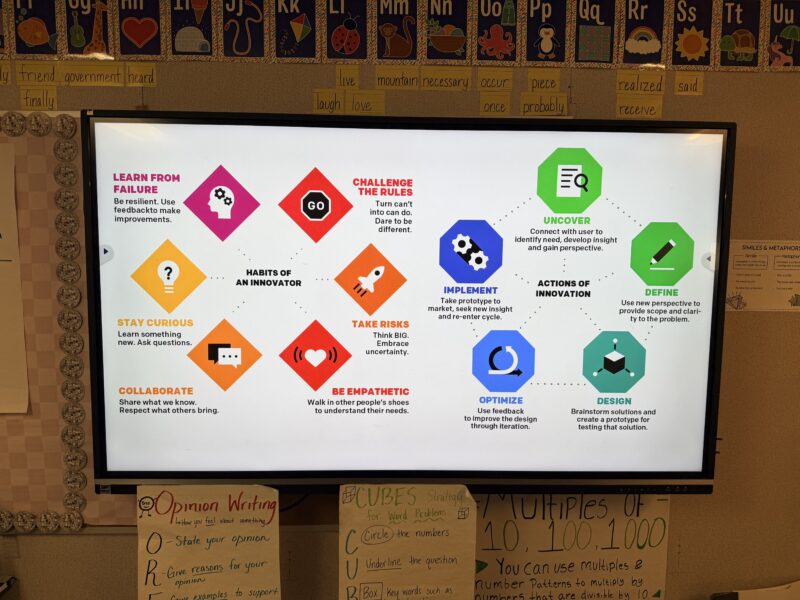
I used the Model i framework during my ELA block, beginning with an introduction to the visuals of the Henry Ford Model i Habits and Actions. We briefly reviewed each Habit and Action to clarify any misconceptions, then discussed what they personally meant to us. Together, we talked about how these habits and actions can be applied both in school and in everyday life.
My students especially enjoyed sharing real-life examples of times when they had to “rewrite the rules,” show empathy, collaborate, or revise and optimize something. They mentioned experiences like creating new plays to help their sports teams win, learning to sew and design their own clothing, and working together during play rehearsals to bring an imaginary world to life onstage.
Can you share an example of how you’ve taught or reinforced one of the Model i habits in your classroom?
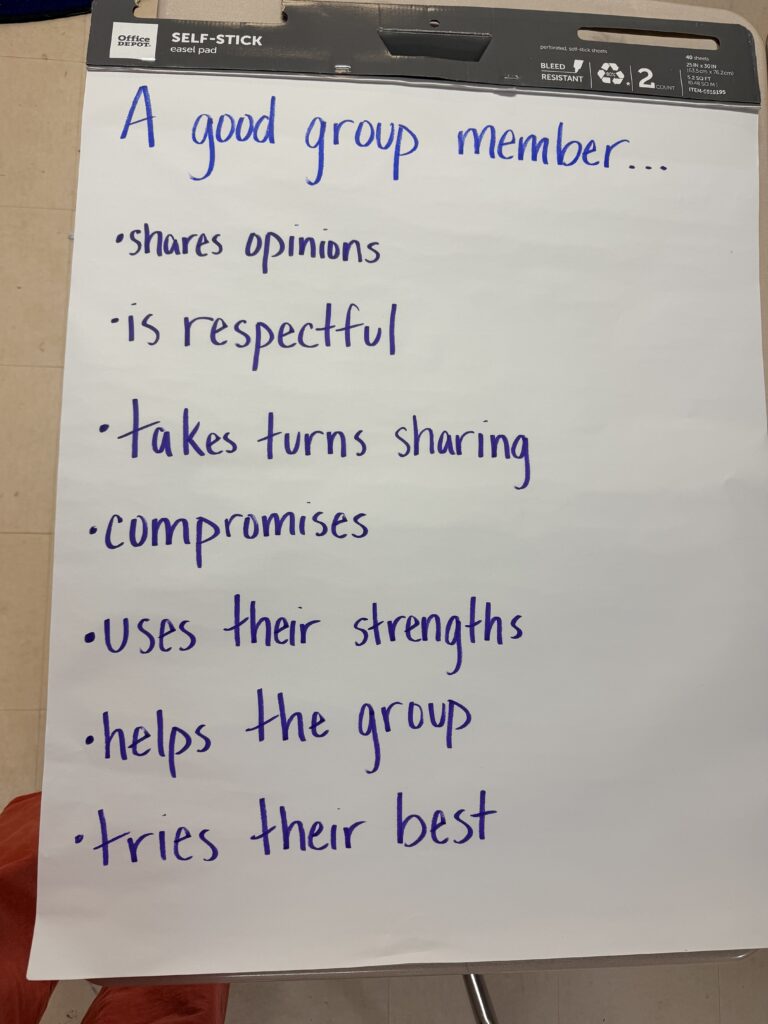
I chose to focus on collaboration with my students, beginning with the primer lesson and the Kahoot. I used the Kahoot after we reviewed what it means to collaborate but before starting the Zoo Trip Planning activity. It was a fantastic way to practice what we had just discussed. During the primer lesson, it was fascinating to watch my students list so many qualities of a good collaborator—only to see very few of those qualities in action during the first five-minute planning session. After some reflection, students had a clearer understanding of not just what collaboration looks like on paper, but also how to apply it, making the second planning session run much more smoothly. It turned out to be a wonderful lesson in the power of compromise and respectful collaboration.
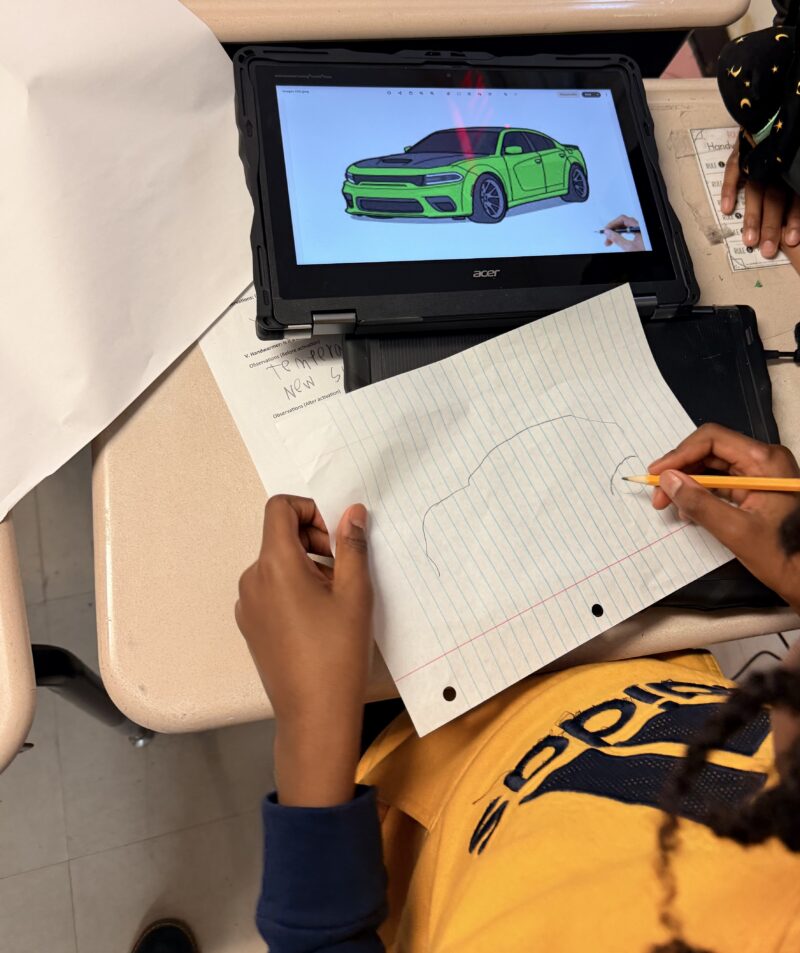
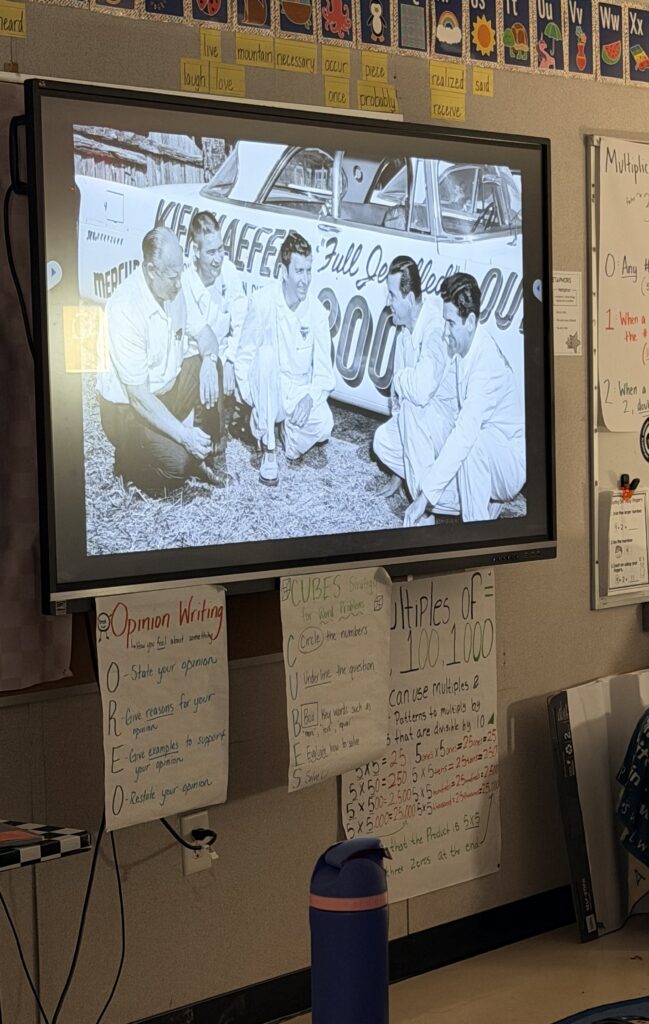
I also had my students complete the “Driven To Win: Racing as a Team” virtual field trip, which was a great follow-up to our collaboration lesson. They loved learning about the pit crew and how the team’s success depends on every member pulling their weight. Their designs were creative and thoughtful, and they did a wonderful job assigning roles for each person in their “pit crew.” We wrapped up with a gallery walk and spent a few minutes giving each group constructive feedback.
How did your students react to the product?
My students really enjoyed the lessons and videos—they’re so well done and very engaging. They also loved the Model i: Actions of Innovation Kahoot and wanted to keep playing! I found it helpful to teach the Habits and Actions in separate lessons so students could build a deeper understanding of each. We also played the Model i: Habits of an Innovator Kahoot! The vocabulary provided good opportunities for discussion and language development, so we worked together to brainstorm synonyms for some of the more challenging words. For example, we replaced “implement” with “try it out” and “optimize” with “improve,” which helped students connect the concepts to their own experiences.
Can you sum up your overall experience with Model i?
The Henry Ford Model i is a wonderful resource for students of any age. I especially enjoyed the engaging videos and lesson ideas. These skills are so important for young minds to be learning.
Was Model i easy to use and implement in your classroom?
It was super easy to implement in my classroom. As a teacher, I really appreciated that all the materials needed for the activities were typical classroom supplies I already had on hand. The lessons were thorough, engaging, and simple to facilitate, requiring little to no prep time in advance. The website was also really easy to navigate, making it effortless to locate the tools and lessons I needed.
What were the two features you liked most about Model i?
The Kahoots and lesson plans were excellent. I really liked how the Kahoots broke down vocabulary and included short videos to reinforce key ideas. Because each video was followed by a related Kahoot question, my students stayed focused and excited to participate. I also liked how clearly the lessons were structured and how easy they were to implement. My students completed two of them and really enjoyed both. The discussion prompts, design activities, and additional videos and resources made for complete, engaging lessons for my students—and they required very little preparation or facilitation on my part.
What makes Model i special or unique compared to other frameworks you’ve used?
I really like how the framework is divided into Habits and Actions. I find myself naturally more drawn to the Habits, while some of my students seemed to connect more with the Actions. I appreciate that there are so many ways to engage with the framework and apply it across different types of tasks—not just in design or STEM activities. As you explore each component and see how they work together, it becomes clear how holistic and valuable the framework truly is.
How will the framework save you time or make teaching easier?
As my students and I become more familiar with the entire framework, it will be easier to recognize and reference its components during class activities. Instead of using different terms depending on the subject, we can now apply the Model i framework language consistently across all areas of learning.
Do you plan to use Model i again?
I plan to use the framework in our next writing activity as we begin peer editing. I’ll revisit what we’ve learned about collaboration, empathy, and accepting feedback to optimize something, guiding students to apply those skills as they edit one another’s writing.
Do you have any suggestions for improvement or constructive feedback? Did you add anything to your lesson that might be helpful for other teachers?
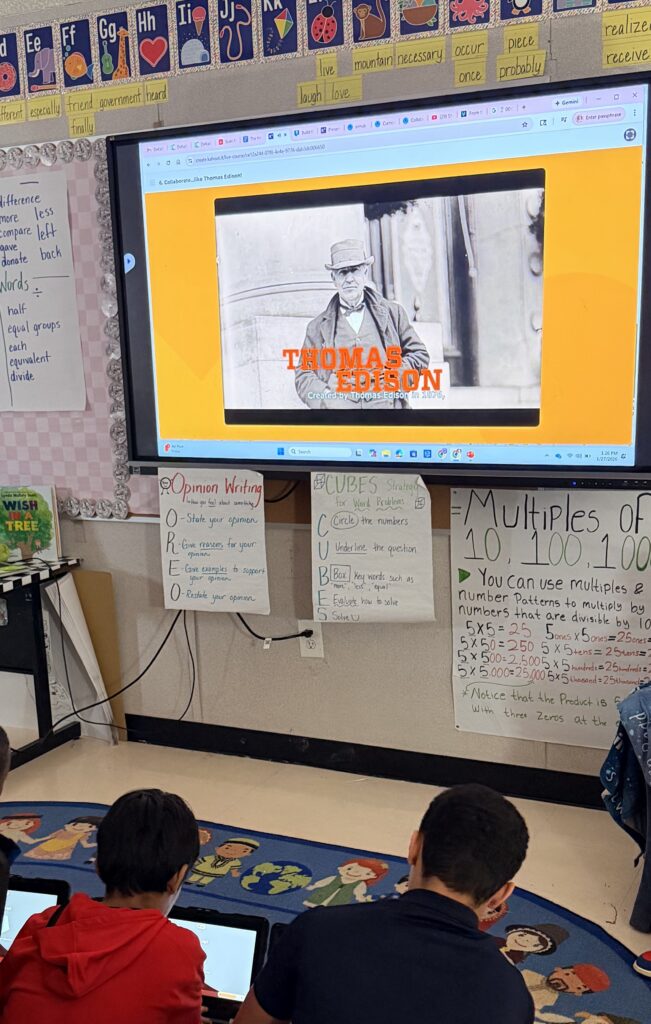
The synonyms we added for challenging vocabulary were very helpful for my students. I’d suggest creating a more child-friendly version of the framework for elementary learners. As a Special Education teacher, I also love teaching about Thomas Edison—he’s one of my favorite innovators because of his struggles with dyslexia. His perseverance and success despite learning challenges are incredibly inspiring and could be a meaningful addition to a lesson featuring Edison’s story.
Is there anything else you’d like us to know about your experience?
I learned just as much as my students did! I really enjoyed learning about all these different innovators and all about The Henry Ford museum. After our lessons in class, I felt inspired and I believe my students did too.

Teacher Picks is a sponsored program available from We Are Teachers. All opinions shared in the review are honest and based on the teacher’s direct experience. To learn more about our guidelines and review process, click here.
Source link