 Light in the evening brings the first sign of spring’s arrival. Before the snow has fully melted or any scraps of green start to appear, those lengthening days are a promise. Just when I’ve forgotten the world was ever anything except cold and gray, I’ll step outside into a mauve six o’clock sunset and remind myself to be patient.
Soon the salamanders will be stirring in the leaf litter, the fiddleheads will poke their sleepy heads above the ground, and color will return. But how does the forest know when spring has truly arrived?
You may have heard that trees are triggered to shed their leaves by the shortening days of autumn. The opposite effect is also true. Day length – or photoperiod – is an important way for plants and animals to tell time, tracking the changing seasons regardless of variations in temperature.
This seasonal clock is especially important for animals arriving from far away, such as migratory birds, which must anticipate when to embark on their journey.
Longer days are a reliable indicator that their summer homes will soon be filled with plentiful food. Plants and insects use photoperiod to help avoid the tricks of “false springs,” periods of unusually warm winter weather.
But how do plants and animals sense day length? The answer involves both the ability to sense light and the regulation of internal biological cycles.
Daily clocks, also known as circadian rhythms, govern the fluctuations of hormones, proteins, and other cellular machinery across a twenty-four-hour period, leading to changes in energy level and behavior.
In humans and other mammals, circadian rhythms influence when we feel sleepy, hungry, and alert. A small region of the brain known as the suprachiasmatic nucleus, or SCN, presides over these rhythms like the conductor of an orchestra.
Using the light-sensing information from our eyes, the SCN keeps our internal clocks in sync with the exterior environment. When sudden changes disrupt this cycle, such as international travel, the SCN scrambles to react, leading to symptoms like jet lag.
As days lengthen in the spring, circadian rhythms adjust accordingly. This can often be accompanied by increased energy, activity, and restlessness, sometimes called “spring fever.”
For hibernating animals, telling time with internal biological clocks is even more complicated. The peaks and valleys of daily circadian rhythms, although still present, are blunted as they slip into metabolic torpor.
Instead, these animals depend on longer-term circannual rhythms to govern their emergence from dormancy. Since many hibernators burrow out of the sun’s reach, it is not the light that directly summons them, but their changing hormones which trigger an internal recognition of spring.
Temperature and other environmental factors also play major roles, and different animals have varying degrees of sensitivity to these cues. For example, groundhogs use a combination of warming temperature and internal hormonal cycles to determine when to end their hibernation.
This usually occurs around Groundhog Day in early February. Therefore, whether the groundhogs emerge as expected can be indicative of warm weather on the way – though it’s a heavy burden for poor Punxsutawney Phil to represent his entire species.
The degree to which each forest dweller relies on photoperiod can also lead to mismatches in timing, particularly as the seasons become more unpredictable due to climate change.
Leaf emergence is heavily influenced by temperature, and despite photoperiod helping to keep plants on schedule, decades of historical observation and citizen science show that “budburst,” when leaves and flowers start to grow, has shifted earlier by about two weeks in the Northeast.
Yet late snows and unexpected below-freezing nights haven’t changed the same way, leading to more intense “false spring” episodes and dieback.
The crossed wires between photoperiod and temperature can also lead to differing rhythms between animals and their food sources, such as insects hatching out and developing before migratory birds arrive.
While day length will always reliably indicate the return of spring, these changing patterns can disrupt long-standing evolutionary expectations about what spring looks like.
Next time you’re outside, close your eyes and count to one hundred and twenty. Each day in March gains about three minutes of light. This may not seem like much, but it carries a wake-up message for the whole world, one that reads: together, we have made it through another dark season.
Read more about Spring in New York State.
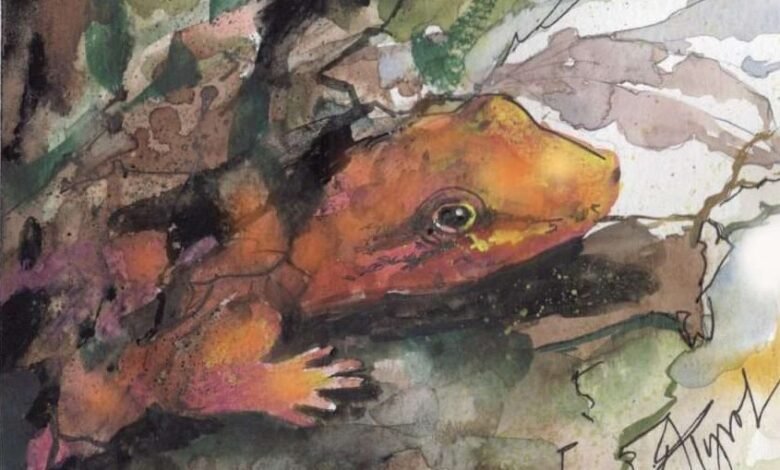
Maggie Weng is a writer and scientist currently working as a NASA postdoctoral fellow. Illustration by Adelaide Murphy Tyrol. The Outside Story is assigned and edited by Northern Woodlands magazine and sponsored by the Wellborn Ecology Fund of New Hampshire Charitable Foundation: nhcf.org.
Source link