 On February 19, 1923, the US Supreme Court issued a ruling legally barring all Indians from becoming U.S. citizens and revoking citizenship from many who had attained it.
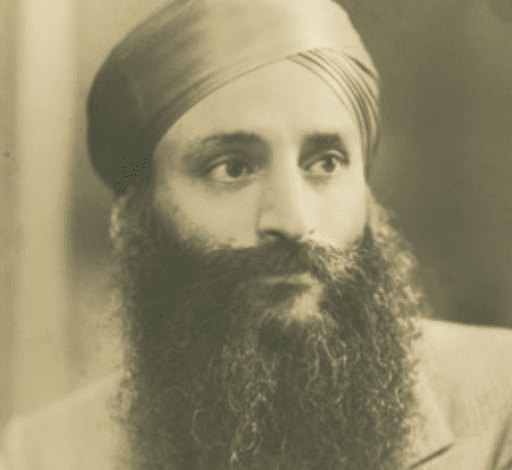
Bhagat Singh Thind (1892-1967), an Indian Sikh man born in Punjab, migrated to the U.S. in 1913. After enlisting in the U.S. Army and serving in World War One, Thind applied and obtained approval for citizenship in 1920.
Though he entered the country prior to the Immigration Act of 1917, which barred nearly all immigration to the U.S. from Asia, the Bureau of Naturalization appealed the grant of his citizenship request and the case went to the Supreme Court.
Thind was a founding member of the Ghadar Party, an Indian independence movement headquartered in San Francisco.
Thind had filed for citizenship under the Naturalization Act of 1906, which said that citizenship is available for “free whites.” Thind argued to the Supreme Court that, under anthropological classifications of the time, Indians of the “high caste” from his native region of Punjab were “Aryan” and thus white for purposes of American law.
The Court conceded that, ethnologically, Indians were “Aryan” and thus Caucasian; however, the Court ruled that the words “white people” in American statutory language had to be taken at their common meaning and that “the average man knows perfectly well that there are unmistakable and profound differences.”
 The Court claimed that Indians were not able to assimilate the way more typical “white” immigrants could and held that a scientific study cannot determine citizenship. As a result, they held that Thind was not white and was legally barred from becoming a U.S. citizen.
The decision had a significant impact. Many Indians who had previously obtained citizenship in the U.S. now had it revoked and lost many rights and privileges as a result.
In California, the 1913 Alien Land Act barred non-citizens from owning land, and Indian Americans in the state who lost their citizenship also lost their land. Following the decision in United States v. Bhagat Singh Thind (1923), America’s Indian immigrant population dropped by half.
Thind however, remained in the United States, earned a PhD in theology and English literature at UC Berkeley, and delivered lectures on metaphysics. His lectures were based on Sikh religious philosophy, but included references to the scriptures of other world religions and the works of Ralph Waldo Emerson, Walt Whitman, and Henry David Thoreau.
In 1936, Thind applied successfully for US citizenship through the State of New York. This followed the 1935 passage of the Nye-Lea Act, which had made First World War veterans eligible for naturalization regardless of race.
The act was named for Republican Senator Gerald P. Nye of North Dakota and Representative Clarence F. Lea of California, a Democrat.
Read more about white supremacy in New York State.
This article was drawn from the Equal Justice Initiative‘s History of Racial Injustice Calendar.
Photos, from above: A portrait of Bhagat Singh Thind and Sergeant Bhagat Singh Thind in his US Army uniform during World War I at Camp Lewis, Washington, in 1918.
Source link