Delftware is a renowned type of tin-glazed earthenware, predominantly featuring white pottery with blue cobalt designs, originating in The Netherlands during the 17th century to mimic Chinese porcelain.
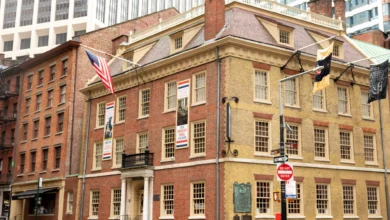
When over seventy-five pieces of 17th and 18th century Delftware were rediscovered in an historic Manhattan townhouse, decorative art advisor and writer Genevieve Wheeler Brown recognized the pieces could tell an amazing story.
In her Beyond Blue and White: The Hidden History of Delftware and the Women Behind the Iconic Ceramic (Pegasus Books, 2025), what begins as a curatorial exercise quickly evolves not only into an exploration of this colorful, expressive, and sometimes even humorous decorative art, coveted for hundreds of years, but also an unexpected uncovering of forceful female lives yet untold.
Connecting the accounts of women across centuries, Beyond Blue and White allows us to craft a more complete picture of female experience through the lens of material culture.
We meet female Delftware makers, including Barbara Rotteveel founder of “The Three Bells” Delftware factory in 1671. We are introduced to female Delftware patrons such as Queen Mary II, who found her means of expression while creating a vogue in the 17th century for Delft blue and white across royal courts.
And then there are the female collectors beginning in the 19th century who saw the artistry and craft in these ceramics others had overlooked.
Foremost among them was Jane Norton Grew (Mrs. J. Pierpont Morgan, 1868–1925) and Alice Claypoole Gwynne (1845–1934, Mrs. Cornelius Vanderbilt II) who came together with fellow New York women and laid the groundwork for women in the museum world while preserving decorative arts with an educational mission.
With illustrations of period objects, documents, maps, paintings, prints and drawings, Beyond Blue and White is a colorful celebration of an iconic decorative art and dynamic women living in extraordinary times.
Wheeler Brown’s narrative encourages us to see beyond the dazzling cobalt glaze of Delftware to consider that these vessels are also our connection to a history with a fascinating group of women at its center.
As a decorative art advisor and writer with over thirty years in the art world, including a decade with Christie’s in New York and London, Genevieve Wheeler Brown has been actively involved in the community of Delftware.
You can hear her discuss the book in a recent interview at WAMC.
Book Purchases made through this Amazon link support the New York Almanack’s mission to report new publications relevant to New York State.
Read more about ceramics in New York State.
Source link