
 The Corporation for Public Broadcasting (CPB), the private, nonprofit corporation created by Congress to steward the federal government’s investment in public broadcasting, announced Monday that its Board of Directors has voted to dissolve the organization after 58 years, rather than be “vulnerable to future political manipulation or misuse.”
The decision follows Congress’s rescission of all of CPB’s federal funding and comes after sustained political attacks by the Trump regime and Republican Party that made it impossible for CPB to continue operating as the Public Broadcasting Act of 1967 intended.
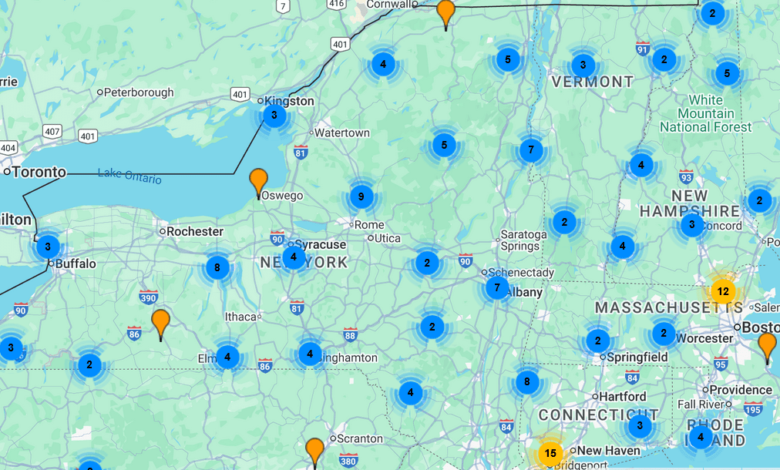
In New York State support for 89 NPR and PBS station transmitters has ended. CPB had supported for more than 1,500 locally managed and operated public television and radio stations nationwide.
“For more than half a century, CPB existed to ensure that all Americans—regardless of geography, income, or background—had access to trusted news, educational programming, and local storytelling,” said Patricia Harrison, President and CEO of CPB.
“When the Administration and Congress rescinded federal funding, our Board faced a profound responsibility: CPB’s final act would be to protect the integrity of the public media system and the democratic values by dissolving, rather than allowing the organization to remain defunded and vulnerable to additional attacks.”
“What has happened to public media is devastating,” said Ruby Calvert, Chair of CPB’s Board of Directors. “After nearly six decades of innovative, educational public television and radio service, Congress eliminated all funding for CPB, leaving the Board with no way to continue the organization or support the public media system that depends on it. Yet, even in this moment, I am convinced that public media will survive, and that a new Congress will address public media’s role in our country because it is critical to our children’s education, our history, culture and democracy to do so.”
CPB’s Board said they determined that without the resources to fulfill its congressionally mandated responsibilities, maintaining the corporation as a nonfunctional entity would not serve the public interest or advance the goals of public media.
“A dormant and defunded CPB could have become vulnerable to future political manipulation or misuse, threatening the independence of public media and the trust audiences place in it, and potentially subjecting staff and board members to legal exposure from bad-faith actors,” they announced.
“While CPB’s chapter is ending, the mission of public media endures. Local stations, producers, journalists, and educators across the country will continue serving their communities, informing the public, and elevating local voices.”
Republican Opposition to CPB
Under the Public Broadcasting Act of 1967, the congressional declaration of policy stated that it was in the public interest for the CPB to facilitate the development of educational, cultural, and other programming not provided by commercial broadcasters, as well as programming for audiences that were unserved or underserved by commercial broadcasters.
The act was originally to be called the “Public Television Act” and focused only on television, but radio was added in the Senate setting the path for the incorporation of National Public Radio (NPR) in 1970.
Two of the most vocal opponents of the Public Broadcasting Act of 1967 were Republicans from South Carolina, who had recently left the Democratic Party in the political realignment that occurred after the Civil Rights Act of 1964: Representative Albert Watson and Senator Strom Thurmond.
At the time, Watson was running the the last high-profile, openly segregationist campaign in American politics at the time for Governor of South Carolina. Strom Thurmond was Watson’s mentor, openly racist, and one of the most vocal opponents of civil rights legislation in the 1950s and 1960s.
Thurman had decried the Supreme Court opinion in Alexander v. Holmes County Board of Education (1969), which ordered the immediate desegregation of schools in the South.
This had followed 15 years of Southern resistance to desegregation following the 1954 U.S. Supreme Court ruling in Brown v. Board of Education that segregation of public schools was unconstitutional.
Thurmond, who organized the Southern Dixiecrat State Rights Democratic Party before finally joining his compatriots in the Republican Party, praised President Richard Nixon’s “Southern Strategy” of delaying desegregation, saying Nixon “stood with the South in this case.”
Thurmond, and a chorus of other right-wingers, claimed public television was a communist plot. Most political observers however, viewed the Public Broadcasting Act as a part of President Lyndon B. Johnson‘s “Great Society” initiatives intended to increase governmental support for the health, welfare, and education of the American people.
 When President Johnson signed the act into law on November 7, 1967, he described its purpose as an important educational tool in the still new era of television:
“It announces to the world that our nation wants more than just material wealth; our nation wants more than a ‘chicken in every pot.’ We in America have an appetite for excellence, too. While we work every day to produce new goods and to create new wealth, we want most of all to enrich man’s spirit. That is the purpose of this act.
“It will give a wider and, I think, stronger voice to educational radio and television by providing new funds for broadcast facilities. It will launch a major study of television’s use in the Nation’s classrooms and its potential use throughout the world. Finally — and most important — it builds a new institution: the Corporation for Public Broadcasting.”
Since it was established, Republicans have launched multiple attempts to eliminate CPB and diminish the role of public broadcasting, including PBS and NPR.
This summer, CPB said that the majority of staff positions would conclude September 30, 2025 and a small transition team would remain through January 2026 “to ensure a responsible and orderly closeout of operations.”
“This team will focus on compliance, final distributions, and resolution of long-term financial obligations, including ensuring continuity for music rights and royalties that remain essential to the public media system,” their statement said at the time.
Former NBC television actor and reality TV show host, and now United States President, Donald Trump led the most recent fight against the Corporation for Public Broadcasting, which he has referred to as a “monstrosity,” calling NPR a “TOTAL SCAM!” in April 2025.
On July 10th of that year, Trump threatened lawmakers who did not support cutting funding for public media, saying any Republican who voted against the move would not receive his support or endorsement.
End of the Educational Television Era
Some of America’s most popular children’s educational programs have come from CPB funding. These include, historically, “Sesame Street” (including Jim Henson’s Muppets) and “Mister Rogers’ Neighborhood;” and currently PBS Kids’ “Daniel Tiger’s Neighborhood,” “Wild Kratts,” “Molly of Denali,” “Work It Out Wombats!,” and “Lyla in the Loop.”
A 2011 FCC Report found that children’s programming on cable television was dominated by entertainment programming while educational programming for children remained chiefly provided by public television.
Prime-time television funded by CPB on local PBS stations has historically included “PBS NewsHour,” “NOVA,” “Nature,” “FRONTLINE,” “American Experience” (which includes Jacques Cousteau and Kens Burns documentaries on such topics as the Civil War, baseball, and country music), “This Old House,” “Austion City Limits,” “Masterpiece Theater,” and “American Masters.”
CPB also funds NPR’s “Morning Edition” and “All Things Considered,” a prime vehicle for national news to rural areas. The FCC found that NPR had 17 international bureaus and a greater number of foreign correspondents than NBC, CBS, Fox News, or MSNBC.
A 2017 Congressional Research Service report found 90 percent of public radio stations provided local newscasts and about half carried local news on weekends.
Polls conducted by YouGov from 2022 through 2025 showed PBS and NPR to be among the most trusted media institutions in the U.S. and that trust in PBS and NPR was growing.
Five surveys conducted by YouGov and the Pew Research Center from February through July 2025 found consistent majorities or pluralities of Americans supported continuing federal funding for PBS and NPR.
Previously, in every year from 2004 through 2021, surveys of Americans had shown PBS to have been consistently ranked as the most trusted institution in comparison to commercial broadcast and cable television, newspapers, and streaming services, and in January 2021, Americans valued tax dollars spent on PBS behind only military defense and oversight of food and drug safety.
John Warren contributed to this essay.
New York Almanack is reporting on the Trump regime’s impacts in New York State, but we can’t do it without your help. Please support this work.
Illustrations, from above: Map showing clusters of NPR and PBS stations funded by CPB courtesy CPB Station Finder; and President Lyndon B Johnson signs the Public Broadcasting Act of 1967 on November 7, 1967.
Source link