One imagines that Virginia Woolf’s name has been inserted into the title of this adaptation of her second novel because it is undeniably her most obscure – not least to distinguish it from the 1946 Cole Porter biopic directed by Michael Curtiz, and of course the 2010 Cruise-Diaz action comedy Knight and Day. Yet doing so might be misleading for those familiar with Woolf’s experimental and stream-of-consciousness narratives, such as ‘Mrs Dalloway’ and ‘Orlando’, for ‘Night and Day’ is, as the author herself described it, rather flat. It is certainly the most conventional of her novels, which makes it ripe for British realist, period filmmaking.
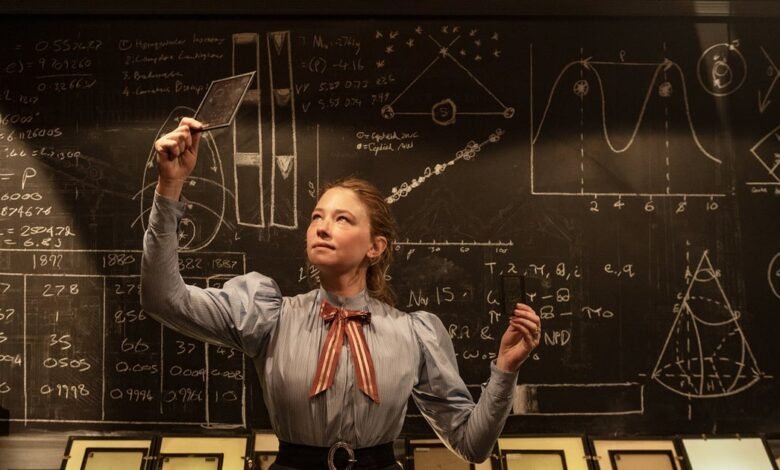
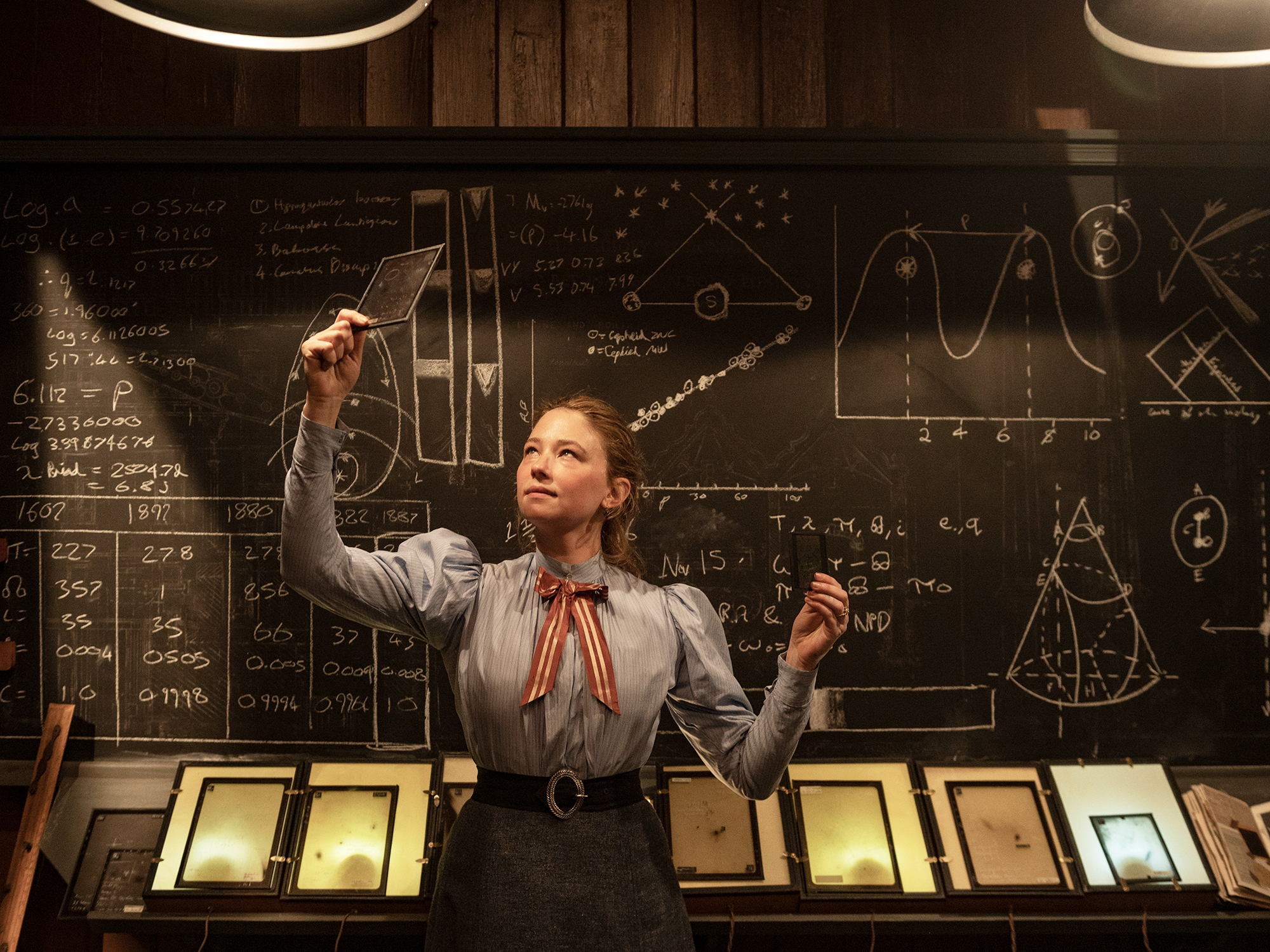
The novel takes as its subject the most pressing issue for feminists of the Edwardian era, that of the limitations placed by marriage upon women’s career ambitions. It is rather loosely adapted by Justine Waddell, making her screenwriting debut, having previously starred in a plethora of literary miniseries, and marks the second feature of the British-Iranian filmmaker Tina Gharavi. They are more interested in the protagonist Katharine Hilbery’s passion for astronomy than her romantic engagements, fashioning her arc into the pursuit of a degree at Cambridge. There had indeed been women attending lectures at the university since the mid-19th century, and the first women’s college, Girton, was founded in 1869. Facts that do not seem to interest Waddell, who instead presents a rather implausible narrative of a young woman earning a place at a male-only college, despite the fact that no women were able to attain full degrees until 1948.
Get more Little White Lies
Katharine is portrayed placidly by Haley Bennett, who spars against her father played with typical bluster by Timothy Spall, and contends with a nitwit of a suitor played by the aptly nitwittish Jack Whitehall. Her mother, an aspiring author, is played by Jennifer Saunders, although like her co-star Sally Phillips, she is largely consigned to stand around with little to do. It is unfortunate that so much screentime is taken up by these blundering men while the aspirant women are pushed to the side.
It is a stroke of genius that Mary Datchet, an advocate for women’s suffrage, is played by Lily Allen, riding high on the masterful rallying cry of her album ‘West End Girl’, which tackles the injustices of heterosexual marriage. Appearing with dyed hair and glittering eyeshadow, Allen gestures towards Woolf’s experimentalism and plays with time in tandem with the film’s synth score by Simon Goff, fracturing the apparent period authenticity through anachronism in much the same vein as Derek Jarman or Sally Potter. Her character is certainly the most compelling aspect of this adaptation, but is tragically underused.
The film would be elevated by greater commitment to its lack of faithfulness. There is undoubtedly an interesting story here, especially in the relationship that women of the time had with their academic and scientific pursuits. Yet a film based on historical fact rather than fiction might have made for more plausible and inspiring viewing, and better served the feminist intentions of Woolf.