Although my upbringing as a white artist was different than those in This Bridge Called My Back, I still find myself serving as a bridge between my home and found communities. I spent some of my childhood in Lexington, Virginia, a college town in the rural Shenandoah Valley, which is like Oberlin in a lot of ways.
I come from a community where at playdates kids would mix up their shoes because their families all bought the same kind from Wal-Mart. My theatrical life took me to Washington, DC; Durham, North Carolina; and San Francisco, California; I made a life writing about intimacy directing, teaching theatre history to undergraduates, and presenting myself as sophisticated critic of queer art and the latest Off-Broadway play. But a part of me will always still be that person searching for the right shoes on a Southern welcome mat, and now that I teach at Oberlin, which has an often urban and wealthy student body, I feel a need to bridge my students’ experiences with the rural and working-class community I grew up in.
Some queer folks feel love and loss for where they’re from. Others stay and make home in rural places. I’m moved by the oral history project Country Queers, which documents queer life in rural places, and Samantha Allen’s book Real Queer America, which chronicles queer lives in red states. In his memoir Exile and Pride, Eli Care describes his journey from a small logging community in Port Orford, Oregon to the queer enclaves of Oakland, California and Ann Arbor, Michigan. Clare describes his journey from Oregon as “exile”: “a big word, a hard word. It implies not only loss, but a sense of allegiance and connection—however ambivalent—to the place left behind.”
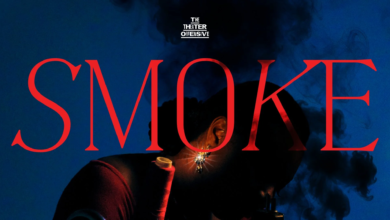
Staging a play about this ambivalence at Oberlin was unexpectedly one of the toughest parts of my teaching career. In a playwriting class in grad school, Young Jean Lee threw down the gauntlet, challenging us to write about topics that scared us. I opted to write a play about growing up in the shadow of Confederate monuments in Robert E. Lee and Stonewall Jackson’s Virginia hometown. I wrote a freewheeling comedy about two millennials who learn witchcraft from Tumblr and decide to cast a spell calling on their ancestors to protect them from the forces of bigotry in their small, Southern town. Thinking they’re calling on those of the Stonewall Riot, they end up bringing to life a statue of their ancestor Stonewall Jackson. Stonewall meets Stonewall, and queers confront the ghosts of their racial pasts.
This play, Stonewallin’, confronts bias head-on and shows how queers might still love a place despite its flaws. In it, I included the protagonist’s grandmother, Mamaw, who, in contrast to the falsely innocent Mamaw in JD Vance’s Hillbilly Elegy, shouts “All Lives Matter,” refuses her grandchild’s gender-nonconformity, and organizes her Civil War Reenactment group around conservative causes. Stonewallin’ attempted to place her in context and show how others attempted to sway her to more anti-racist views. When the play had its first production in Richmond, Virginia, audiences recognized this character (and some even nodded along to her lines). Voices like Mamaw’s had been part of the political discourse. On opening night, the city even took down the pedestal from its old monument to Stonewall Jackson. That’s how fresh the topics were.
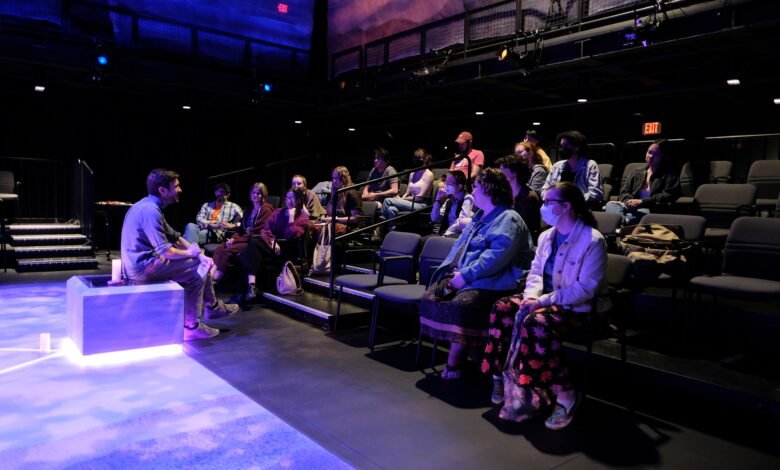
Directing on the Oberlin campus, however, I felt like I was building a bridge that few wanted, getting pushback from left and right alike. Some students liked the play but said that it didn’t have a place at Oberlin. Some audience members described to me (understandable) discomfort at the Mamaw character especially, and there were vocal responses and grunts when she spoke during the show. I heard through the grapevine that some students felt that including her was an endorsement of her views. Was showing Mamaw “platforming” racism or transphobia? In some critiques of Mamaw’s voice, I heard an expression that movements for queer and trans justice should not consider where conservative views come from. We’ve been hurt so much that finding care is hard. Certainly, the Midwest is a different world than the South, but drive a few minutes down the road from Oberlin, and you’d meet some Mamaws and people who agree with them.