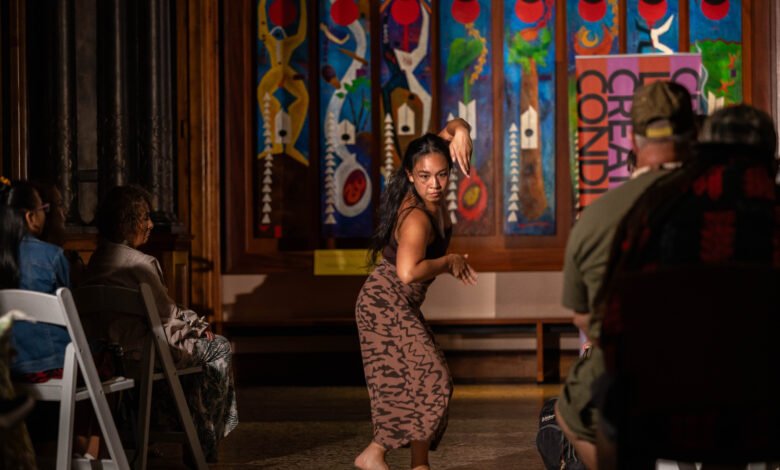
Creative ecosystems cannot be measured only by the number of organizations, grants, venues, or programs they contain. We must also ask: Are the relationships between artists strong enough to allow resources, knowledge, opportunities, and care to circulate and be shared?
One Wehiwehi participant asked, “Do we need more organizations, or do we need stronger connections between the ones we already have?” The answer may be both, but deeper connection is essential.
Resources That Create Freedom
Financial support remains fundamental. Artists need fees, grants, travel support, rehearsal space, and production support. However, funding alone does not create sustainable artistic lives. What matters is the freedom that resources create.
Flexible, unrestricted support allows artists to respond to their actual lives and creative processes rather than forcing artists into predetermined institutional timelines. It creates room for experimentation, rest, caregiving, cultural responsibilities, and unexpected opportunities. Funding should support the conditions that make artistic lives possible, not simply the production of a particular artistic product.
The suspension of individual artist grants from the Hawaiʻi State Foundation on Culture and the Arts since 2021 is particularly significant. Hawaiʻi needs mechanisms for directly supporting individual artists and small, artist-led organizations as well as infrastructure support for presenting partners who understand and trust artists’ creative decision-making.
The broader Native performing arts field offers important models. Organizations such as First Peoples Fund, Native Arts and Cultures Foundation, and Western Arts Alliance have demonstrated how sustained investment can strengthen not only individual artists but the networks and infrastructure around them.
The question, then, is not simply how much money do artists need? Rather, what kind of resources allow artists to make meaningful choices?
Time and Care for Whole Lives
One of the most important findings affirmed in Wehiwehi has been that artists need time.
Contemporary arts culture often equates productivity with artistic significance. Artists are expected to produce, pursue grants, travel, perform, teach, document, promote, and demonstrate impact, alongside responsibilities to family, community, culture, land, ceremony, and cultural stewardship.
Creative labor includes caregiving, mentorship, advocacy, cultural practice, administration, ceremony, research, and being in relationship, not simply producing an object or performance.
One Wehiwehi participant expressed a desire for “less pressure to produce,” acknowledgement of the many responsibilities they carry, and space to slow down and rest.
Abundant creativity requires breathing room.
Artists need periods when they can observe, listen, study, wander, gather, fail, and think. They need time when nothing has to become a finished product. They need the freedom to follow a question whose outcome is unknown.
In Hawaiian cultural practice, kilo (deep observation) is itself a methodology. Listening, oral tradition, ceremony, relationship, and attention to place are Indigenous technologies. Rest and relationship are not necessarily interruptions to creative work. They can be part of the work itself.
This is why the material conditions of an artistic life matter so deeply. Artists identified housing stability, childcare, healthcare, community care, transportation, access to ʻāina, technical assistance, administrative support, and time as essential creative conditions.
These may sound like social services, but the distinction is artificial. An artist who cannot afford housing cannot sustain a long-term practice. Artists caring for children or elders need childcare and flexibility. Artists living far from other practitioners need travel support and opportunities to gather.
If we want abundant creativity, we have to support whole people.
Brightening the Spotlight similarly found that Native creators understand their roles as extending well beyond performance, including cultural stewardship, community education, advocacy, and other forms of community care. Supporting the artist has an impact far beyond a single performance or exhibition.