Sonya: I think this is one of the things that Ruzibiza and I really have in common, this belief in the power of imagination and reimagination. For me, imagination is very active in the body. It can drive something to happen. And I will quote Ruzibiza from another conversation we had. He said, “If you can imagine, then maybe you can make it happen.” And I really liked when he said this, because that’s what I mean when I say it’s an active movement in the body.
For me, art and imagination really go hand in hand, because art is so rich with everything from symbolism to stories to colors to the magic of the arts that nurtures and creates a space for imagination. When there is a crisis, especially with young people in context of wars, the imagination can get lost. But through art and creative process, reimagination becomes possible.
In 2016, I did a theatre project in Nepal. We had a group of young people, ten young Nepalese men and women who started coming to these workshops three times a week. We were just exploring and playing. Part of imagination is having that space to have fun and connect through that joy and laughter. Play, I think, is also important.
And then another part of imagination for me is connected to little things that are deeply seated inside us. Associations or memories or things that maybe we’re not even aware of. Through art we can help these stories inside us come out.
Ruzibiza: It’s important to be surrounded by love, like Sonya likes to say, but it’s also really important to surround yourself with people that are lifting you up and making you feel like every single thing that you’re doing is worth it.
Sonya: I love love. At the end of the day, for me, art is about that: It is to remind ourselves that love exists and that different manifestations of love can flow in the body and outside of the body.
Ruzibiza: Most of the time, when I look around the world—Palestine, the Democratic Republic of the Congo (DRC), Ukraine, Armenia, Sudan, Libya, etc., the state of democracy in the United States—it feels as though every corner of the world is burning. In the middle of all that, I had to find a way, not to find happiness, but to find peace. For me, that peace came through reimagining the world, questioning it, and asking myself how it could be different tomorrow.
With all these wars unfolding, I reached a point where I simply sat down and thought, “I want to disappear. I don’t understand what is happening to this world anymore.” It felt as though humanity was refusing to learn from its past, repeating the same mistakes over and over again. It felt like a kind of collective madness.
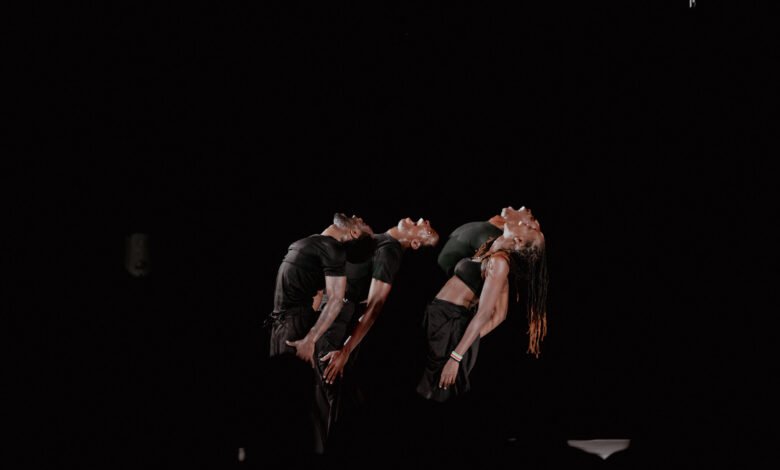
So I asked myself, “What can my answer be?” My answer became a play. A play that gave me peace. began to write, drawing from my own story. I come from a family of perpetual refugees. Before 1994, my father grew up in exile. My mother grew up in exile. I was born in exile, and before and after returning to my own country, I had lived across different parts of Africa and Europe. Everywhere I went, I was the foreigner. I was the other. I was the Black person. I was Rwandan. From that experience, I created Multitude to remind us that, before anything else, we are human beings, and that we need one another. Whether I am Black, Rwandan, or any other identity people choose to place on me, I cannot move through this world unless I am first seen as a human being.
Creating Multitude became my response. It became my place of peace. When I finished it, I felt lighter. I felt that I had done something.