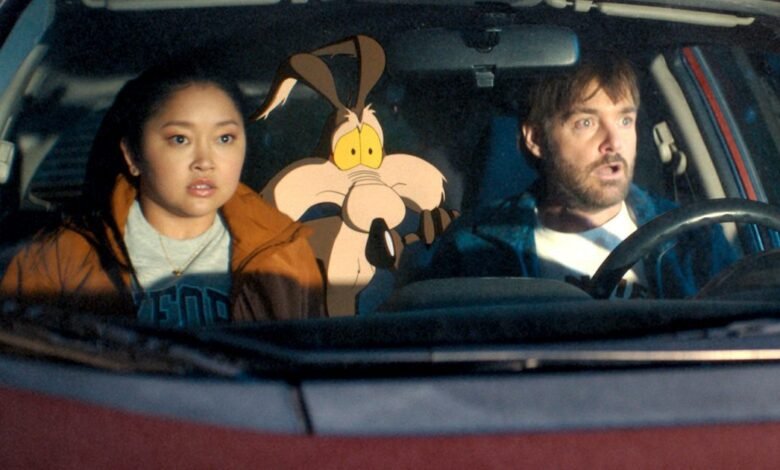
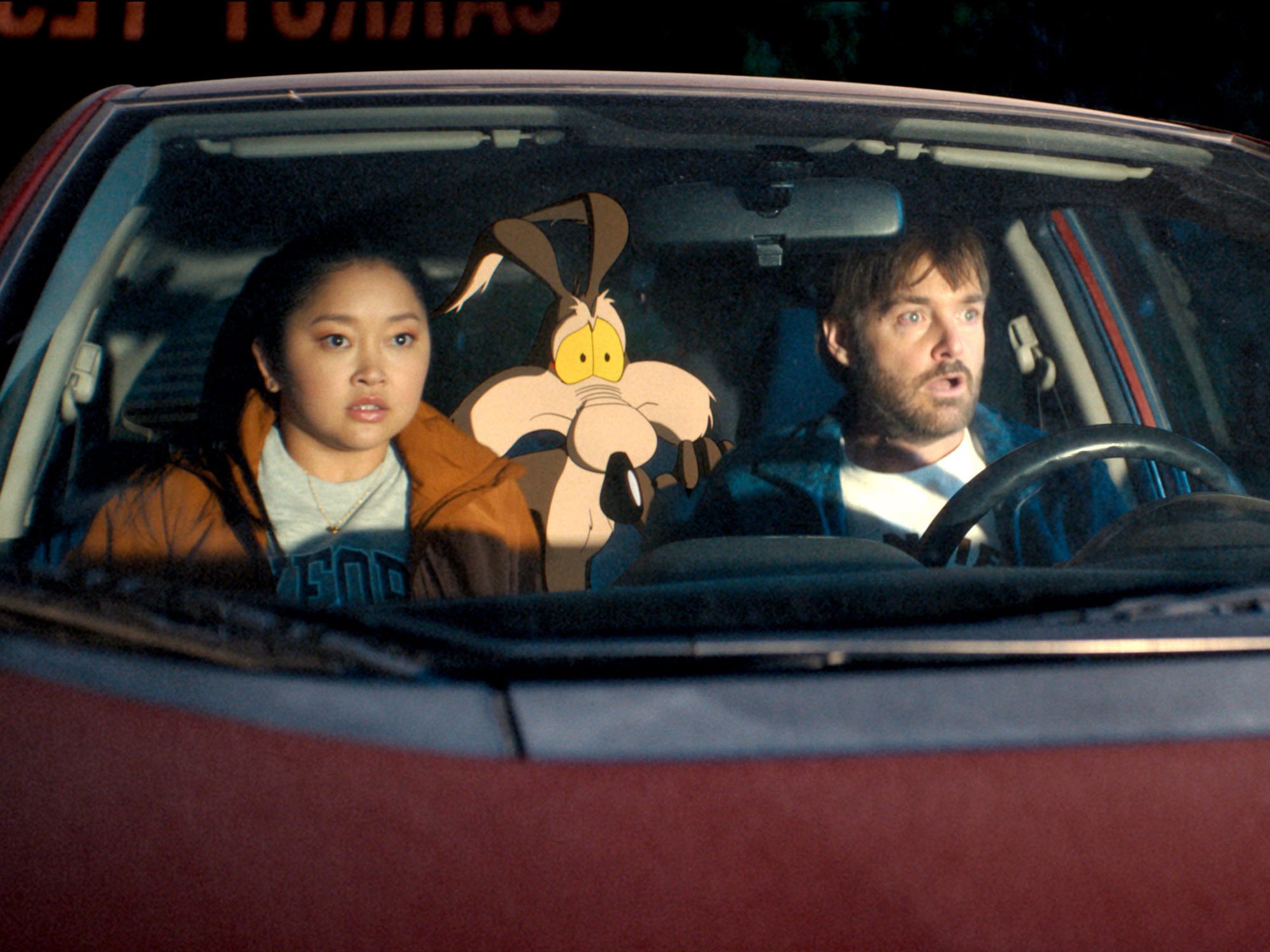
Even if the plot of Coyote vs Acme didn’t feel like an uncanny reflection of its own making, it would be hard not to mention the making of the film itself, a near-victim of Warner Bros’ habit of creating and then casting off feature films for tax write-offs. But Dave Green’s courtroom-drama parody does position one of the Looney Tunes against a company whose interest in cartoons only goes as far as its profit margin.
The metatext of Coyote vs Acme doesn’t quite overshadow everything, even if its plot strongly reminds you of the corporate apathy that landed the film in distribution purgatory in the first place. After failing again in his Sisyphean struggle to catch the Road Runner, Wile E Coyote realises that this is in large part thanks to faulty products being sold by the Acme Corporation, which here is also a stand-in for Google, Apple, Microsoft and possibly Lockheed Martin. A timely TV advert featuring Will Forte’s lawyer Kevin Avery encourages “Mr Coyote” to sue, drawing them both into a conspiracy as they build their case. All of it is presented with great sympathy for Wile E: his continual losses and compulsive self-sabotage become a little sad when presented all at once, which makes it even funnier in a way. To its credit, Coyote vs Acme even finds occasional sweetness in his elaborate plots to slaughter an innocent, very fast bird.
Get more Little White Lies
This angle works because the film mostly plays things straight, especially Forte, who proves a suitable foil for the mostly mute Wile E. Forte has his own history of sad-sack comic personas, and that history feels clear in his funny and even touching performance as a hapless, perennial loser content to settle. Kevin’s polar opposite, Buddy Crane, is played by John Cena, who is also right at home in cartoons as Acme’s cocky lawyer who casually throws out hollow platitudes like “God bless the troops” while presenting his argument.
Because of this approach, most of the gags are visual, stepping from the friction between cartoon mayhem and the real world, which proves far more brittle compared to Kevin’s squashable, stretchable clients. The cel-shaded 3D animation can be inconsistent, and doesn’t feel like as much of a magic trick as it does when the film employs more traditional 2D (it’s hard not to think of Who Framed Roger Rabbit). But there are little graphic touches that stop the characters from feeling uncannily smooth, like the way the Road Runner’s legs blur into a smear of paint. Plus, it’s still a treat to see the characters abide by the impossible physics and often contradictory rules established by the pantheon of Looney Tunes animators. It’s because of these touches, and its very real love for cartoons, that Coyote vs Acme is more than just a story about itself, but a winsome, silly homage to one of animation’s biggest losers.