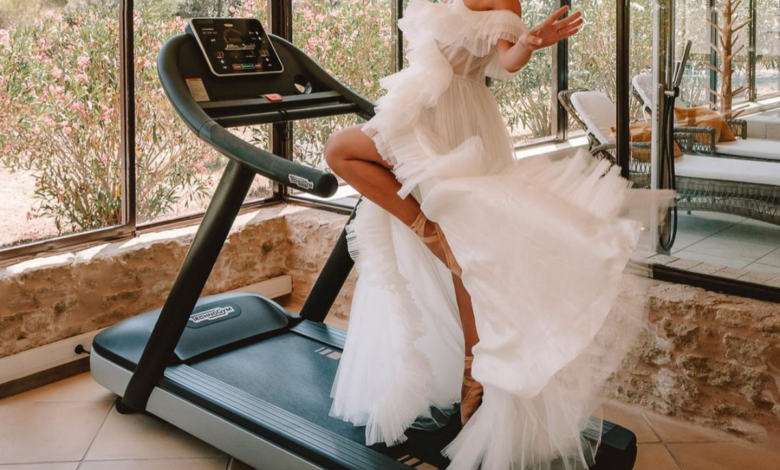
A dress can look perfect standing still in front of a mirror and become a completely different experience the moment you start moving. You sit down and the bodice digs. You walk and the skirt pulls at your knees. You raise your arms and the whole thing shifts. These aren’t flaws in your body. They’re mismatches between the dress and how you actually need to use it.
Most formal events require a lot more movement than people plan for. You’re walking across uneven ground. Sitting for a ceremony or dinner. Hugging people. Dancing. Getting in and out of cars. A dress that doesn’t account for those realities will spend the whole night reminding you it’s there, and not in a good way.
The good news is that choosing a dress that moves with you isn’t complicated. It comes down to fabric, silhouette, construction, and knowing how to test the fit before you commit.
Start With Fabric
Fabric is the single biggest factor in how a dress moves. Two dresses in the exact same silhouette will feel completely different on the body if one is made in stiff satin and the other in stretch crepe.
Fabrics that move well tend to have either natural drape or built-in stretch. Jersey is one of the best options for movement because it’s soft, stretchy, and returns to its shape after being pulled or compressed. You can sit, bend, and dance in jersey without worrying about the dress losing its form. It’s a strong choice for fitted evening gowns and column styles where the fabric needs to work closely with the body.
Crepe is another reliable performer. It has a subtle stretch, a smooth drape, and enough weight to hold its shape without feeling stiff. Crepe moves quietly with the body rather than fighting it, which is why it’s a favorite in formal gowns and Mother of the Bride dresses where comfort over a long day matters.
Chiffon and tulle are lightweight enough that they move freely on their own. They don’t restrict the legs or arms, and they add a sense of flow and softness that looks beautiful in motion. You’ll find both fabrics across prom dresses, bridesmaid styles, and wedding guest dresses.
Fabrics that can work against movement include heavily structured satin, stiff taffeta, and dense, fully lined lace. These aren’t bad fabrics, but they hold their own shape rather than adapting to yours. If you’re choosing a stiffer material, the silhouette and construction need to compensate.
Silhouette Matters More Than You Think
Some silhouettes are designed to follow the body. Others are designed to hold a shape regardless of what the body is doing. Both can look beautiful, but they feel very different over the course of a night.
A-line dresses are one of the most movement-friendly silhouettes in formalwear. The skirt flares from the waist and hangs free of the legs, which means there’s nothing restricting your stride, your ability to sit, or your range of motion on the dance floor. You don’t have to think about the dress. It just goes where you go.
Empire waist styles work on the same principle. The fitted section ends just below the bust, and everything below that flows freely. This makes them especially comfortable for events that involve a lot of sitting or standing transitions.
Fit-and-flare and trumpet silhouettes offer a middle ground. They’re fitted through the torso and hips but release into a flare that gives the legs room to move. The flare point matters here. The higher the flare starts, the more freedom you’ll have. A trumpet dress that releases at mid-thigh moves significantly better than a mermaid that holds until the knee.
Mermaid dresses are the most restrictive silhouette when it comes to movement. The fitted section through the thighs and knees limits stride length and can make sitting and stair navigation challenging. They’re stunning to look at, but they require a conscious trade-off between visual impact and physical ease. If you love the mermaid look but want more mobility, look for styles in stretch fabric or with a slightly higher flare point.

Construction Details That Help
Beyond fabric and silhouette, there are specific construction details that make a dress more comfortable in motion.
A lined bodice with a bit of internal structure, like light boning or a built-in corset, can actually improve movement rather than restrict it. When the bodice holds itself up securely, you’re not constantly adjusting straps or pulling the neckline back into place. You can move naturally because the dress is doing its job without your help.
Stretch panels are increasingly common in formalwear and make a real difference. Some evening gowns incorporate stretch mesh or jersey panels along the sides or back of the bodice, allowing the fitted areas to flex with the body rather than constrict it.
A well-placed slit is one of the simplest and most effective movement features in a floor-length dress. It gives the legs room to stride naturally and makes sitting significantly more comfortable. It also prevents the skirt from wrapping around the legs when walking, which is a common frustration with narrow column dresses.
Closures matter too. A zipper that sits flat and doesn’t dig into the back when you’re seated, a clasp that holds without pulling, or a stretch waistband that allows your torso to expand naturally after eating. These are small things that add up to a very different experience over several hours.
How to Test Movement Before You Buy
Trying on a dress standing still in front of a mirror is only the first step. Before you commit, put the dress through the movements you’ll actually be doing at the event.
Sit down. Not perched on the edge of a chair, but actually settled into a seat the way you would at a dinner table. Does the bodice dig? Does the skirt bunch awkwardly? Can you breathe comfortably?
Walk at your normal pace, not the slow, careful steps people take in fitting rooms. Walk like you’re crossing a venue to greet someone. Does the skirt restrict your stride? Do your legs get tangled in the fabric?
Raise your arms above your head. The dress shouldn’t ride up significantly or pull across the chest. If it does, the fit through the bodice or the armholes is too tight.
Do a small twist or turn at the waist. This mimics what your body does when you dance or turn to talk to someone beside you. The dress should rotate with you, not stay rigid while your body moves inside it.
If the dress passes all of those tests and still looks great, you’ve found something that will work for the full duration of your event, not just the first twenty minutes.
Comfort Isn’t a Compromise
There’s a persistent idea that formal dresses are supposed to be at least a little uncomfortable. That looking great requires some amount of suffering. It doesn’t. The best-designed formalwear accounts for the fact that people wear these dresses to events where they need to move, eat, sit, dance, and be present for hours.
Choosing a dress that moves with your body isn’t settling for something less dramatic or less beautiful. It’s choosing something that lets you enjoy the event you’re dressing for. The best dress is the one you forget you’re wearing because it’s doing everything right.
Explore evening dresses, prom dresses, and special occasion styles at NewYorkDress to find gowns designed to look stunning and move beautifully. Or book an appointment at the NYC boutique to try on styles and test them in person before you decide.