
As a man returns from the brink of death in one big gasp of air, Mariano (Adriano Giannini) calmly welcomes him back: “You decided to live. Good.” Mariano knows a thing or two about deciding to live. By the time he saves the patient in the ambulance, he’s been a doctor in Turin for three decades and has just been summoned to Argentina to depose in an upcoming trial. The trip that returns him to the country where he spent the worst days of his life gives Marcho Bechis’ Back to Buenos Aires its title.
The drama is set in 2008 and sees the Italian director revisit the Olimpo Garage of his eponymous 1999 thriller. Here, Mariano travels to Argentina as the nation undergoes a delayed process of legislative justice following the military dictatorship that ravaged the country in the 1970s. Back then, Mariano was a young Italian man driven into South America by idealist political convictions. On a July morning in 1977, he is tossed into the boot of a car and taken to Olimpo Garage, one of the harshest military camps. He would stay there for two years and 48 days. What happened there would remain with him his whole life.
Get more Little White Lies
Bechis doesn’t give much insight into Mariano’s present, choosing instead to hone in on the growing anxiety the doctor experiences around the upcoming trial. As he lands in Argentina, the man is taken to an isolated hotel with the other victims, his body recoiling when anyone crosses his path, his words measured and hesitant. Making his protagonist a foreigner is a winning choice; Mariano never quite settles into the unspoken bond of his Argentinian counterparts, privy to the horrors of their pain but denied entrance to a more intimate, elusive national grief.
As the witnesses dance around one another in dimly lit dining rooms and ever-narrow corridors, the haunting nature of their upcoming testimony becomes clearer. Some have deposed before and have developed defense mechanisms to detach their recollections from the physical trauma they recount. First-timers like Mariano see the court as a twisted mirror of the camp: unknown, and therefore to be feared. Back to Buenos Aires dips in rhythm when Bechis stays with the group a little too long, the ensemble scenes verging on the theatrical and therefore edging the film into safer, and therefore less interesting, classicism.
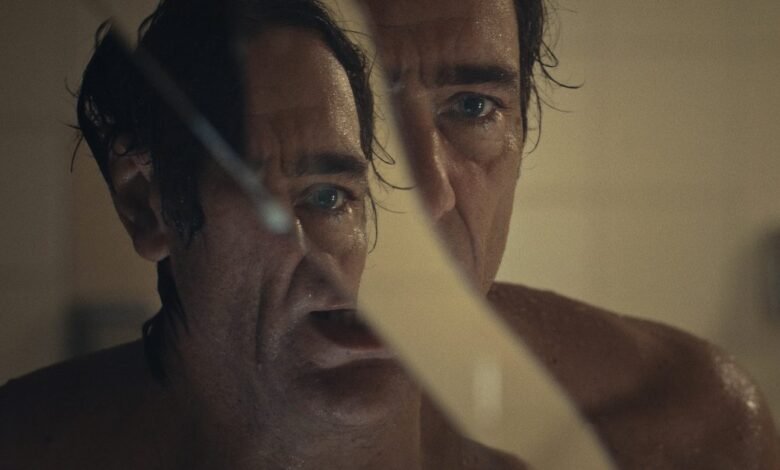
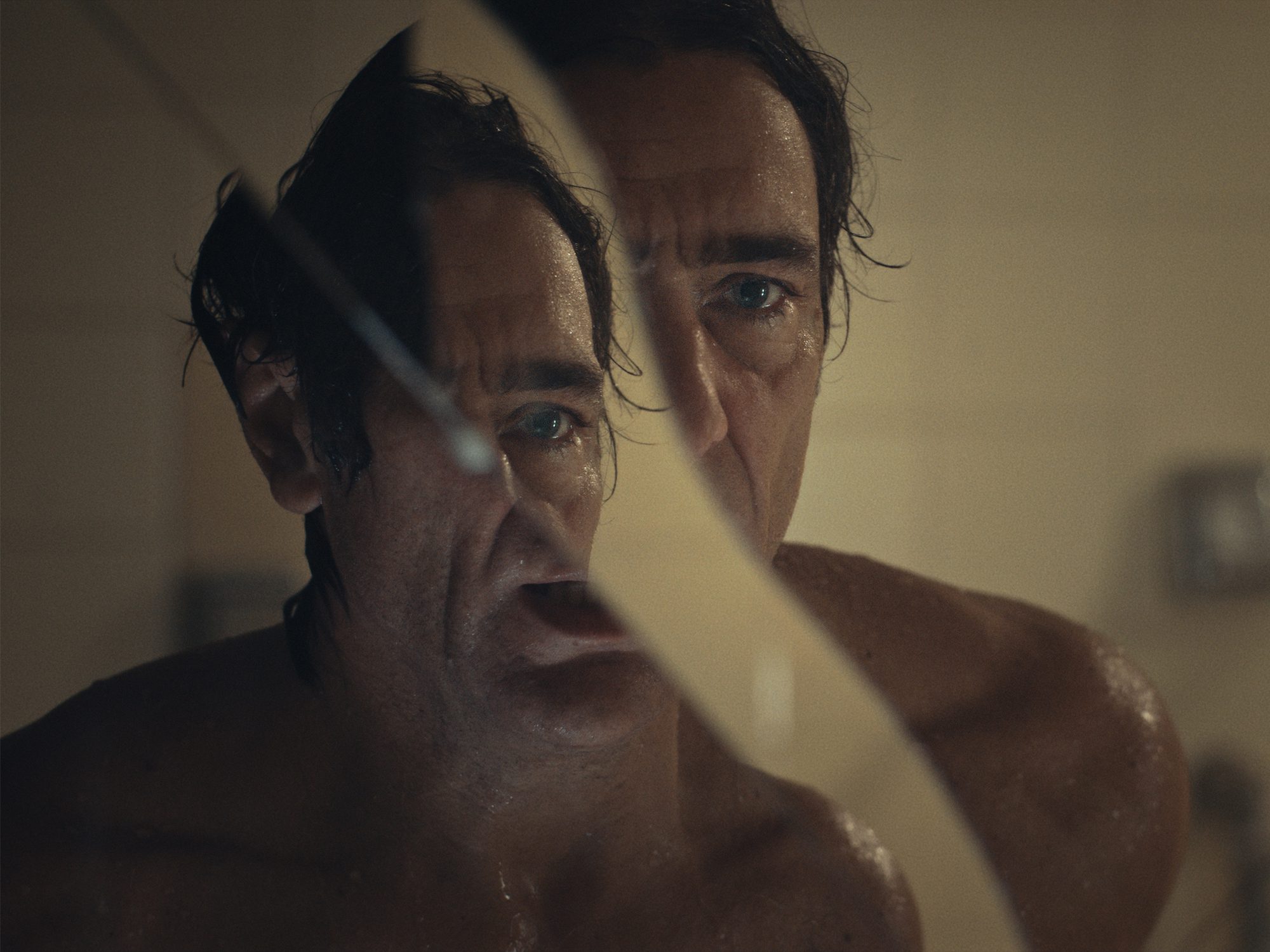
But when the director returns to Mariano, echoing the fragile state of his mind with the film’s visual language, what begins as a seemingly by-the-books courtroom drama morphs into a much more complex character study. Fabrizio La Palombara’s cinematography seesaws between the regimented framing of austere legal rooms and the frenzy of an increasingly unstable man, staircases swirling like blenders and mirrors amplifying the doctor’s growing paranoia. Mariano experiences body-shaking flashbacks at the sight of familiar landmarks in the capital, sweat dripping from his skin and soaking his curls as Bechis cuts to pooling sewage in the crevasses of an old prison block.
These stylistic flourishes help cut the somberness of the legal procedures, with the director sparing us of lengthy testimonials in favor of letting Mariano’s trauma response tell a story of its own. Bechis’ examination of the murky lines that separate a victim from an enabler – or, worse, a perpetrator – stumbles briefly when it tries to create a gendered parallel that only dilutes the potency of his difficult, unanswerable question. But as we watch Mariano at last take the stand, it is impossible not to think of ourselves, living at a time of cruel voyeurism and agonising helplessness, searching for accountability which doesn’t always come.
Back to Buenos Aires narrows that bridge between past and present in its making, too. A co-production between Brazil and Italy, the film was made entirely without support from the country it depicts, with southern Brazil standing in for Buenos Aires onscreen. Argentina, one of the great film countries – the land of Ricardo Darín, Lucrecia Martel and Lisandro Alonso – is currently under the rule of a man much more interested in living in the reality that torments Mariano than the one he travelled across the Atlantic to help remedy. This dire fact looms heavily over Bechis’s film, draining it of hope, but drenching it in truth.