 We brew it at home, we drink it at work, we socialize over a cup, or stop in at a café for its energy boost—never once reflecting on how the popularization of coffee literally changed the world.
It all began in Ethiopia, where coffee plants (Coffea) grew wild. It was discovered that the seeds of the coffee plant could be roasted and ground to yield a robust beverage with an unexpected effect. It seems to have become popular in the late-1400s and spread to Yemen quickly thereafter.
Much like us, Arab Sufi monks drank coffee to stay awake and aid in concentration… not to study for exams, but to achieve divine consciousness during midnight prayers.
No matter the goal, when Somali traders stumbled upon this miraculous brew, they were quick to appreciate its value. And thus began the commerce that would soon spread coffee around the globe.
A Social Outlet and Leveler
Coffee houses are said to have first sprang up in Cairo, then Aleppo (Syria) and, by the mid-1500s, in Constantinople in Ottoman Turkey. There were no such places as taverns in that part of the world because Muslims did not drink alcohol.
So the coffee house filled a gaping void—it provided a “public sphere” where men could gather to socialize and discuss religion, politics, business and news (or gossip) away from the watchful eye of religious and state authorities.
 In fact, coffee houses soon became centers of public life, not just for the elite, but for a broader socioeconomic mix — a baby step, one might say, toward democratization. That is not to suggest, however, that coffee and coffee houses weren’t controversial.
On the heels of the beverage’s explosive popularity, conservative imams in various locations, including in all-important Mecca, sought to ban coffee. A fatwa, or religious decree, was issued declaring coffee haram, or forbidden. Taxes were imposed on its consumption and many coffee houses were forced to close.
In some places, coffeehouses and warehouses containing coffee beans were sacked. This attitude most likely arose from the idea that, like alcohol and hashish, coffee had an effect on cognition.
But early practitioners of Islamic medicine and science fought against this notion; instead they argued the benefits of the drink, which, they said, would stimulate the mind while defending against the appeal of those other harmful substances.
They were aided in their efforts by vigorous protests staged by pro-coffee mobs — all of which eventually occasioned a reversal of the fatwa and a reopening of the community gathering places.
Inevitably, coffee spread along existing trade routes, in some instances even forging new ones. Coffee arrived in Italy in the late 1500s through Mediterranean pathways, while Central and Eastern Europeans learned of it from the Ottomans.
By the 1600s, coffee and coffee house culture had reached Western Europe. People everywhere were enthralled.
Fueling the Enlightenment – and Slavery
On the one hand, cafés in Western Europe became hubs of intellectual ferment and debate. In Germany, Johann Sebastian Bach conducted musical ensembles at a local café and famously composed that paean to coffee, the “Coffee Cantata.”
In England, eminent physicians discussed the medicinal benefits of coffee, while the more business-minded planted the seeds for such commercial innovations as the London Stock Exchange, Lloyd’s of London and the East India Company. In Vienna, world-famous personalities such as Gustav Klimt, Sigmund Freud, James Joyce and Egon Schiele met there to argue and exchange ideas.
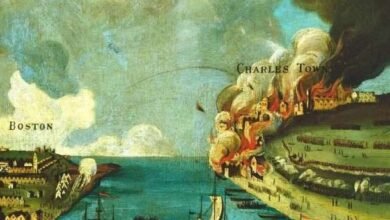
 While in America, Boston’s Green Dragon Tavern and Coffeehouse achieved fame as the place where the Sons of Liberty gathered to plan the 1773 Boston Tea Party and to develop the seditious ideas that led to the American Revolution.
(It is said that, after the Boston Tea Party, a majority of Americans began drinking coffee because drinking tea was seen as unpatriotic. In New York, Merchant’s Coffee House, established in 1793, was the foundation of what is today the New York Stock Exchange.)
On the other hand, some of coffee’s effects were not unmixed blessings. In the 1600s, a Dutch merchant somehow obtained a number of coffee bushes from Yemen, even though they were very closely guarded. He transplanted them in Amsterdam’s Botanical Garden, where they thrived, expanding over many decades into a healthy and productive coffee patch.
The colonial powers among the European nations got the message; they realized they didn’t have to import coffee beans from foreign lands; they could grow their own product using peasant and slave labor in their far-flung colonies.
France was seemingly the first New World cultivator. Seedlings brought to Martinique in 1720 yielded a phenomenal 18,680 coffee trees, which then allowed coffee growing to extend onto the French-held Caribbean island of Saint-Domingue (now Haiti).
Not far behind were the Dutch, English, Spanish and Portuguese. They also added coffee plantations to their cotton, tobacco and sugar holdings, transforming Indonesia, the Caribbean and Latin America into gulags of coffee cultivation.
In the late 1700s, Saint-Domingue grew two-thirds of the world’s coffee, until conditions drove the populace to burn the island’s plantations and massacre their owners during the Haitian Revolution of 1791.
 Importing even more slave labor than before and supplanting huge tracts of forest, the Portuguese were determined to make Brazil the world’s largest coffee producer, which it has been and continues to be since 1852.
Coffee became the central element of the country’s economy, banking system, politics and social structure, thus suppressing any impulse toward slave emancipation. Not surprisingly, it wasn’t until 1888 that Brazil abolished slavery, the last country in the Western Hemisphere to do so.
Coffee, Industry and War
As the Industrial Revolution gained momentum in 18th century England, the demands of factory work were unrelenting. Not only was the work numbingly monotonous, factory schedules abandoned natural sleep-wake cycles to encompass round-the-clock shifts.
Enter coffee, whose stimulant effect boosted energy and heightened focus. Frequent coffee breaks enabled workers to remain alert and engaged regardless of the time of day. Coffee also replaced beer as the beverage of choice for many workers, leading to a more sober and attentive workforce.
When industry spread to the rest of Europe and North America, owners took note and productivity soared.
 Even our two world wars had a coffee component. George C.L. Washington’s development of instant coffee, made with fast-dissolving crystals, eliminated the lengthy brewing process of regular coffee. Thus the government saw an opportunity to give combat rations a boost.
By lighting a little oil heater, GIs could take comfort and energy from their “cup of George” (WWI parlance) or “cup of Joe” (WWII) despite the hellfire going on around them. So popular was the instant brew, the Army ordered 140,000 bags of coffee beans a month the year we entered WWII, ten times the previous year’s order.
For a while, officials even rationed coffee for civilians so troops would have enough. After the war, companies like Nescafé and Maxwell House turned instant coffee into a household must.
Nevertheless, yet again, coffee had its dark side. In Latin America, from the 1950s through the 1980s, it was linked to bloody civil wars. Widespread exploitation of laborers who tended and harvested coffee beans (as well as bananas and other global commodities) resulted in crushing rural poverty.
When this spurred regional movements of communist activism, America — fearful of Soviet influence in our backyard and also mindful of corporate financial interests — intervened.
In Guatemala, we helped topple democratically elected, pro-peasant reformist Jácobo Arbenz Guzmán and helped install a right-wing president who canceled agrarian reform and restored the previous police state.
In El Salvador, as a military junta fought leftist rebels trying to replace the country’s coffee-oligarch-backed government, the U.S. contributed to the carnage by training right-wing death squads.
In both countries, as well as in neighboring Nicaragua, coffee-instigated strife led to years, if not decades, of repression and bloody violence.
Return of the Coffee House
Inexplicably, coffee houses largely disappeared in America over most of the 20th century. We were probably unaware of what we had lost until legions of American tourists experienced the charm of Europe’s cafés and expressed their chagrin.
One of these tourists was Brooklyn native Howard Schulz. Traveling to Italy, he fell in love with the ubiquitous cafés and espresso bars and their wonderful variety of coffee concoctions. Returning to Seattle, he convinced the owners of Starbucks, then the preeminent coffee bean roaster, to let him open an espresso bar.
Read more about the history of coffee in New York State.
This essay was first published in Blackwell’s Almanac, the newsletter of the Roosevelt Island Historical Society. The Society was founded in 1977 to recover, maintain and disseminate the record of Roosevelt Island’s heritage from colonial times to the present. Visit their website at www.rihs.us.
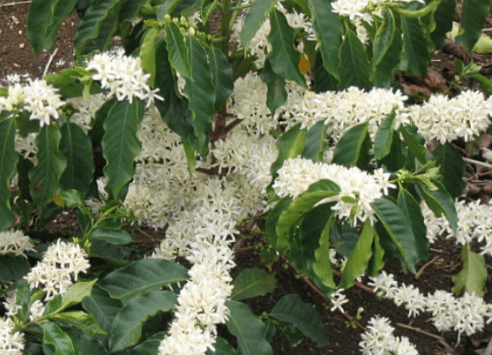
Illustrations, from above: Coffee arabica in bloom; 17th-century depiction of an Ottoman coffeehouse; Slaves on a coffee plantation in the Paraíba Valley, Brazil, ca. 1882; Paul Revere’s Coffee Pot, 1773, (Worcester Art Museum, MA); G Washington’s instant coffee advertisement, 1919.
Source link